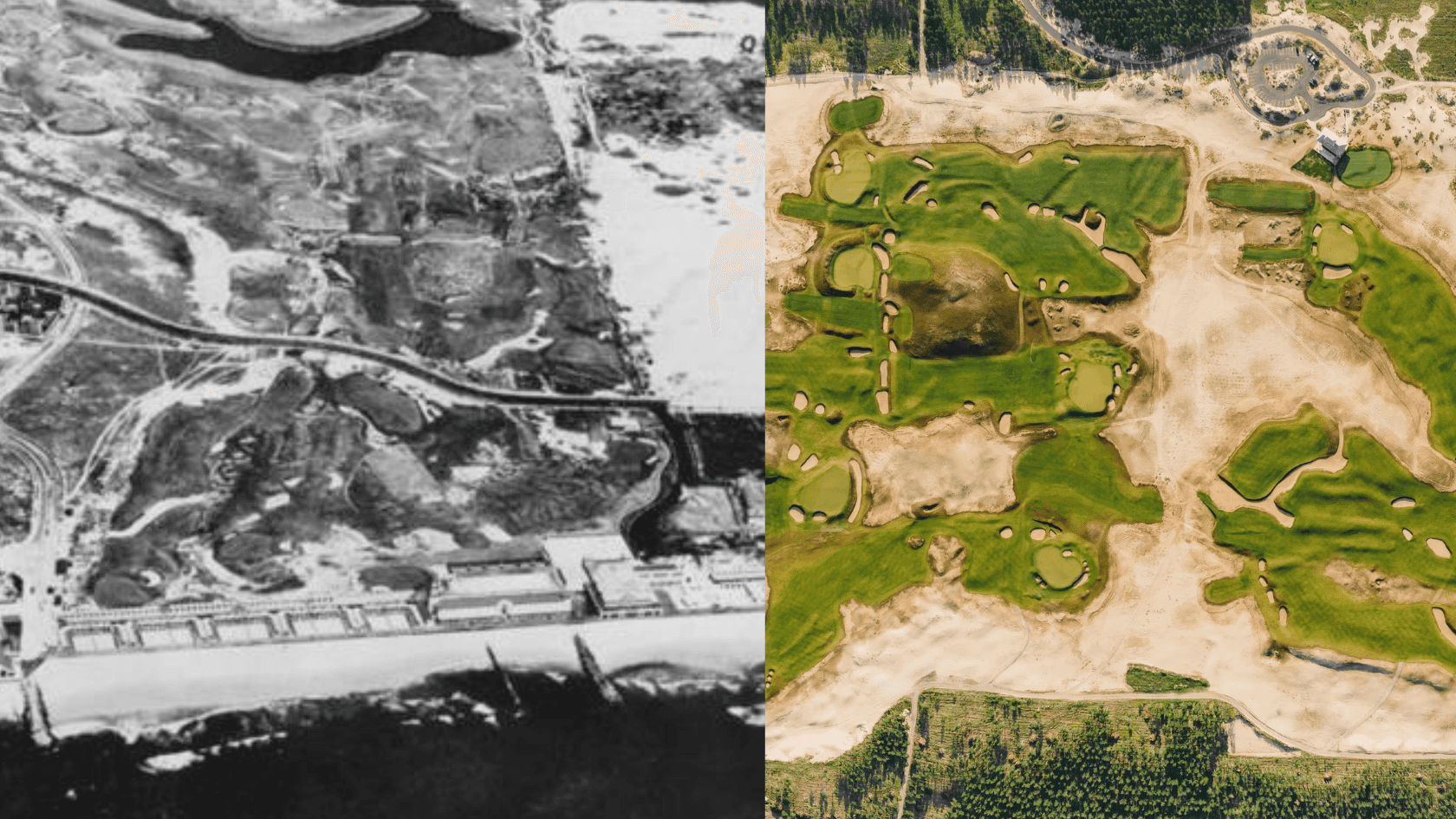


Most championship venues have a history. The Lido has a resurrection.
When the 45th U.S. Mid-Amateur arrives at Sand Valley Resort on September 26, stroke play will split between the resort's original Coore-Crenshaw course and its newest headliner — but every match that matters, from the Round of 64 through Thursday's 36-hole final, will be played on The Lido. It is the first USGA championship contested on a golf course that, strictly speaking, has existed twice: once on a Long Island barrier beach, where it was called the best course in the world before it was bulldozed for a naval base, and now on a 225-acre plain of Wisconsin sand, where it was rebuilt from photographs, newspaper clippings and a computer simulation — in many places accurate to the square inch.
To understand what the 264 players in this field are about to walk onto, you have to start in a salt marsh in 1914.
Two million cubic yards of ambition
Charles Blair Macdonald — winner of the first U.S. Amateur in 1895 and the man who essentially invented American golf architecture — had already built his "ideal course" at the National Golf Links. The Lido was something more audacious: a great links conjured on ground where no golf course could exist. The site at Lido Beach, on the barrier island between the Atlantic and Reynolds Channel, was swamp. Macdonald and his engineer Seth Raynor simply decided to manufacture the land itself.
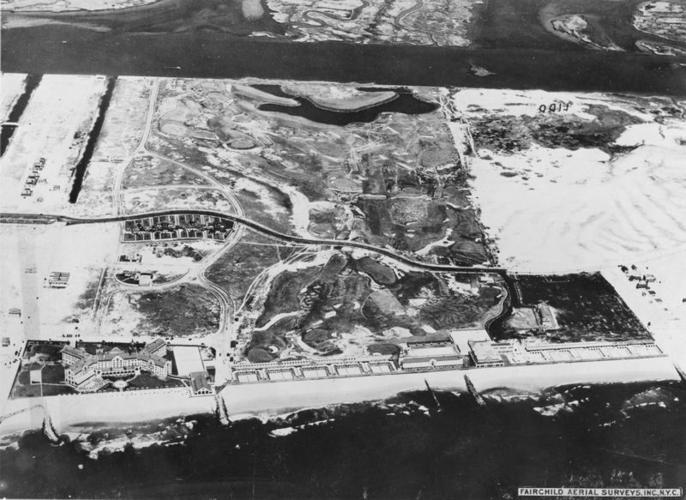
The construction ledger reads like a public-works project. Five hydraulic dredges pumped more than two million cubic yards of sand out of the channel to bury the marsh, building hills up to forty feet high. Forty thousand cubic yards of meadow muck were lifted and spread as soil for the fairways, greens and tees, amended with 2,500 tons of lime, 6,000 tons of fertilizer and 35,000 tons of topsoil. The rough was planted by hand with beach grass — nearly a million plants, set in squares eighteen inches apart, to hold the manufactured dunes in place. A seven-acre lagoon was dredged twelve feet deep, with made land in its center forming an island fairway. The bill came to roughly $800,000 — north of $20 million in today's money, and by a wide margin the most expensive golf course ever attempted to that point.
The contest that discovered Alister MacKenzie
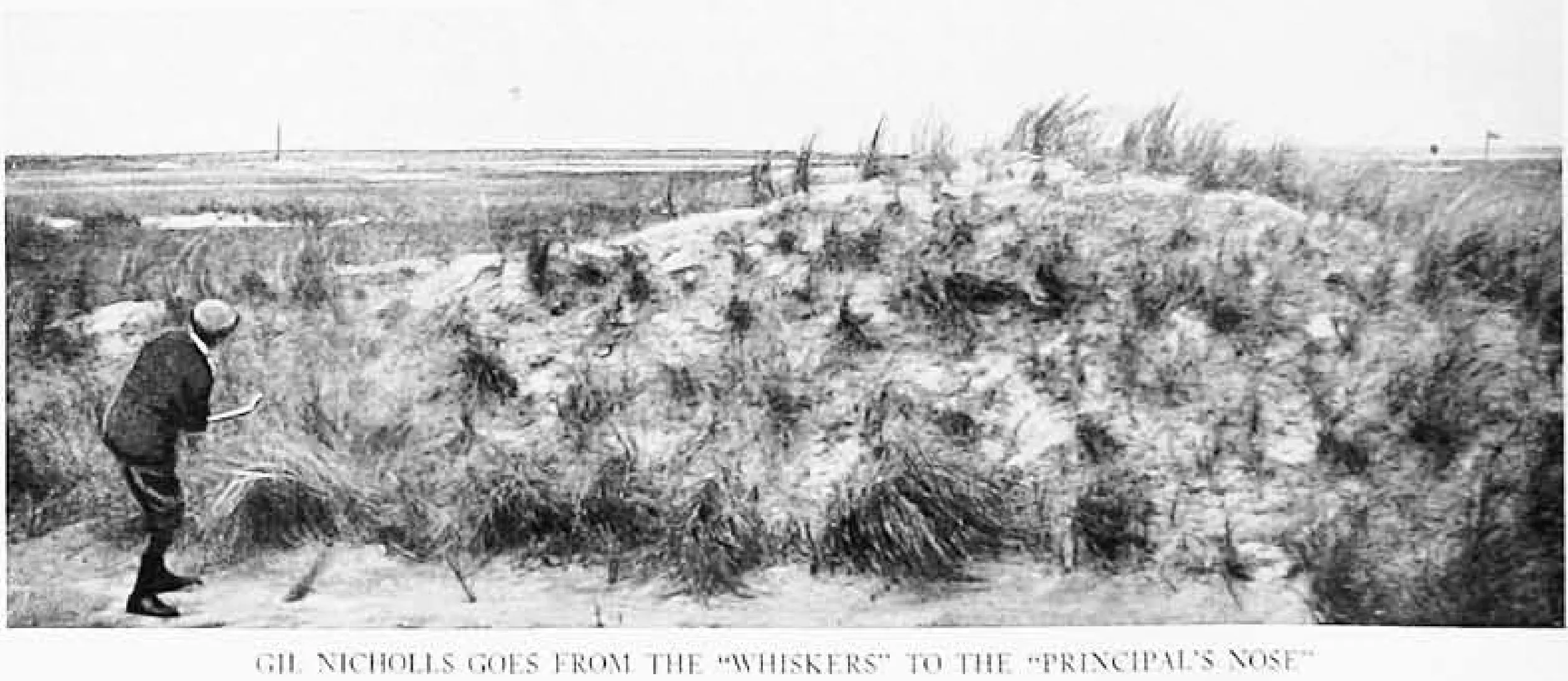
One Lido hole has a origin story all its own. During planning, Macdonald ran a design contest through the British magazine Country Life: amateur architects were invited to submit plans for an ideal two-shot hole, with the winner to be actually built at The Lido. The judges were Bernard Darwin, Horace Hutchinson and Herbert Fowler; roughly eighty entries were narrowed to sixteen finalists.
The winner was an unknown British army surgeon named Alister MacKenzie. A variation of his winning plan became the Lido's 18th hole, "Home" — and the prize helped launch the design career of the man who would go on to create Cypress Point, Royal Melbourne and Augusta National. Before any of those existed, MacKenzie's first calling card in American golf was a hole on this golf course. Mid-Am competitors will play it, faithfully rebuilt, as their finishing hole all week.
What they said about it
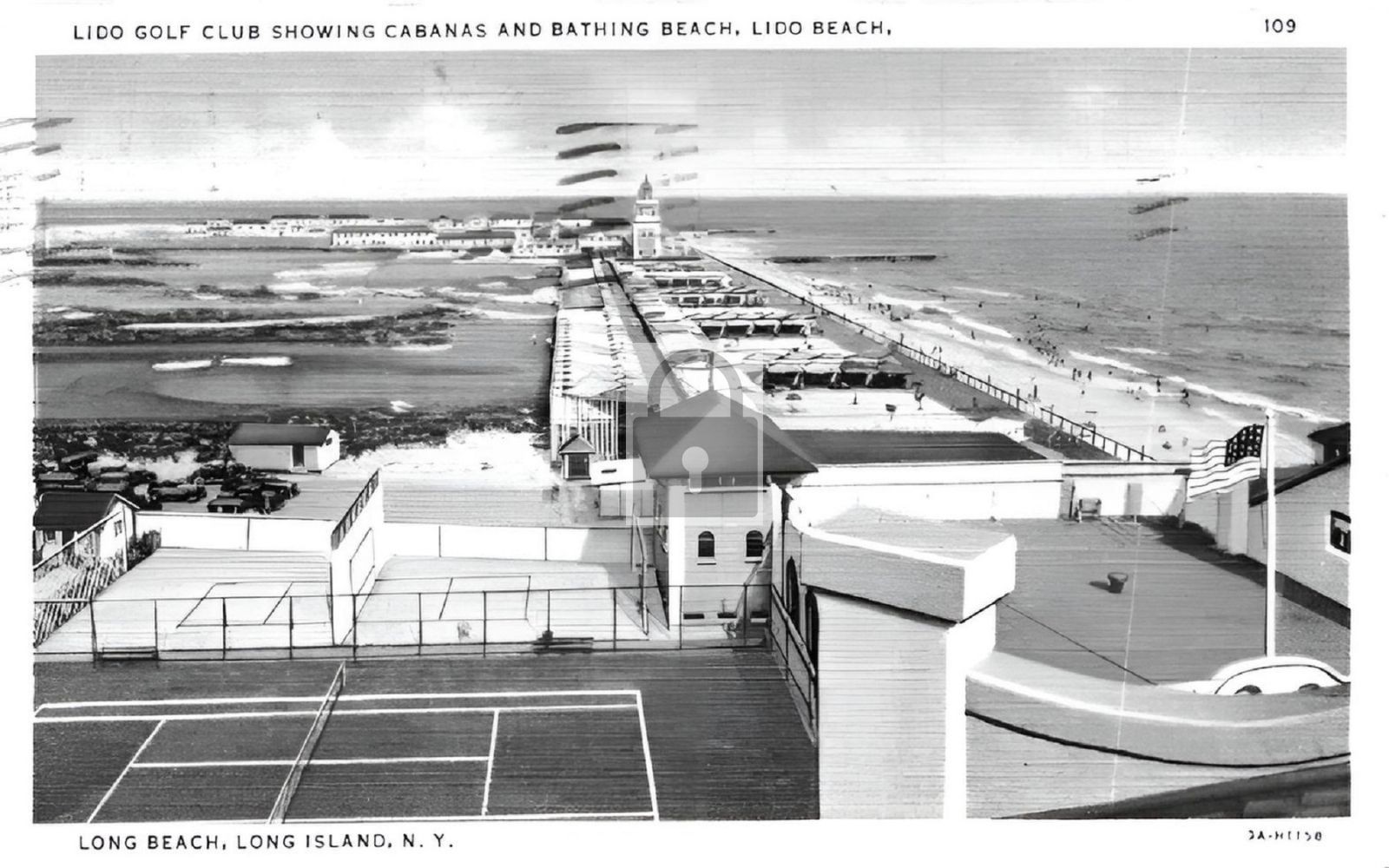
The praise for the finished product still reads as excessive, except that everyone kept saying it. Darwin, the greatest golf writer of his era, called The Lido "the finest course in the world." Claude Harmon went further, rating it the greatest ever built. In 1921, Walter Hagen grouped it with the National Golf Links and Pine Valley as the game's "Big Three," and a late-1920s survey by the Metropolitan Golfer ranked it the second-best course in the United States, behind only Pine Valley.
The original scorecard, for the golfers who like to do their homework:
| Hole | Name | Yards | Par | Hole | Name | Yards | Par | |
|---|---|---|---|---|---|---|---|---|
| 1 | First | 361 | 4 | 10 | Alps | 389 | 4 | |
| 2 | Plateau | 398 | 4 | 11 | Lagoon | 393 | 4 | |
| 3 | Eden | 160 | 3 | 12 | Punch Bowl | 412 | 4 | |
| 4 | Channel | 505 | 5 | 13 | Knoll | 283 | 4 | |
| 5 | Cape | 354 | 4 | 14 | Short | 129 | 3 | |
| 6 | Dog's Leg | 477 | 5 | 15 | Strategy | 387 | 4 | |
| 7 | Hog's Back | 455 | 5 | 16 | Redan | 189 | 3 | |
| 8 | Ocean | 220 | 3 | 17 | Long | 548 | 5 | |
| 9 | Leven | 334 | 4 | 18 | Home | 405 | 4 |
Original Lido Golf Club regular course, 6,416 yards, par 72.
Death by history
The Lido never got a fair fight. It opened in the summer of 1917, weeks after the United States entered World War I; by 1918 the club was slashing annual dues from $200 to $60 just to fill tee sheets. The Depression finished the club's finances, and in 1942 the U.S. Navy acquired the property and destroyed the course to build a naval base for the war effort. It never reopened.
Today the original site lies beneath housing tracts and schools. The only trace of what stood there is in the street signs — Fairway Road, Redan Road, Bunker Road. A Robert Trent Jones course built nearby in 1953 borrows the name and includes a replica of Macdonald's Channel hole, but the course itself was simply gone, surviving in aerial photographs, hole diagrams and the memories of people who insisted, decade after decade, that the best American course of the Golden Age was the one nobody could play.
The simulator that brought it back
Gil Hanse — who built his own Lido tribute, Ballyshear, outside Bangkok in 2022 — has called the original "the white whale" of golf architecture. Restorers had dreamed about it for decades. What finally made it possible wasn't an architect. It was a Chicago-area financial consultant and golf historian named Peter Flory, who spent three years assembling hundreds of vintage photographs, drawings and press accounts into a photorealistic 3-D model of The Lido — originally so he could play the lost course on a home golf simulator.
When Sand Valley's Michael and Chris Keiser saw Flory's model, they became convinced a faithful rebuild was possible and hired Tom Doak to do it. One obstacle remained: a video game rendering isn't a construction document. Digital mapping specialist Brian Zager spent roughly three months cracking the problem before devising a way, in September 2020, to translate the simulation's contours into a real GPS topographical map. GPS-guided bulldozers rough-shaped the site to the model's elevations; Doak and associates Brian Schneider — who logged more than 230 days on site — and Brian Slawnik then finished the golf course by hand and eye. "He gave us a landscape on which to build the golf course," Schneider said of Flory's model.
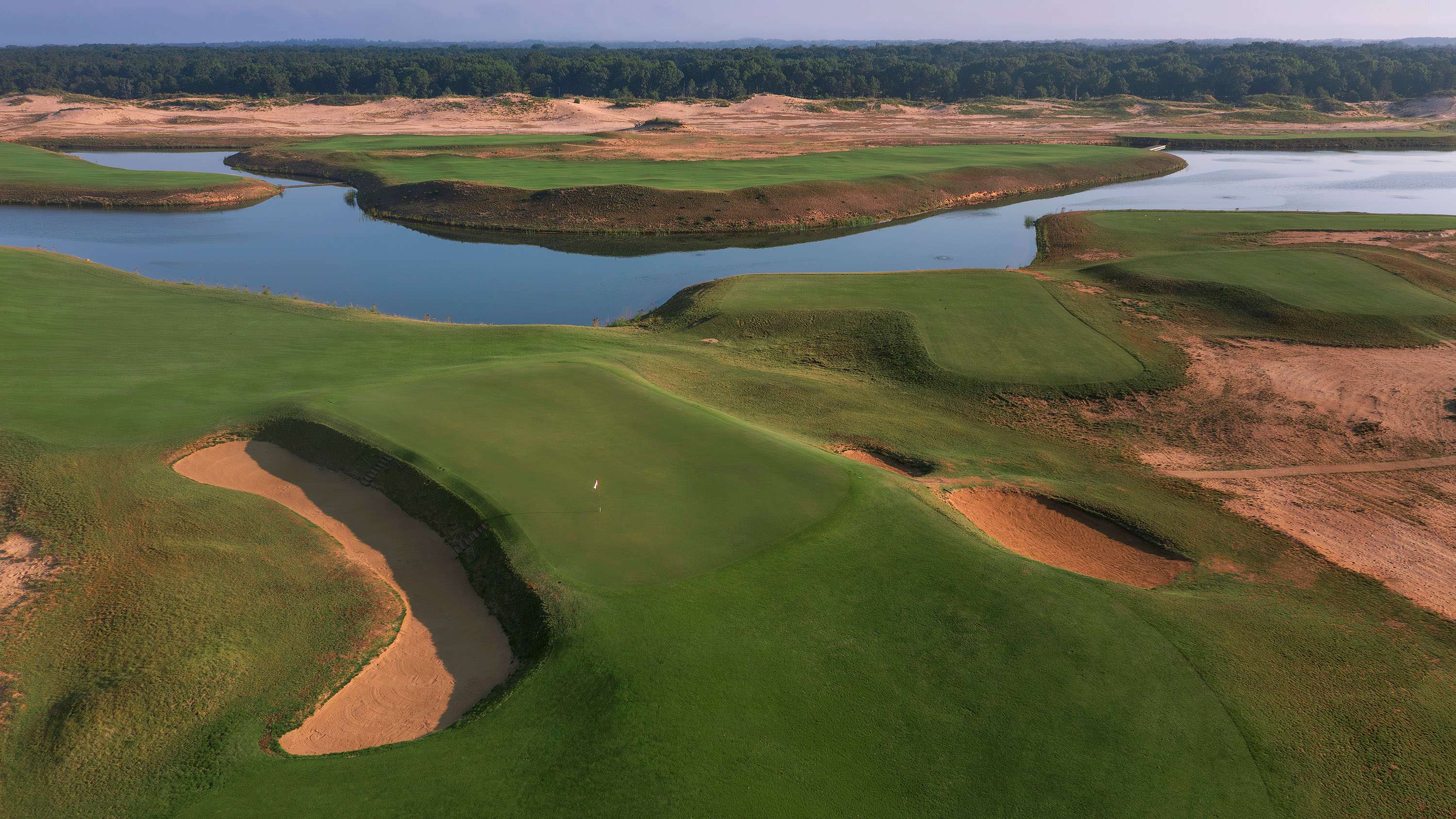
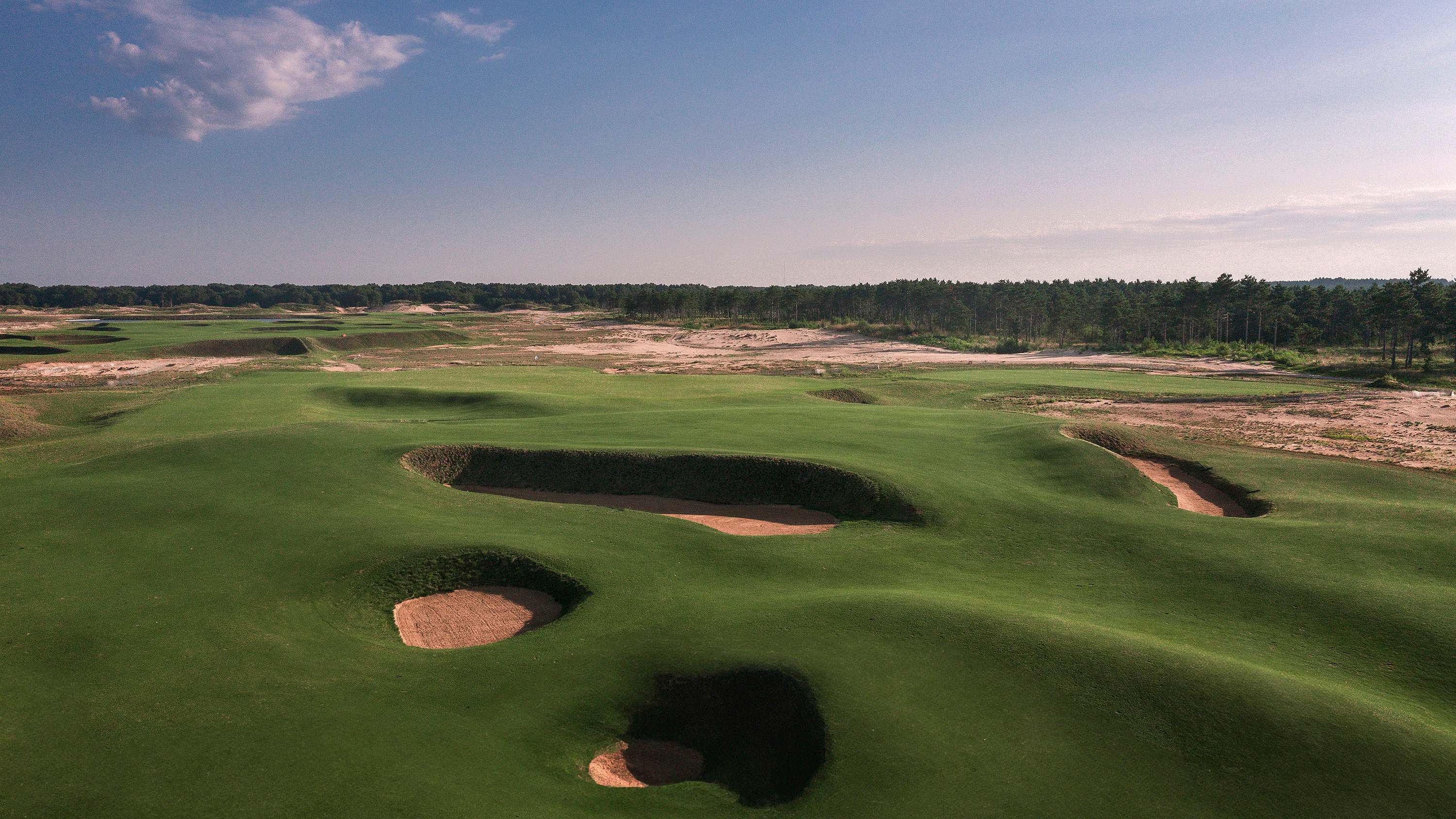
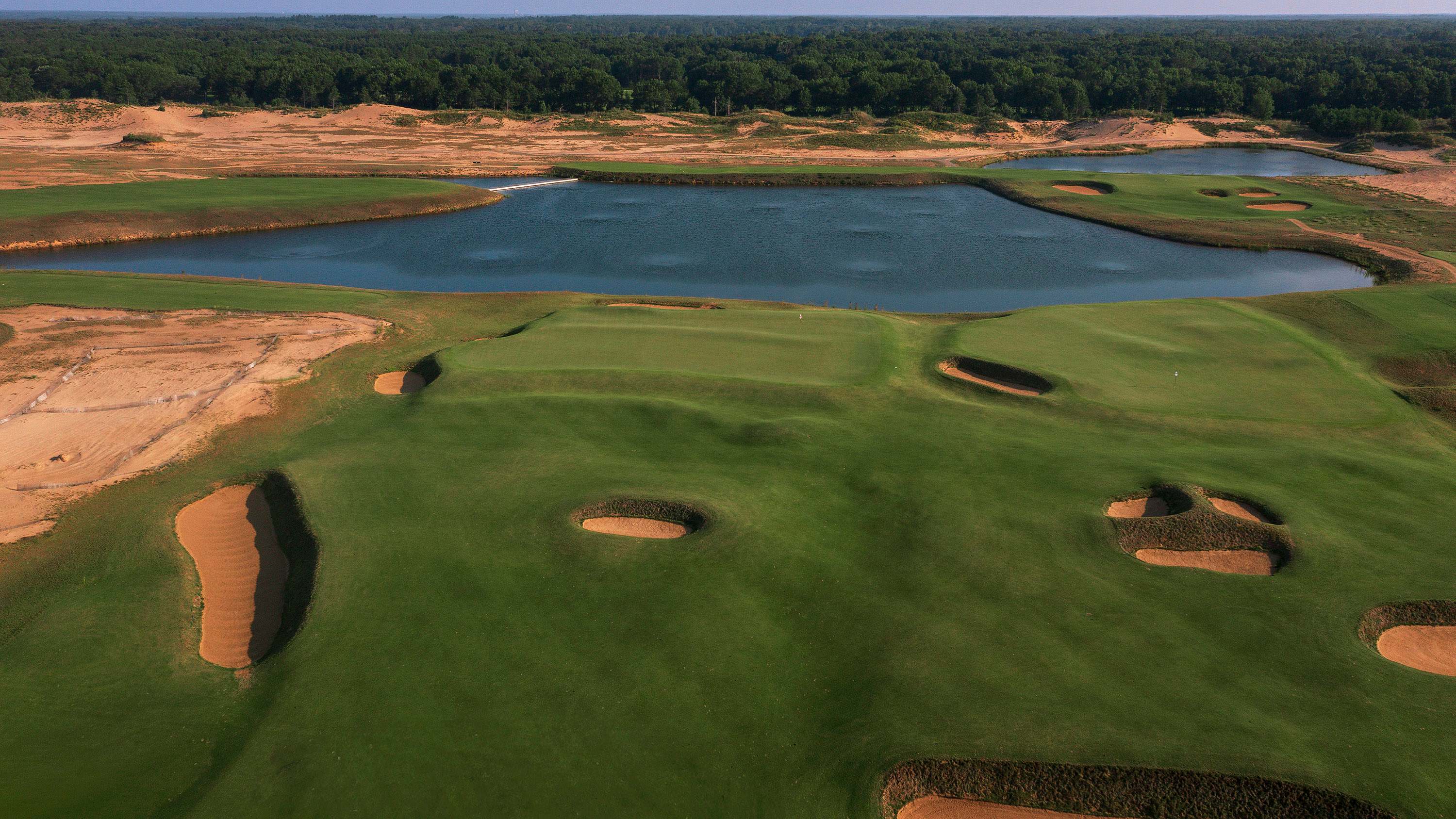
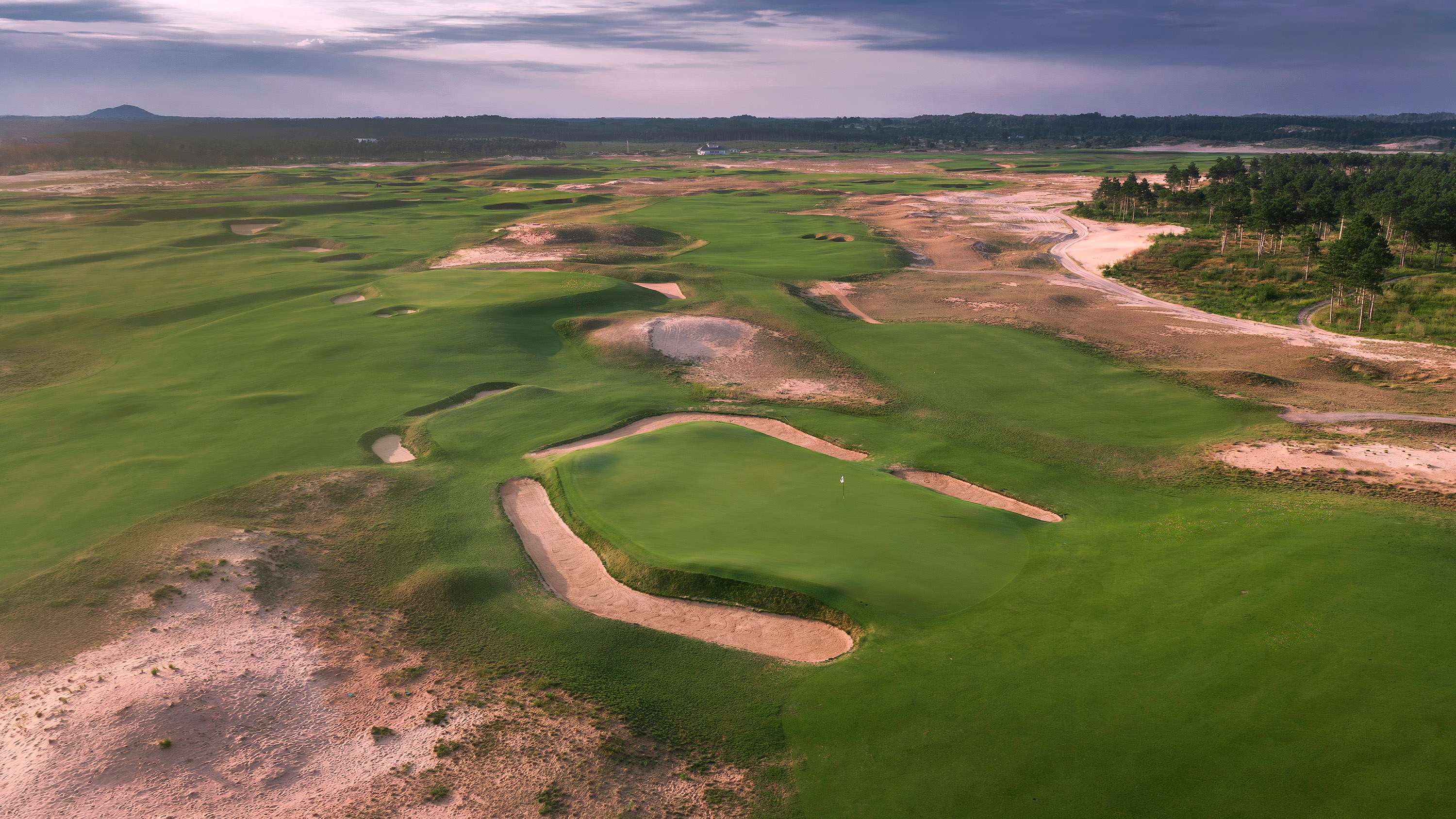
The result, opened in May 2023, is not an homage and not "inspired by." It is the Lido — hole for hole, contour for contour, with only minor concessions to drainage and some longer tees for the modern ball. The Wisconsin sand barrens gave Doak the one thing Long Island real estate never could again: room to put all of it back.
Why it's a match play course
Macdonald built The Lido for spectacle and decision-making, and no hole shows it better than the one the Mid-Am may turn on: the par-5 Channel, where an alternate island fairway sits across a water carry, daring the player to trade risk for a clear path home. Stroke play flattens that kind of architecture into card-and-pencil caution. Match play sets it loose — the safe route at the Channel concedes half a hole to an opponent willing to take on the carry, and the calculus changes with every match state and every shift of the wind that sweeps the open Sand Valley property.
It's the same story across the routing: the blind heave of the Alps, the gathering trap of the Punch Bowl, the drivable Knoll, the Redan feeding balls away from the flag. These templates were designed as arguments between two players as much as tests against par. The USGA clearly likes the fit — after this Mid-Amateur, The Lido is already booked for the 2029 U.S. Junior Amateur.
The week ahead
Stroke play runs September 26-27 across The Lido and the Sand Valley Course, the low 64 advance, and match play owns The Lido from Monday through Thursday's 36-hole final, with a likely 2027 Masters invitation waiting for the winner. The club operates privately with limited resort play, which gives this championship the same quiet magnetism as the Crump Cup at Pine Valley: for most of the 264 players in the field, the Mid-Amateur is the only way onto this golf course.
Macdonald spent his life arguing that amateur golf was the game's highest form. A hundred and nine years after his dredges started pumping, the course he considered proof of it will crown a national amateur champion — on its second life, in its second state, playing exactly the way he drew it.