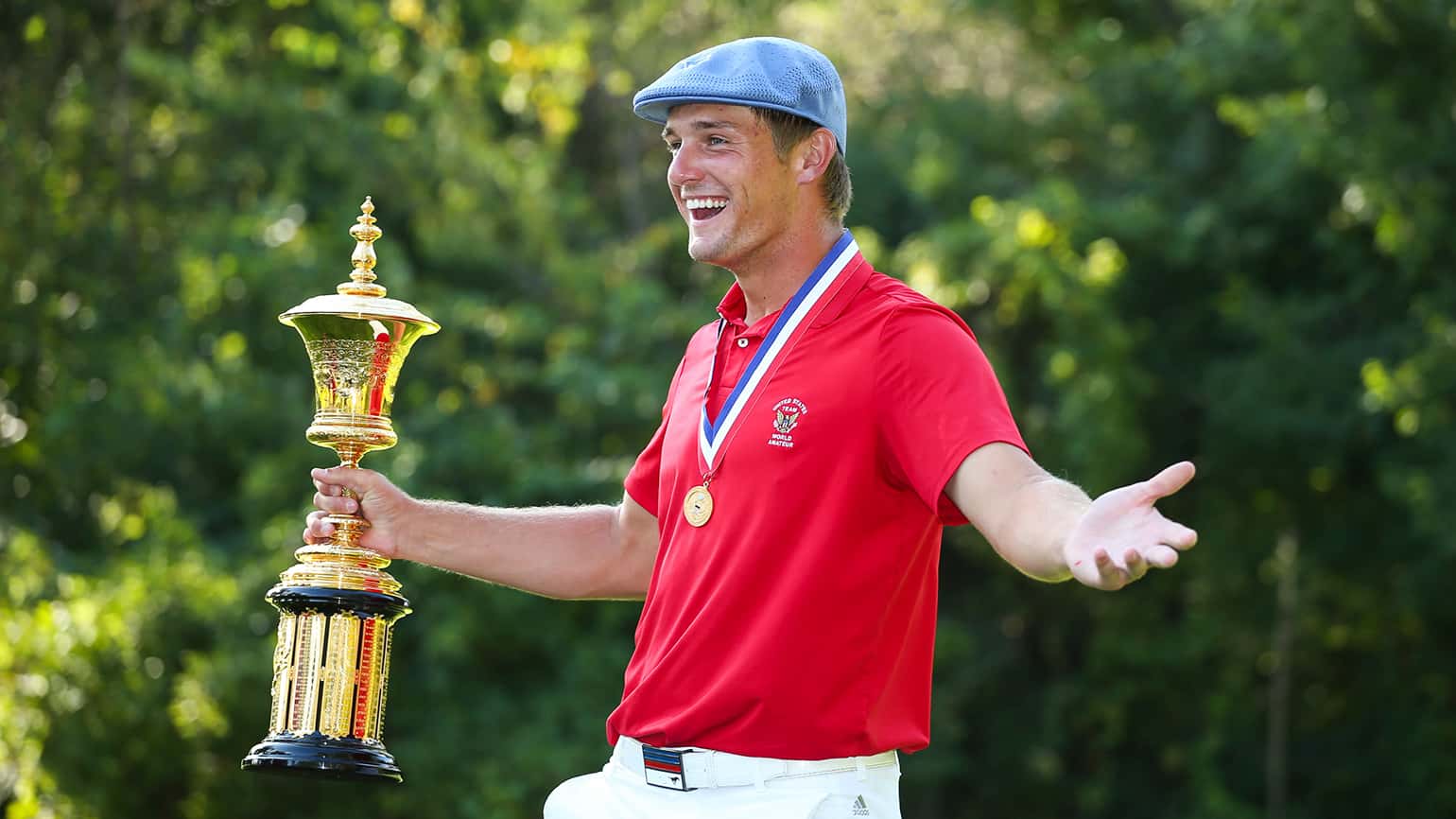
The U.S. Amateur is often called a launching pad, and the résumés of its recent winners explain why. The champion earns exemptions into the Masters, the U.S. Open, and The Open Championship — a stage that can turn a college kid into a household name almost overnight. But the Havemeyer Trophy is not a guarantee. For every Viktor Hovland or Matt Fitzpatrick who became a global star, there's a talented player still grinding on a developmental tour, or one who walked away from the game entirely.
As the 126th U.S. Amateur gets underway at Merion, here's a look at where the champions of the last decade-plus have landed.
The superstars
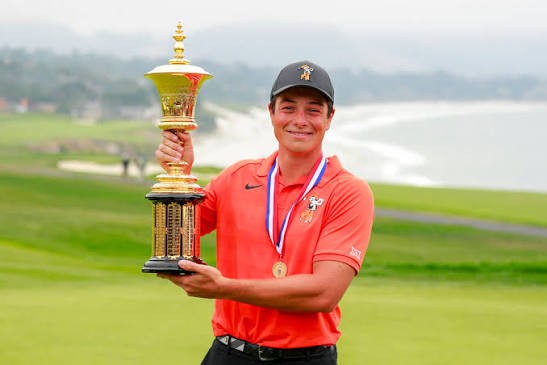
Viktor Hovland (2018, Pebble Beach) is the clearest success story of the modern era. The Oklahoma State product turned pro in 2019 and quickly became one of the best players in the world, stacking up PGA Tour wins, multiple Ryder Cup appearances for Europe, and contention at the game's biggest events. His U.S. Amateur title, won 6 and 5 over Devon Bling, launched a career that has stayed near the top of the sport.
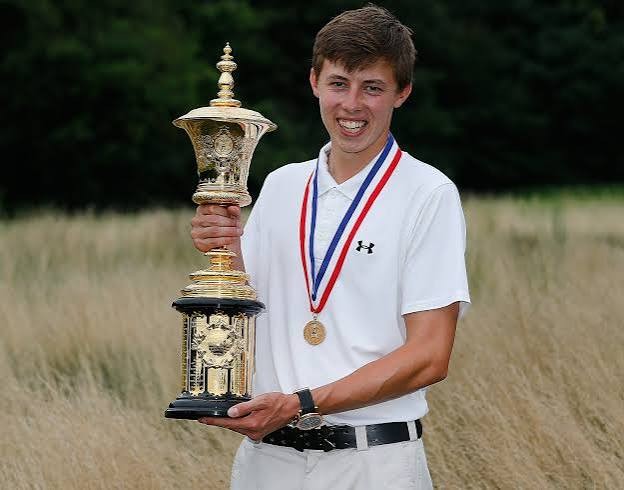
Matt Fitzpatrick (2013, The Country Club) validated his Brookline win in the best way imaginable — by returning to the same course to win the 2022 U.S. Open. The Englishman has been a fixture in the world's top ranks for years, a multiple DP World Tour and PGA Tour winner, and a stalwart of the European Ryder Cup team.
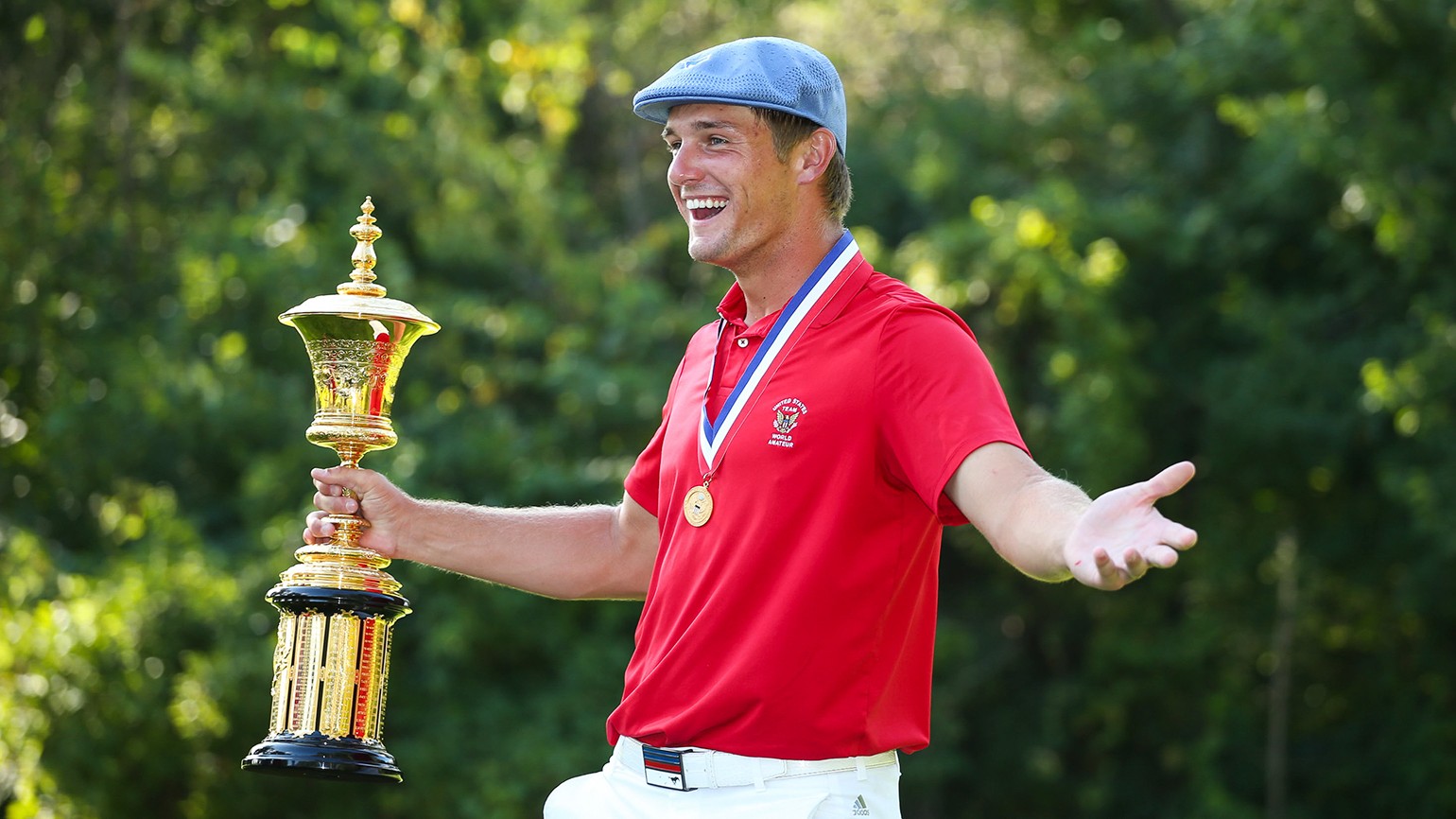
Bryson DeChambeau (2015, Olympia Fields) has become one of golf's most magnetic figures. A two-time U.S. Open champion (2020, 2024) known for his scientific approach and prodigious length, he now headlines LIV Golf and commands one of the largest audiences in the game. His 7-and-6 rout of Derek Bard hinted at the dominance to come.
Established tour pros
Nick Dunlap (2023, Cherry Hills) made history even before the ink dried on his amateur career: in January 2024, still an amateur, he won the PGA Tour's American Express — the first amateur to win on Tour in 33 years. He turned pro immediately, was named 2024 PGA Tour Rookie of the Year, and remains an exempt Tour member, though 2025 and 2026 have brought the growing pains that often follow a fast start.
Byeong Hun An (2009, Southern Hills) was the youngest-ever U.S. Amateur champion at 17. "Ben" An has since built a long, steady career across the PGA Tour and DP World Tour, contended in majors, and represented South Korea at the Olympics.
Sam Bennett (2022, The Ridgewood C.C.) parlayed his title and a memorable low-amateur run at the 2023 Masters into a professional career, competing across the PGA Tour and Korn Ferry Tour.
Still climbing
Jose Luis Ballester (2024, Hazeltine) — the Spaniard and former Arizona State standout turned pro in June 2025 and has been building his status, hovering around the fringes of the world's top 130 as he establishes himself in the paid ranks.
James Piot (2021, Oakmont) turned pro out of Michigan State and has bounced between circuits, including a stint in the LIV Golf ecosystem.
Tyler Strafaci (2020, Bandon Dunes) claimed his title during the pandemic-altered season and has since worked to establish full-time status on the game's main tours.
Andy Ogletree (2019, Pinehurst) found his footing internationally, winning on and topping the Asian Tour's International Series before earning his way into more major and world-ranking opportunities.
The journeymen
Not every champion's path runs straight to stardom, and these careers are a reminder of how thin the margins are at the top.
Peter Uihlein (2010, Chambers Bay) was the most decorated amateur of his generation — a McCormack Medal winner and world No. 1 amateur who began his pro career in Europe. Now in his mid-30s, he plays on LIV Golf and the Asian Tour, with five worldwide professional wins to his name, still searching for the breakthrough that his amateur pedigree once promised.
Doc Redman (2017, Riviera) reached as high as No. 76 in the world and had strong major moments early, including a T20 at The Open, but has more recently been competing on the Korn Ferry Tour, working to reclaim a PGA Tour card.
Curtis Luck (2016, Oakland Hills) rose to world No. 1 amateur and turned pro amid huge expectations. The Australian has since split time between the Korn Ferry Tour and the PGA Tour of Australasia, chasing a return to golf's biggest stage.
Kelly Kraft (2011, Erin Hills) — who beat Patrick Cantlay in the final, a reminder that runners-up sometimes outshine winners — carved out a professional career across the PGA and Korn Ferry Tours.
Steven Fox (2012, Cherry Hills) never reached the game's top tier and moved into other roles within golf after his competitive career.
The one who walked away
Gunn Yang (2014, Atlanta Athletic Club) is one of the more unusual stories. The Korean-American beat future PGA Tour winner Corey Conners in the final, but injuries and struggles derailed his momentum. He stepped away from professional golf entirely for roughly five years before mounting a comeback on the developmental circuits of PGA Tour Americas.
What it tells us
The pattern is clear: the U.S. Amateur reliably identifies elite talent, but it can't promise what a player does with it. The exemptions open the door; everything after is up to the player. As this year's field of 312 tees it up at Merion, the winner will join this lineage — and the question of "where will they be in ten years?" starts the moment the final putt drops.
Follow every round of the 126th U.S. Amateur on our live coverage hub, with scoring, the full match-play bracket, and recaps all week.