Most range sessions follow the same script. Grab a 7-iron, pick a flag, hit 20 balls at it and leave feeling good about the last three. The problem is that no tournament round looks like that. On the course you never hit the same shot twice in a row. You get one ball, one yardage and one chance, and the next shot asks for something completely different.
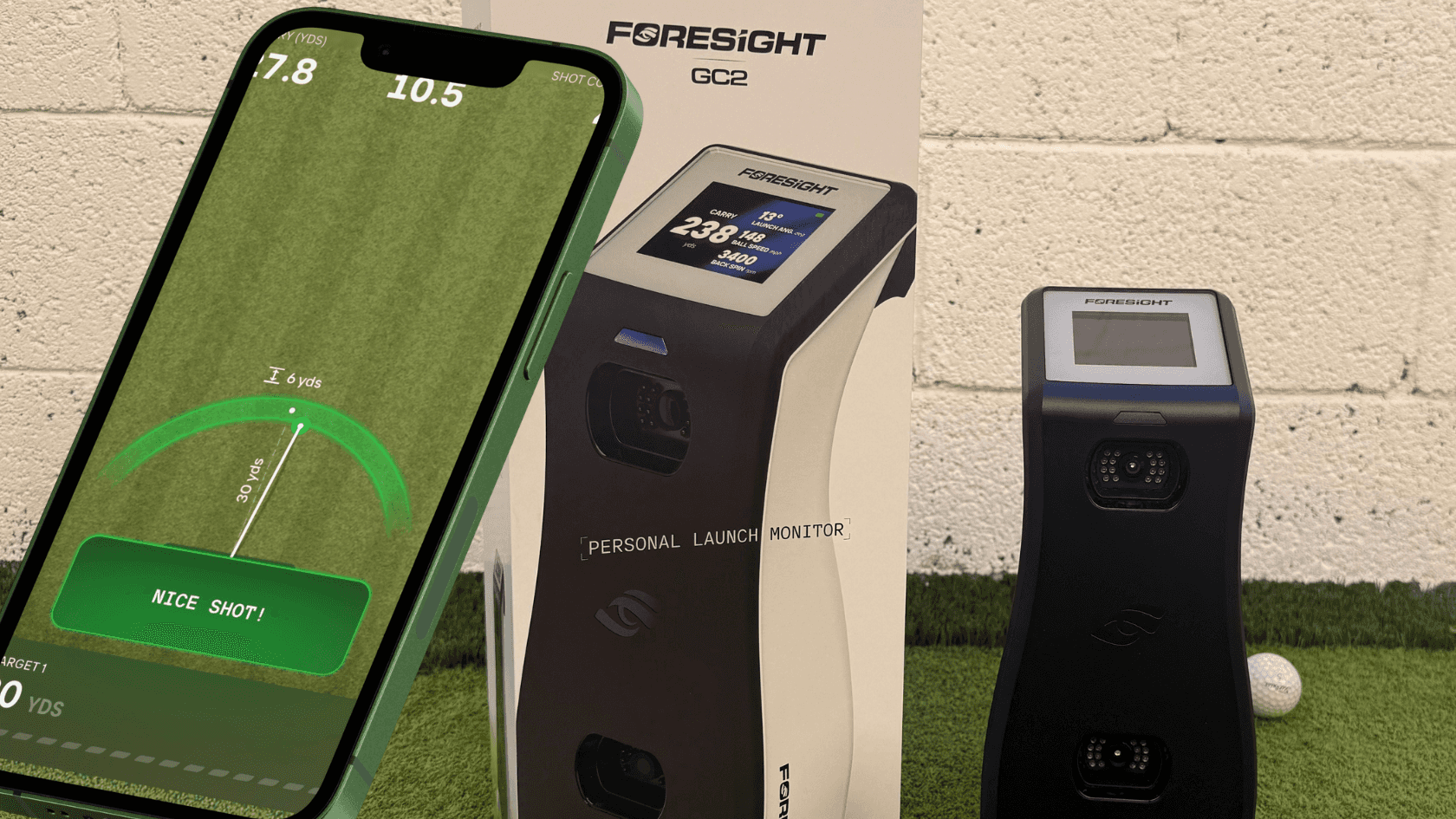
The Ladder Drill in the Foresight app is built to close that gap. Paired with a launch monitor like the new Foresight GC2, it turns a bucket of balls into a scored test of the skill that decides most rounds: carrying the ball the number you intended.
How the Ladder Drill works
The Ladder Drill lives in the Drill Library inside the Foresight app's Training Facility, which also includes Quick Range and Target Practice. It runs on iOS and Android and works with Foresight and Bushnell launch monitors.
The setup is simple. The app gives you a series of carry-distance targets, the rungs, and you climb them one at a time. Land a shot in the window and you move up a rung. Miss, and you stay put until you hit it.
Three settings decide how hard the drill is:
Difficulty: levels run from Easy to Tour Pro. Each step up shrinks the target window, so a shot that counts on Easy can be a miss on Tour Pro.
Pressure Mode: an optional setting where a miss drops you back down the ladder instead of letting you retry the same rung. One loose swing near the top can cost you several rungs.
Custom drills: you can build and save your own ladders with your own yardages and spacing, so the drill fits your bag and your weaknesses.
After each shot, audio feedback tells you whether you hit the target, so you can keep your eyes on the ball instead of a screen. At the end, a session report shows total shots, success rate and your miss tendencies.
Why carry is the only number that counts
The Ladder Drill scores carry distance, not total distance. Bounce and rollout don't help you.
That matters more than it sounds. On a range, a thin wedge that skips up to the flag looks like a good shot. On a firm tournament green with a pin cut just over a bunker, the same shot finishes in the sand. The Ladder Drill grades that thin wedge as a miss, which is exactly what it would be in competition.
It's also why a camera-based launch monitor fits the drill so well. The GC2 photographs the ball at impact and measures ball speed, launch and spin directly to calculate carry. When the drill draws a line between a make and a miss in a window only a few yards wide, the number deciding it needs to be one you trust.
What it actually does for your game
1. It teaches the yardages between your clubs
Most amateurs know their stock numbers. Ask a good player how far they carry a full pitching wedge and you'll get an answer. Ask about 87 yards and you'll usually get a shrug.
Tournament golf is full of 87-yard shots. Layups, short par 4s, recovery shots and par 5 approaches all leave in-between distances that require a partial swing, a choke-down or a different trajectory. Laddering through 5- or 10-yard steps forces you to build and test those shots on purpose instead of hoping you find them on the course.
2. Every shot is a new problem
Motor-learning research has studied this for decades under the name contextual interference. Practice that changes the task from rep to rep feels harder and messier in the moment than hitting the same shot over and over. It tends to produce skills that hold up better later, when it matters.
The Ladder Drill builds that in. Every rung is a new distance, so you have to reset your target, your swing length and sometimes your club on every ball. That's much closer to how a round actually feels.
3. It adds consequences
A range ball costs nothing. A shot on the 16th hole of a qualifier costs a lot. Pressure Mode is the app's way of putting a little of that weight back into practice.
When a miss sends you back down the ladder, the shot at the top rung starts to feel different. Your grip pressure creeps up and you start thinking about the result. That's the feeling you need to learn to play through, and it's far better to meet it on a Tuesday range session than on the back nine of a club championship.
4. It shows you how you miss
The session report doesn't just say you hit 60 percent of your targets. It shows how you missed the other 40, and each kind of miss points to a different fix:
Consistently short: your partial swings aren't producing enough speed, or you're decelerating through the ball.
Consistently long: too much club or too long a motion for the number. That's common with players who only practice full swings.
Left and right: a dispersion problem, not a distance one. That calls for different work entirely.
A player who misses short at 70 yards and long at 110 has two separate problems. A bucket of balls hit at one flag would never have shown either.
5. It gives you a score to beat
Because the drill is scored, it's repeatable. Run the same ladder at the same difficulty every week and you have a real benchmark instead of a vague sense of whether your wedges are getting better. When your success rate climbs, move up a difficulty level or turn on Pressure Mode.
Five ladders to try
The app's custom drill builder lets you save these, so you can repeat them exactly.
| Ladder | Range | Steps | What it trains |
|---|---|---|---|
| Wedge ladder | 40–100 yards | 10 yards | Partial-swing distance control, the scoring zone |
| Fine wedge ladder | 60–90 yards | 5 yards | Precision once the wedge ladder gets easy |
| Iron ladder | 120–180 yards | 10 yards | Club selection and full-swing carry gaps |
| Up and down | 50 → 100 → 50 yards | 10 yards | Reversing direction, the way Arizona State coach Thomas Sutton runs his ladder |
| Tournament ladder | Your most common approach yardages | Varies | The exact shots your home course or next event will ask for |
One useful variation comes from PGA Tour winner Nick Dunlap, who has described hitting the same 10-yard increments with two or three different clubs. A knockdown 8-iron and a full pitching wedge can both carry 120 yards. Knowing both gives you an answer when the wind is up or the pin is tucked.
Building a session
Warm up in Quick Range. Hit balls until your contact settles, and confirm the launch monitor is aligned to your target line.
Set normalization if you're at a range. The Foresight app can adjust your numbers for range or limited-flight balls and for elevation and weather. Range balls fly differently from your gamer, and normalization keeps your carry numbers honest.
Pick one ladder that targets a weakness. Don't start with your strength. If 70-yard shots scare you, build the ladder around them.
Start at a level you can complete. The goal is to finish the ladder with a respectable success rate, not to fail at Tour Pro on day one.
Go through your full routine on every ball. Pick a target, take a practice swing and commit. Raking ball after ball defeats the purpose.
Read the report before you leave. Write down your success rate and miss pattern. That's next week's starting point.
Level up on purpose. When you're consistently clearing a ladder, tighten the window or turn on Pressure Mode. Don't do both at once.
The bigger picture
Golf's strokes-gained era, built on Columbia professor Mark Broadie's research in Every Shot Counts, changed how players think about where scores come from. Approach play separates good players from great ones more than most golfers assume. Even scratch players rarely know their in-between numbers as precisely as their scoring requires.
For a long time, scored, measured practice like this needed a tour-level launch monitor and a coach with a clipboard. The Ladder Drill builds that structure into the Foresight app on your phone, and the GC2 brings Foresight's camera-measured carry numbers to $1,699. That puts it within reach of far more competitive amateurs than ever before.
The drill won't swing the club for you. But it will show you, in numbers, whether the shot you think you own actually holds up. That's what you need to know before your next tournament.
New to the drill? Start with our walkthrough, Foresight Ladder Drill: Stop Guessing Your Carry Yardages. Our full hands-on review of the Foresight GC2 is coming soon.