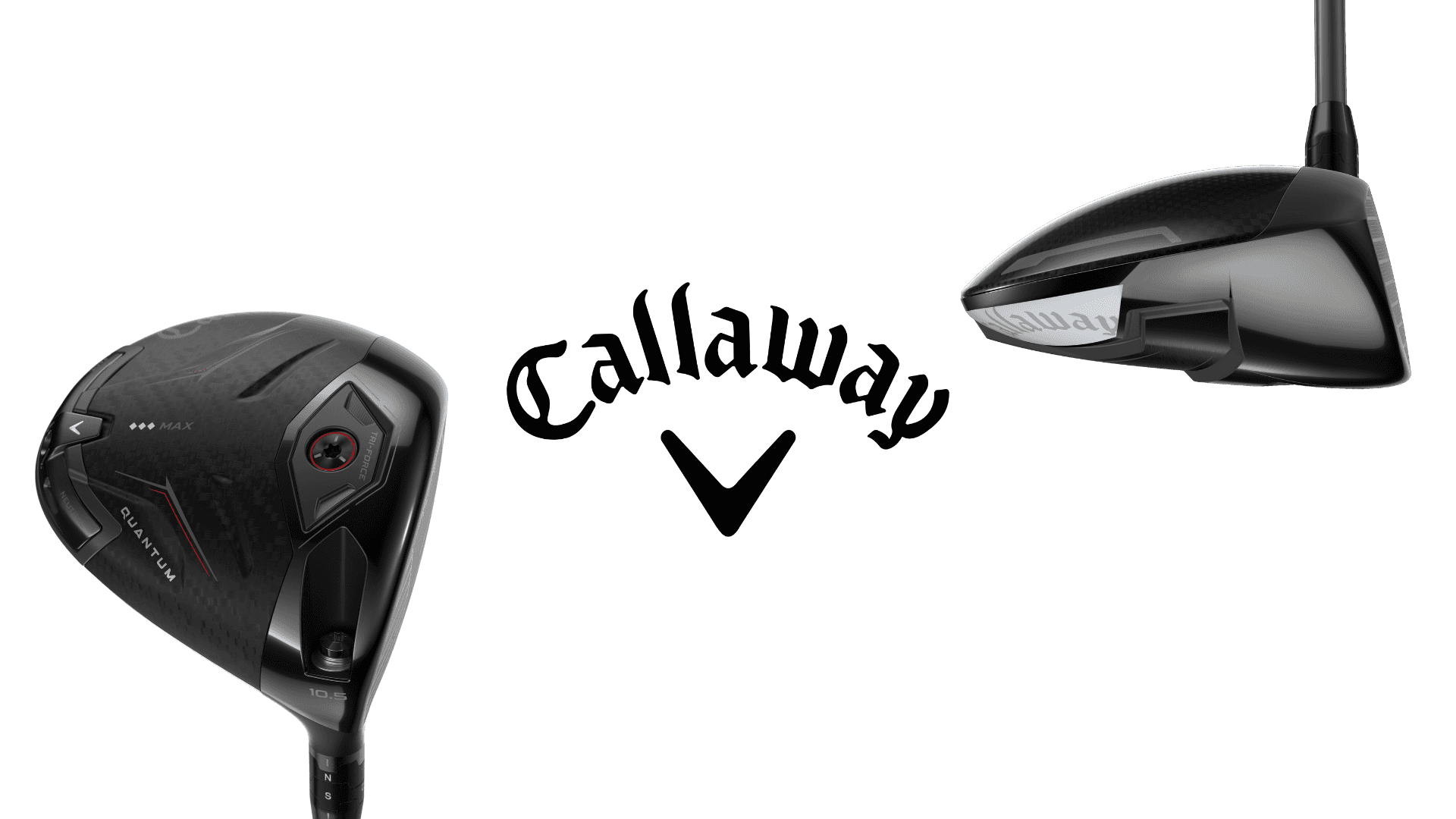
For about two decades, the premium driver in your bag has been built roughly the same way: a titanium body cast overseas, a face welded onto it, and engineers squeezing out gains by moving a few grams around inside a box the USGA and R&A drew a long time ago.
Callaway thinks the next real jump in performance won't come from refining that process. It will come from replacing it.
On Friday, Callaway Golf Company announced a $15 million investment in an advanced titanium 3D printing facility in Fort Worth, Texas, built next door to its North America Distribution Center. The plant is expected to be up and running in mid-2027 and to begin supplying part of Callaway's U.S. product needs in 2028, starting with custom titanium products.
On its own, $15 million is a modest number for a company with more than $2 billion in annual revenue. What makes the announcement worth paying attention to is what Callaway said around it, and what it signals about where club design is heading.
What Callaway is actually doing
This isn't a cold start. Callaway says it has been researching additive manufacturing for roughly seven years and has been printing titanium prototypes and custom models in-house since late 2022. The Fort Worth facility turns that lab capability into dedicated U.S. production.
The more interesting details came on the company's third-quarter earnings call the same morning:
- Printed parts are already on tour. Callaway disclosed that it has had 3D-printed parts in play on professional tours that it never announced publicly.
- Retail product is coming in 2027. The company said its 2027 line will include product that uses 3D printing, well before Fort Worth reaches production in 2028.
- The supply chain is the story, too. Management noted that essentially all premium drivers are titanium heads made through centrifugal casting overseas, that no scaled U.S. vendor has made titanium clubs in years, and that, to its knowledge, there is no scaled capacity for 3D printing titanium clubs to its specifications anywhere outside China. Fort Worth parts will carry a U.S. country of origin.
CEO Chip Brewer was blunt about the ambition, calling 3D printing transformative and saying Callaway believes it knows more about the technology than its peers. "We believe this technology is going to be transformative for the club category," he told analysts.
Fort Worth also follows a familiar Callaway playbook. The company has put more than $100 million into its golf ball plant in Chicopee, Massachusetts, over the past several years. Now freshly refocused as a pure golf equipment company after selling Jack Wolfskin and a majority stake in Topgolf, Callaway is clearly choosing to own the manufacturing that it thinks will differentiate its products.
Why printing titanium is different from casting it
To understand why this matters, it helps to know what conventional manufacturing can't do.
A modern titanium driver is typically a cast body with a separately made face welded on. That process works, but it imposes constraints. Casting limits how thin and how intricate internal walls can be. The weld zone around the perimeter of the face limits how precisely engineers can vary face thickness out toward the edges, which is exactly where most amateurs miss the ball. And every internal rib, pocket or brace has to be something a mold can actually produce.
Printing builds the part layer by layer from titanium powder, which changes the rules of what's possible:
- Internal structures casting can't make. Lattices, honeycomb-like supports and hollow channels can stiffen a head where it needs stiffness and strip weight everywhere else.
- Fewer pieces, fewer seams. A body and face can potentially be printed as one piece, eliminating weld lines and the face-thickness compromises that come with them.
- More discretionary mass. Every gram saved in the structure is a gram engineers can put where they want it to tune center of gravity, launch, spin and stability on mishits.
That last point is the one that matters most for players. Callaway isn't promising more ball speed than the rules allow. It's promising more freedom to decide where the weight goes and how the face behaves across its whole surface.
The R&D speed advantage is already real
Before printing ever reaches retail, it has already changed how fast Callaway can iterate. During development of the 2025 Elyte drivers, the company spent about $2 million on an in-house printing setup that cut prototype turnaround from roughly three months to about five days, and it ran more than 75 prototype variants through testing. A traditional development cycle typically allows three or four rounds.
That's the quiet benefit of the printer in the R&D building: more swings at the problem, faster. Fort Worth extends it from testing into products people can buy.
Callaway isn't first, and that's worth saying
Callaway's language about leading the industry is a stretch on one front: it isn't the first brand to sell a printed club.
Cobra has been the pioneer. It brought the first 3D-printed putter to retail in 2020 using HP's Metal Jet process, then launched LIMIT3D in 2024, a fully printed 316L stainless iron with an internal lattice, sold in a limited run of 500 sets at $3,000. In 2025, Cobra put printed irons into its standard retail line with the 3DP Tour. On the driver side, direct-to-consumer brand Sub 70 has sold what is believed to be the first commercially available printed driver, the TAIII 3D, a one-piece printed titanium head that its designer says removes the weld line and opens up new face designs.
What's different about Callaway's bet is the combination: titanium rather than steel, the woods category where titanium matters most, a company with Callaway's tour presence and fitting network, and production capacity it owns on U.S. soil rather than buys from a vendor. If 3D printing is going to move from limited-edition curiosity to something on every fitting cart, a move like this is how it happens.
Why this matters for competitive golfers
1. Custom comes first, and that favors serious players. Callaway says Fort Worth will start with custom titanium products. That's the corner of the market where competitive amateurs already live: custom builds, specific lofts and weights, tour-preferred head shapes. Printing makes small runs and specialized variants far more practical than retooling a casting line. Think of the gap-filling clubs better players go hunting for, like low-spin titanium fairway woods, mini drivers and compact tour heads, becoming easier to build in more configurations.
2. Tour-to-retail could get shorter. If a titanium prototype can be printed and on a launch monitor in days, the cycle from a tour player's feedback to a finished head shrinks. Callaway already confirmed printed parts are being used on tour. Competitive amateurs who follow what's coming off the tour van should expect that pipeline to move faster.
3. Forgiveness without the look of forgiveness. Better players have always paid a forgiveness tax for wanting a compact, workable head. Freeing up mass through printed internal structures is one of the clearest ways to give a smaller, more traditional head higher stability on mishits. Cobra used exactly that logic with LIMIT3D irons. Applied to titanium woods, that could matter a lot for players who want to shape tee shots under pressure without giving up much when they miss the center.
4. Consistency across the face. The weld zone limits how carefully engineers can tune the face near the edges. If printing allows more precise variable thickness out toward the perimeter, the payoff isn't a bigger max ball speed. It's less speed loss on heel and toe strikes, and tighter dispersion. Over 72 holes, that's the kind of improvement that shows up on a scorecard.
5. The rules don't change. A printed head still has to fit inside the same limits on size, face flexibility and spring-like effect as any other club. For players entering USGA championships, state amateurs and most elite amateur events, new driver heads will still need to appear on the USGA's conforming list. Printing changes how engineers work inside the box, not the size of the box.
What to watch, and the reasons for caution
It's worth keeping expectations calibrated. The facility isn't operational until mid-2027 and will only support "a portion" of U.S. product needs in 2028. Printed titanium is still more expensive and slower to make than cast titanium, and Cobra's early printed irons were priced like collector's items. Callaway's own forward-looking statements flag uncertainty around the facility's completion and the ramp to production quantities.
There are also performance questions only testing will answer. Does a printed titanium face hold up to thousands of 115-plus mph impacts the same way a forged face does? Do the gains show up on a launch monitor for a scratch player, or mostly in design flexibility that's hard to feel? And will printed product carry a premium price that puts it out of reach for the junior and college players who'd benefit most from a better fit?
The 2027 product line will be the first real answer. When Callaway's first printed titanium heads reach the market, we'll put them on a launch monitor alongside the cast versions they're meant to replace and report what the numbers actually say.
The bottom line
For years, club design improvements have come in small increments because everyone was working with the same manufacturing toolkit inside the same set of rules. Callaway is betting that a different toolkit unlocks bigger gains, and it's willing to build the factory to prove it.
For competitive golfers, the near-term impact is modest. The long-term one could be significant: more custom options, faster tour-to-retail cycles, and heads that let better players keep the look and workability they want while losing less on the misses. Brewer summed up the thinking in the announcement: "Nobody can create the next generation of performance by relying exclusively on yesterday's methods."
Whether that holds up, we'll find out in 2027.