There is a big difference between knowing your score and understanding why you shot it.
As I get ready for the Idaho State Mid-Am, I wanted more than a basic post-round reaction. I wanted to know which parts of my game were holding up, which areas were costing me shots, and where my practice time should go before tournament golf starts to feel very real again.
I played Ridgecrest Golf Club’s Championship Course from the Gold tees on July 7. The setup measured 5,670 yards, with 2,901 yards on the front nine and 2,769 yards on the back.
I shot 82.
On its own, that number gives a general idea of the round. But after logging my shots in StrackaStats, the recap told a much more useful story.
The Round by the Numbers
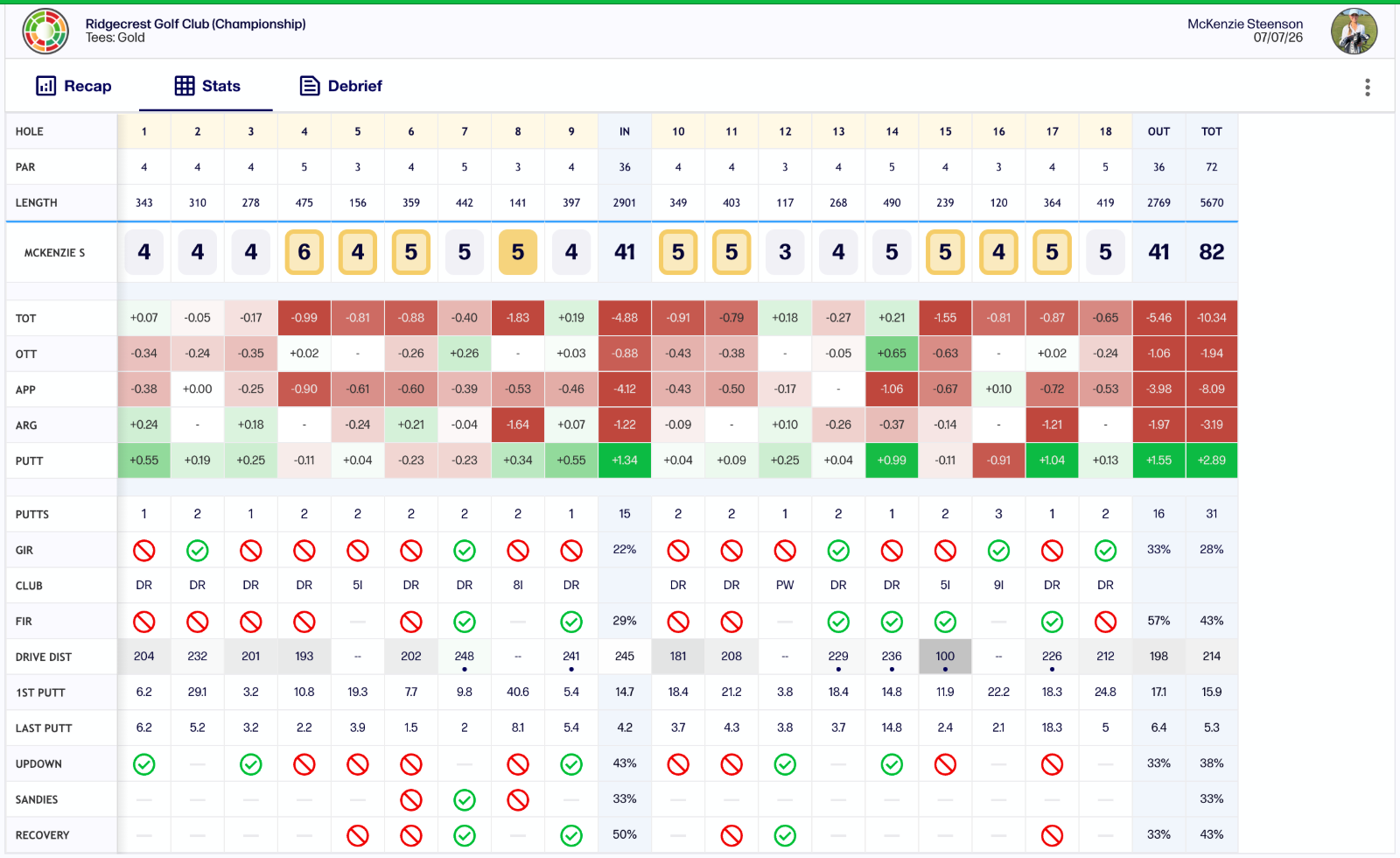
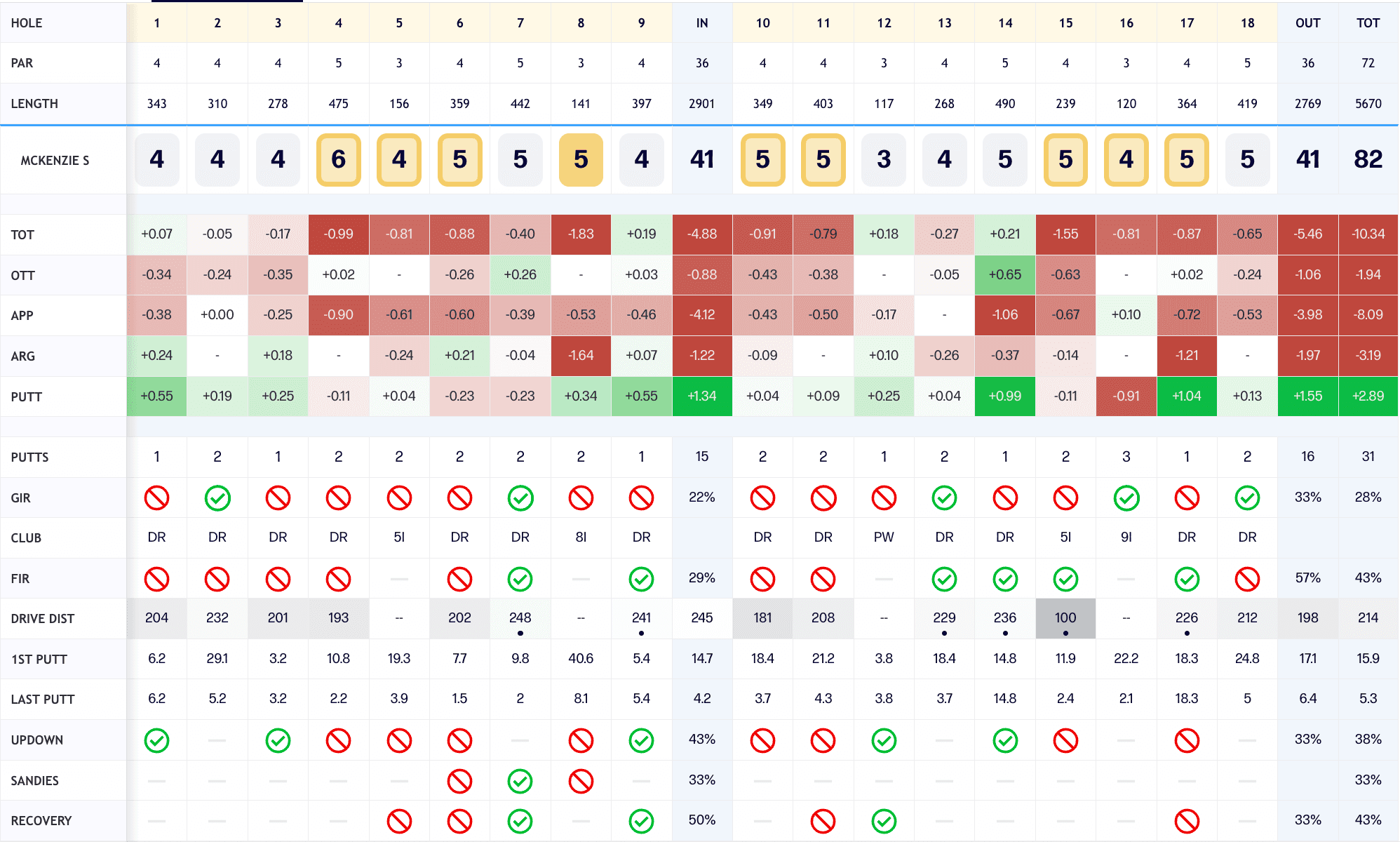
According to the StrackaStats report, I lost 10.34 total strokes during the round. The breakdown was clear:
I lost 1.94 strokes off the tee, 8.09 strokes on approach shots, and 3.19 strokes around the green. The bright spot was putting, where I gained 2.89 strokes.
At first glance, the biggest problem looks obvious: approach play. Losing more than eight strokes into the greens is hard to ignore. But the hole overviews in the StrackaStats recap gave that number more context.
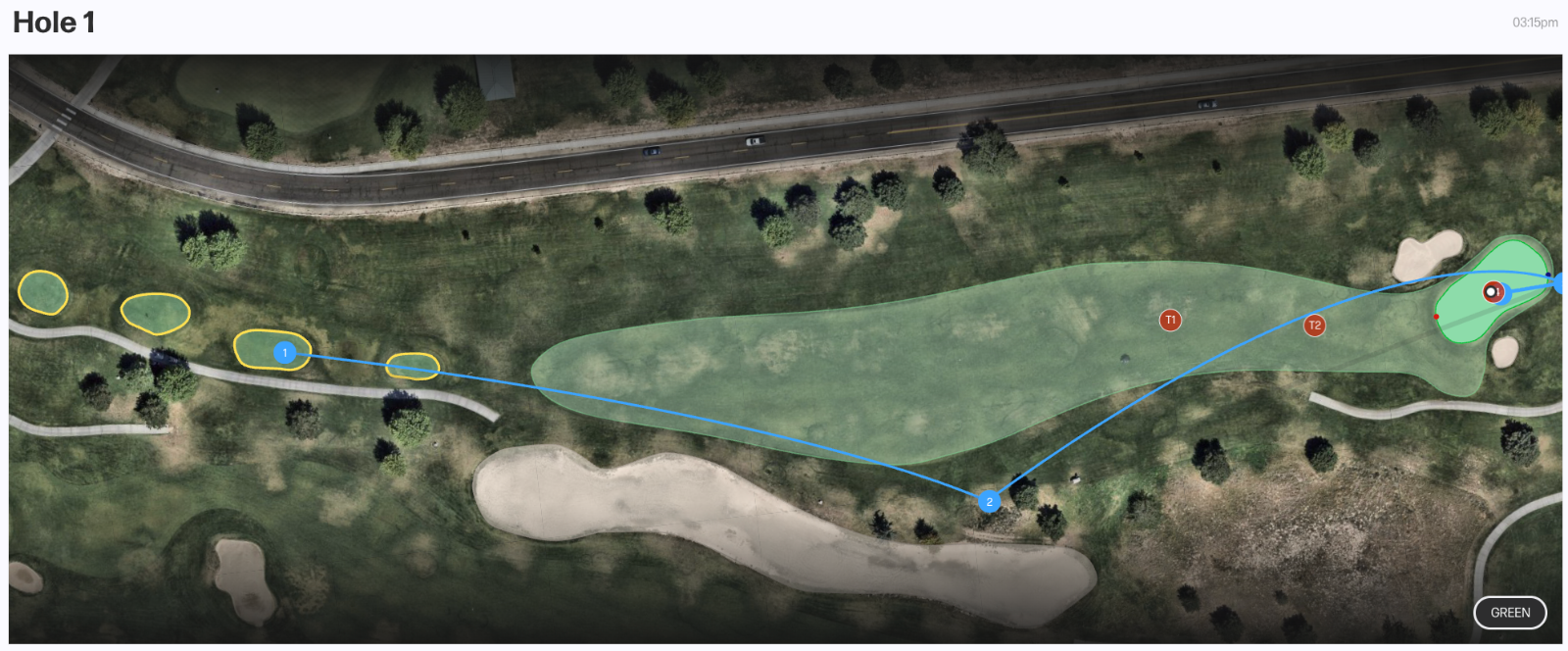
On the front nine especially, I leaked almost every drive wide right of the fairway. I was also coming up much shorter than my typical driving distance. That combination left me with longer approach shots, often from the rough, with longer clubs in my hands.
That matters.
A long approach from the fairway is already difficult. A long approach from thick grass, after a shorter-than-normal drive, is even harder. The StrackaStats numbers showed where I lost shots, but the hole overviews helped me understand why.
My approach game was poor, but my tee shots were a major reason those approaches became so difficult.
Tee Shots Created a Chain Reaction
The off-the-tee number showed 1.94 strokes lost on par 4s and par 5s. That does not look nearly as damaging as the approach number, but in this round, the tee ball had a much bigger effect than the category total suggests.
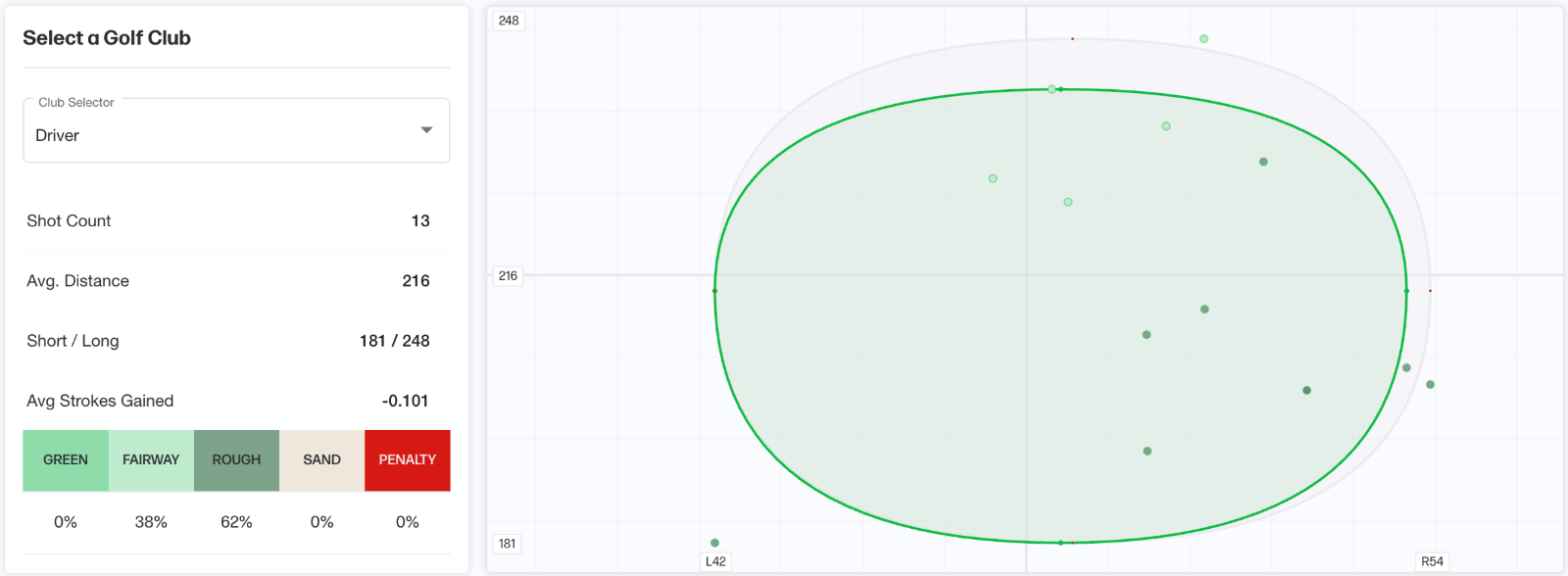
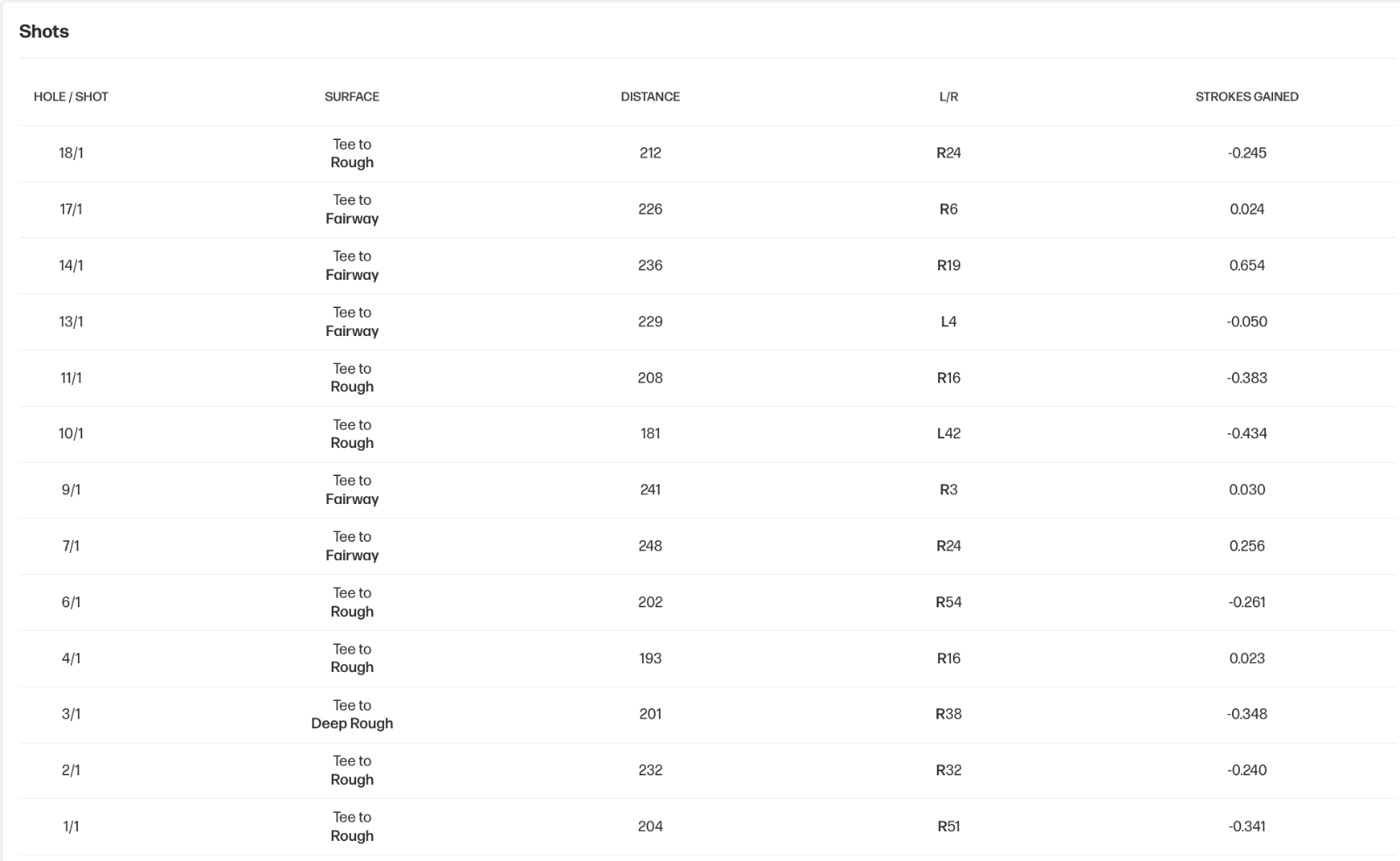
When I missed right and lost distance off the tee, I was not just missing fairways. I was changing the entire hole. You can see in the chart above, I hit a few good drivers on the back 9, getting into the 220-240 yard range, but the dispersion overall really hurt me.
Instead of having a comfortable approach from the fairway, I was often left with a longer shot from the rough. That lowered my chances of hitting greens in regulation and put more pressure on my short game.
That was one of the biggest takeaways from using StrackaStats. Better tee shots would not just improve my driving stats. They would also make the next shot easier and likely improve my approach numbers.
For the Idaho State Mid-Am, that is important. I do not need to overpower the course. I need to put myself in better positions.
Approach Play Was Still the Biggest Leak
Even with the tee-shot context, the approach number still stands out.
I lost 8.09 strokes on approach shots, with the biggest issue coming from 131 to 150 yards, where I lost 2.43 strokes. That is a range where I need to be much more reliable. From that distance, I should be giving myself chances to hit greens, control proximity, and make routine pars.
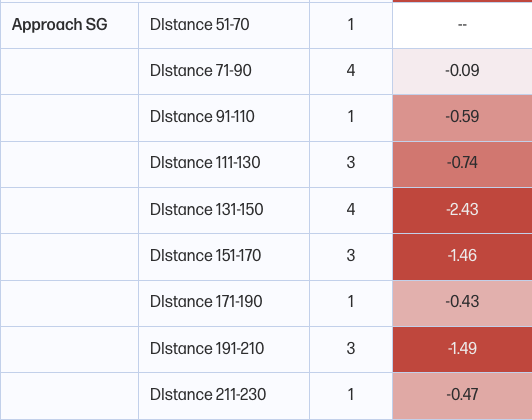
I also lost 1.49 strokes from 191 to 210 yards. Some of that connects directly to the tee-shot issues. When drives came up short or finished in the rough, I was left with longer approach shots that were harder to control.
My average proximity to the hole was 52 feet, 1 inch, which tells the story pretty well. Even when I was getting the ball near the green, I was not consistently putting myself in scoring position.
That has to improve before tournament play. I do not need perfect iron shots, but I need more predictable misses and more greens hit from my scoring ranges.
The Wedge Game Was Encouraging
Not everything in the approach category was negative.
StrackaStats showed that my approach shots from 51 to 70 yards were neutral in strokes gained, and my shots from 71 to 90 yards were only slightly negative at -0.09.
On hole 18, I pulled my 2nd shot pretty aggressively, about 40 yards offline, but my approach shots with my wedges saved me. This shot was 74 yards, slightly downwind, and I was able to leave myself with a 20-footer for birdie. I made par, and considering how much I missed my first two shots on this hole by, I was happy with par.
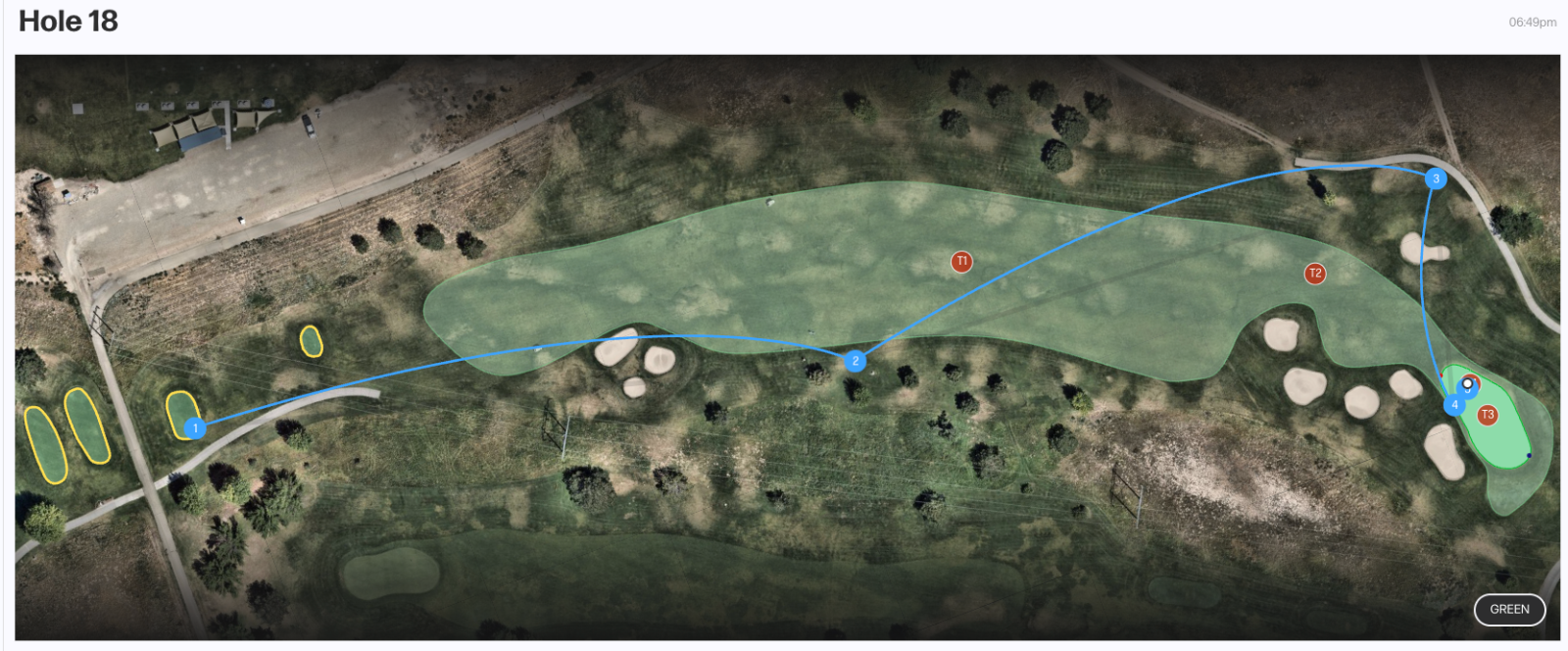
That is encouraging because those are important scoring distances for me. If I am laying up, recovering from position, or attacking shorter holes, I need those wedge numbers to hold up.
The takeaway is that I do not need to rebuild everything. My shorter wedge game is in a decent place. The bigger issue is getting myself into better positions off the tee and improving full-swing approach shots, especially from 130 to 150 yards.
Short Game Needs to Be Sharper
Around the green, I lost 3.19 strokes. That is too many, especially when missed greens are already happening because of poor approach situations.
For tournament golf, this is one of the easiest areas to identify as a priority. I need my misses to be less expensive.
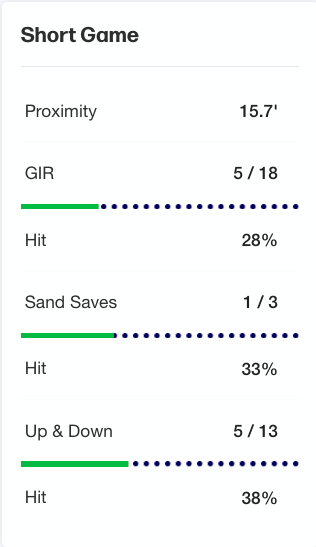
That means practicing realistic chips and pitches from the kinds of lies I actually saw at Ridgecrest, not just perfect practice-area lies. If I am going to miss greens, I need to give myself more makable par saves.
The putting numbers showed I can finish holes when I give myself a chance. Now the short game has to create more of those chances.
Putting Was the Clear Strength
Putting was the best part of the round.
I gained 2.89 strokes on the greens, including 4.37 strokes gained from 0 to 5 feet. That is a huge confidence boost because those are the putts that save pars, prevent doubles, and keep a round from getting away.
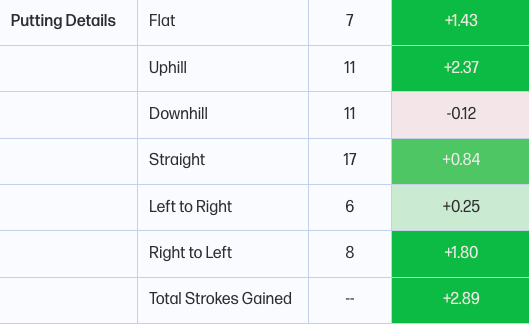
I also gained 1.05 strokes from 11 to 20 feet, which shows I converted some mid-range opportunities.
The one area that needs work is 21 to 30 feet, where I lost 1.62 strokes. That likely points to speed control. I do not need to make a ton of those putts, but I do need to leave fewer stressful comebackers.
Overall, the putter gave me a floor. It kept the round from becoming much worse.
What I Learned Before the Idaho State Mid-Am
Without StrackaStats, I probably would have walked away from this round thinking I needed to work on everything. After shooting 82, that is an easy trap to fall into.
The recap made the picture much clearer.
My putting is in a good place, especially inside five feet. My wedge play from 51 to 90 yards is not the main problem. My short game needs work. My approach play was the biggest statistical leak. And after reviewing the hole overviews, it became clear that many of those approach problems started with poor tee-shot position.
That gives me a much better practice plan.
Before the Idaho State Mid-Am, my priorities are tee-shot control, approach shots from 130 to 150 yards, short-game reps from realistic lies, and speed control from 21 to 30 feet.
Final Takeaway
My 82 at Ridgecrest was not perfect, but it was productive.
StrackaStats showed me that my game is not far away, but it also showed how connected every part of the round really is. My poor approach stats were not only about bad iron shots. A lot of them started with tee shots that leaked right, came up short, and left me hitting longer approaches from the rough.
That is the kind of insight a scorecard alone does not give you.
A scorecard tells you what you shot. StrackaStats helped me understand why. Learn more about StrackaStats here!