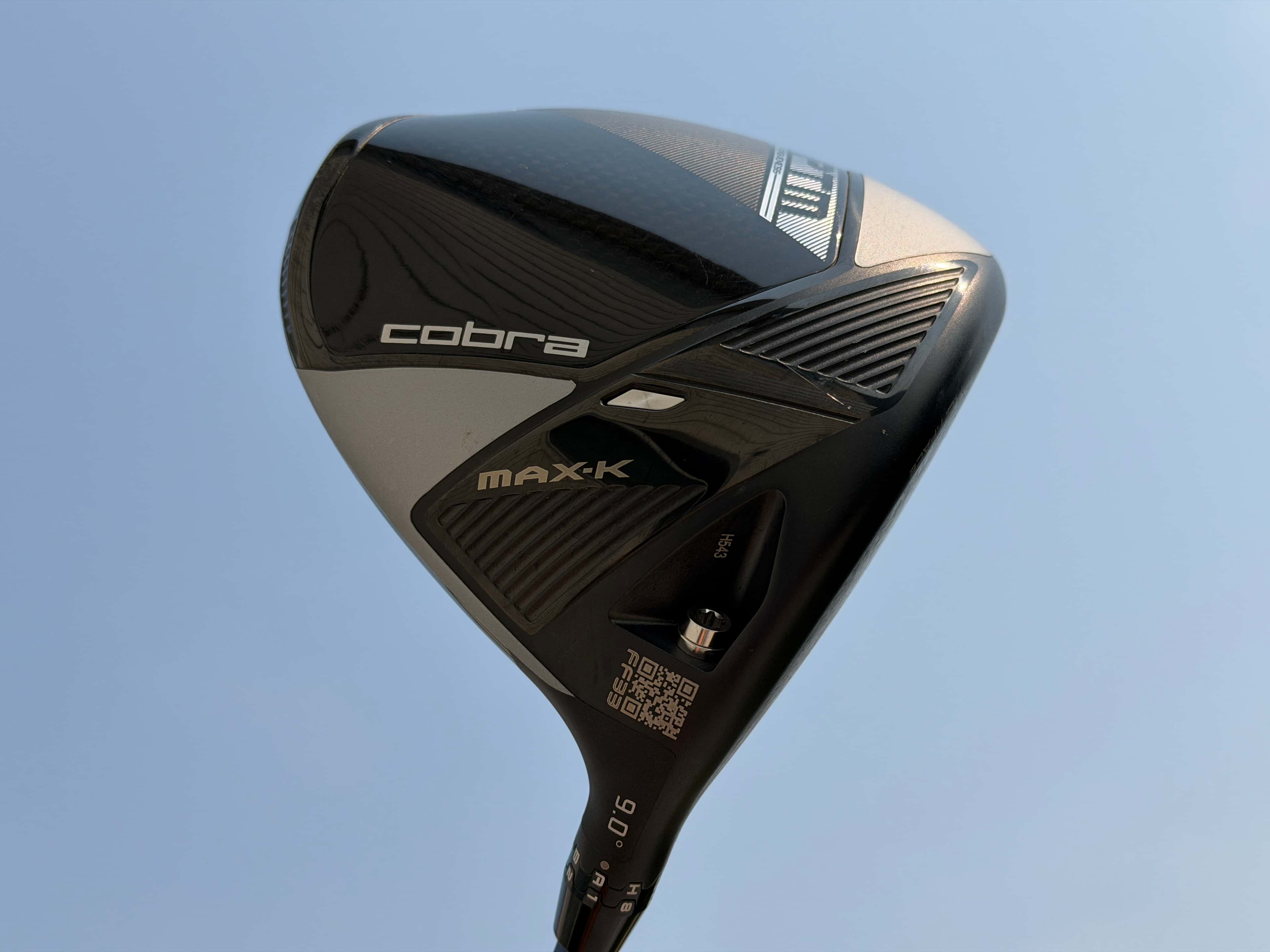
Driver reviews are easy to write after one launch-monitor session. You hit a few good ones, look at the numbers, compare ball speed and spin, and start making conclusions. Five months with a driver is different because it means range sessions, casual rounds, competitive rounds, good swings, bad swings, windy days and those tee shots where you absolutely have to find the fairway. By that point, you have a much better understanding of what a driver actually does for your golf game.
I’ve been play-testing the Cobra OPTM MAX-K for roughly five months now, and what started with a fitting decision I wasn’t entirely convinced about has turned into one of the easiest driver recommendations I can make. That fitting—and the 267-yard drive that made me stop questioning it—will come into the story shortly, but first it’s worth understanding what Cobra was trying to accomplish with the OPTM lineup.
The Idea Behind Cobra OPTM
When Cobra introduced the OPTM family for 2026, the biggest story wasn’t a new face material or another promise of dramatically higher ball speeds. Instead, Cobra put much of its attention on accuracy and, more specifically, finding ways to tighten dispersion.
A major part of the engineering behind OPTM centers around reducing what Cobra calls Products of Inertia, or POI. While golfers have become accustomed to hearing about MOI as a measurement of a driver’s stability and forgiveness, POI looks at the clubhead’s resistance to twisting across multiple axes. Cobra used strategic head shaping and weight placement throughout the OPTM family with the goal of reducing that unwanted twisting, which in turn is intended to reduce side spin and tighten dispersion.
It’s a slightly different approach to a driver conversation that has spent years revolving around maximizing speed and pushing MOI higher. Cobra certainly isn’t abandoning speed or forgiveness with OPTM. Instead, the idea is to make the clubhead behave more predictably when impact moves away from the center of the face, ideally producing fewer drives that make an unexpected turn left or right and more golf balls finishing somewhere near the line you intended.
Cobra sums all of that up with the tagline “Highly Addictive Accuracy.” After five months with the MAX-K, accuracy has legitimately become one of the defining characteristics of this driver for me.
Four Drivers, Four Different Jobs
Cobra built the OPTM driver family around four distinct head designs rather than trying to make one driver work for every golfer. The OPTM LS is the compact, low-spin option aimed at players looking for speed, workability and tighter control. The OPTM X occupies the middle of the lineup, blending speed and forgiveness with a more neutral performance profile, while the OPTM MAX-D adds draw bias for golfers who need help eliminating the right side of the golf course.
Then there’s the OPTM MAX-K, which is the model I was fit into. The MAX-K is the stability and forgiveness option in the family, with a 460cc oversized profile and an 11-gram fixed rear weight designed to push the center of gravity low and back. Cobra calls it the highest-MOI driver the company has produced, with an emphasis on maintaining stability and performance when contact moves away from the center of the face.
On paper, the MAX-K made plenty of sense for what I needed. The part of my fitting that surprised me was the loft.
My Fitting Experience
Every OPTM driver incorporates Cobra’s FutureFit33 adjustable hosel, giving fitters 33 different loft-and-lie combinations to work with. Loft and lie can each be adjusted within a two-degree range, while Cobra’s SMARTPAD design is intended to keep the face sitting square as those settings change. That adjustability gives a fitter considerably more freedom to dial in launch conditions and ball flight without immediately moving a player into a different head.
In my case, Perry Dickey at Encinitas Ranch Golf Course in Carlsbad fit me into a 9-degree Cobra OPTM MAX-K with a Fujikura Ventus Blue 5R with VeloCore+ at the A1 setting. If you want to dive deeper into the adjustability, check out our full breakdown of how the FutureFit33 system works and how to find your fit here.
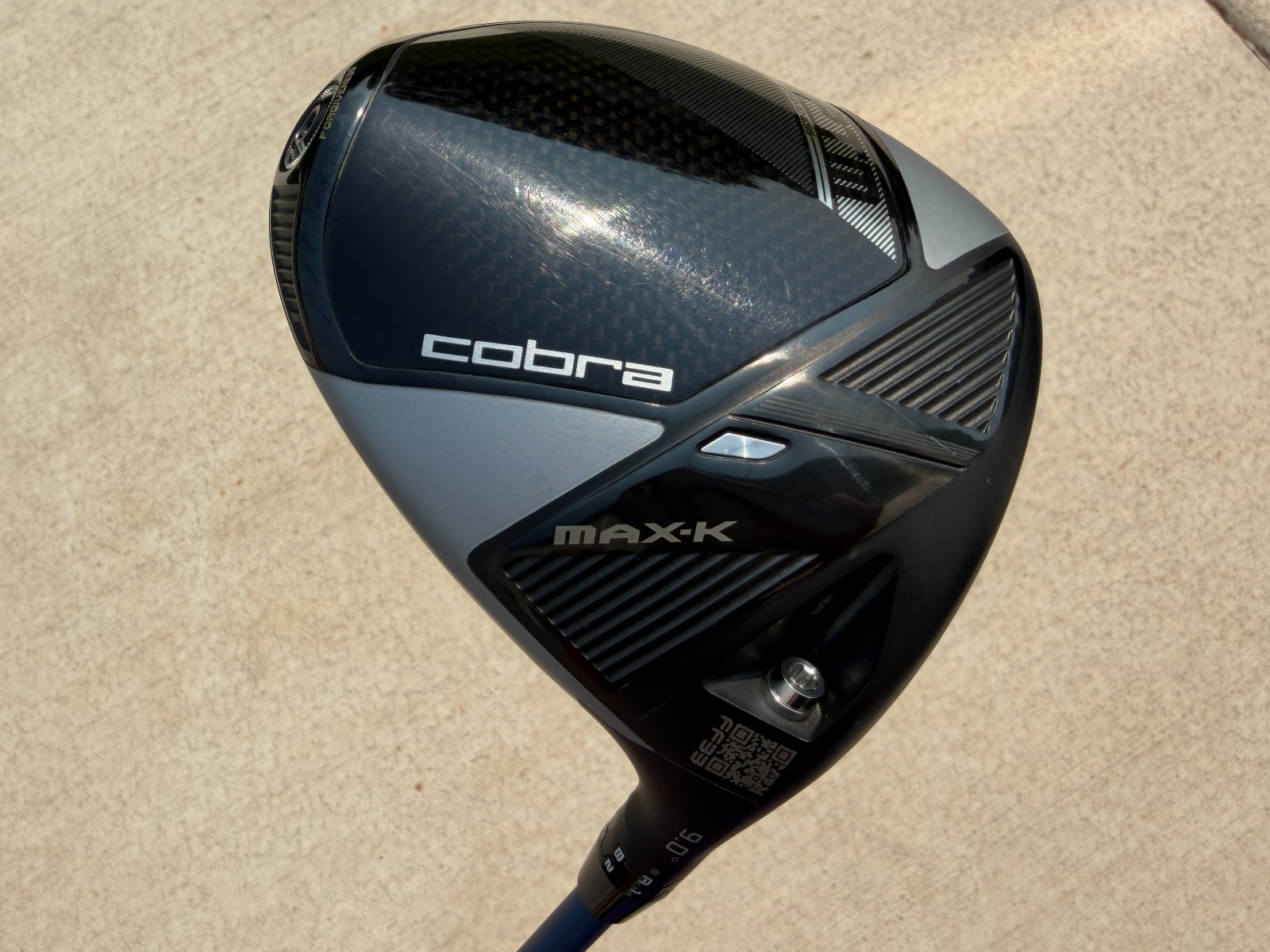
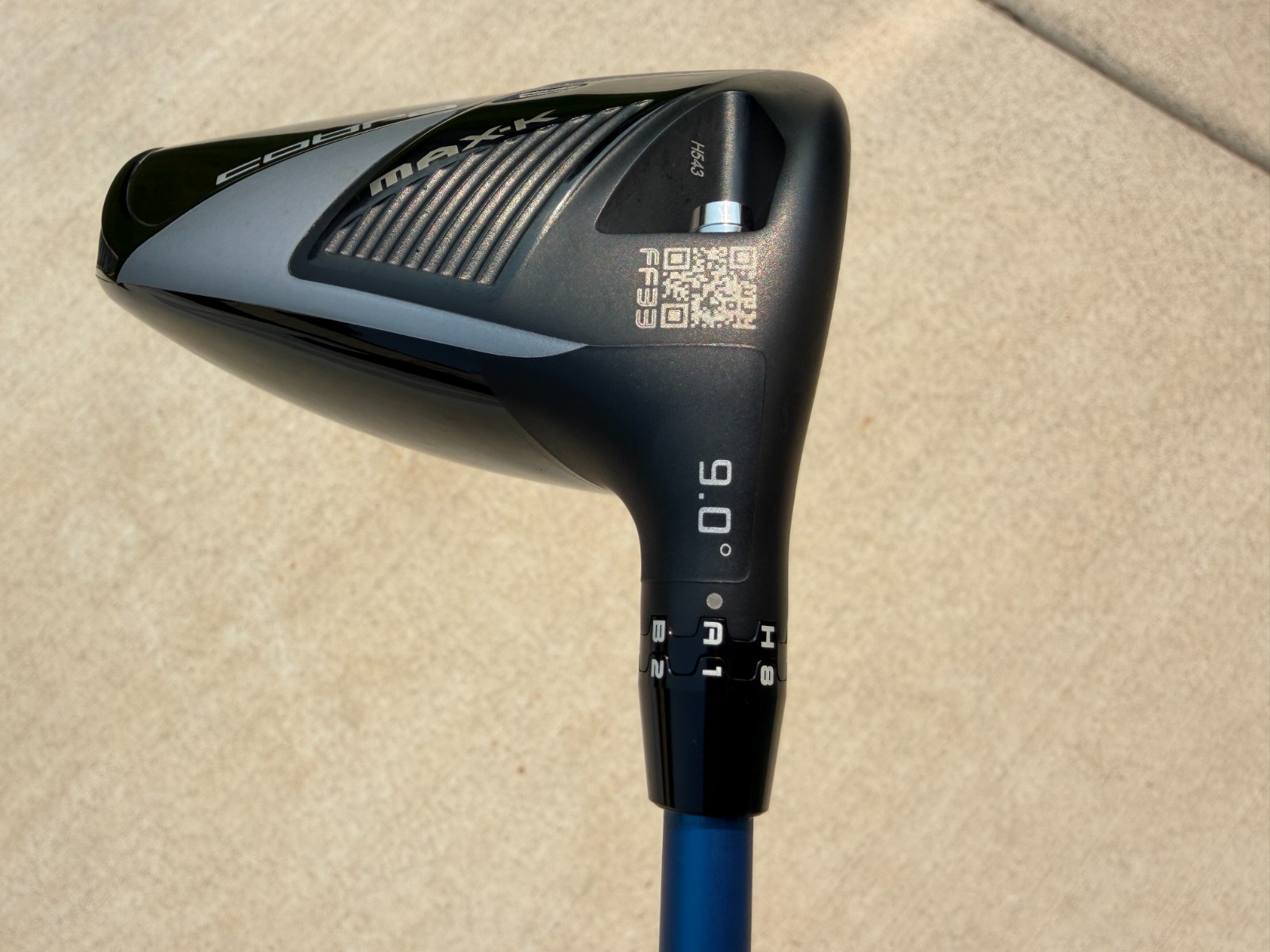
I’ve typically played drivers in the 10.5- to 11-degree range, so going into the fitting I had already made an assumption about what I needed. I thought more loft would help me get the ball into the air and give me the launch conditions I was looking for. Perry had a different idea.
After working through the options, he landed on the 9-degree MAX-K. I wasn’t completely sold. In fact, I left the fitting feeling pretty apprehensive about the 9-degree head because it went against what I thought I knew about my own driver swing and the type of equipment I needed.
That feeling lasted until I started playing golf with it. Not long after putting the OPTM into the bag, I hit a drive that went 267 yards. For context, I’ve been accustomed to averaging somewhere around 240 yards off the tee. One swing doesn’t define a driver fitting, but seeing a number like that on the golf course immediately got my attention.
It also reminded me of something golfers—including myself—probably need to hear more often: there’s a reason you go through a fitting. Perry wasn’t trying to put me into the loft I thought I needed. He was looking at how I delivered the club, what the golf ball was doing and which combination gave me the best result. Five months later, I’m no longer questioning the 9-degree head.
You can watch my full fitting experience with Perry at Encinitas Ranch here:
Looks: Big, But Still Sleek
There’s no getting around the fact that the MAX-K looks large behind the golf ball. That shouldn’t be much of a surprise considering where it sits in the OPTM family, but if you’re coming from a more compact driver head, there will probably be an adjustment period. The 9-degree loft also contributes to that look for me because I’ve spent so much time looking down at drivers with 10.5 or 11 degrees of loft. The face initially appeared a little flatter than what I was accustomed to seeing at address.
Overall, though, I really like the presentation. The crown uses a glossy carbon-fiber finish surrounded by a more subtle matte frame, which gives the head some contrast without making it overly busy when you’re standing over the golf ball. Flip the driver over and Cobra gets a little more creative with the branding, textures, shaping and visible technology.
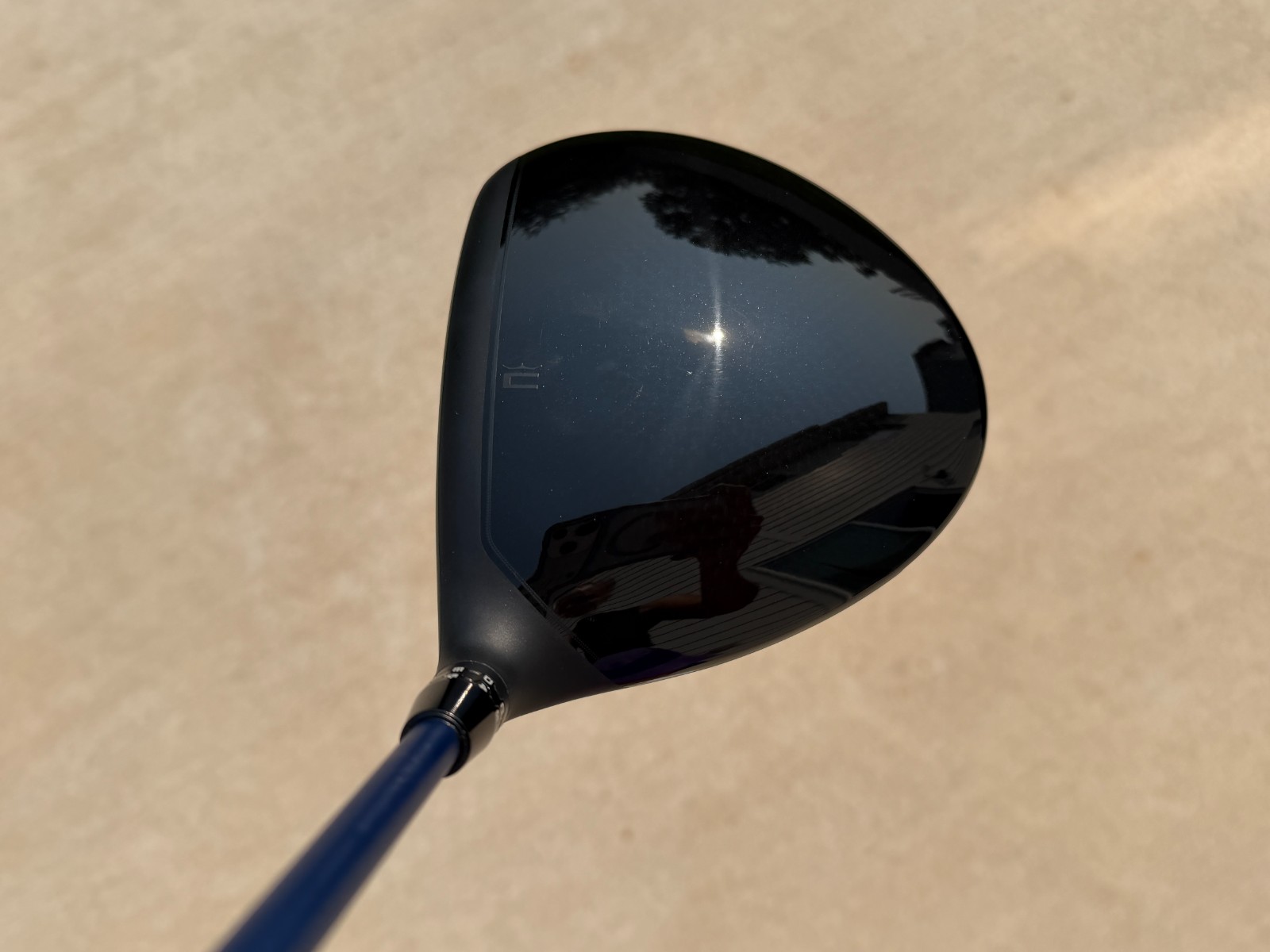
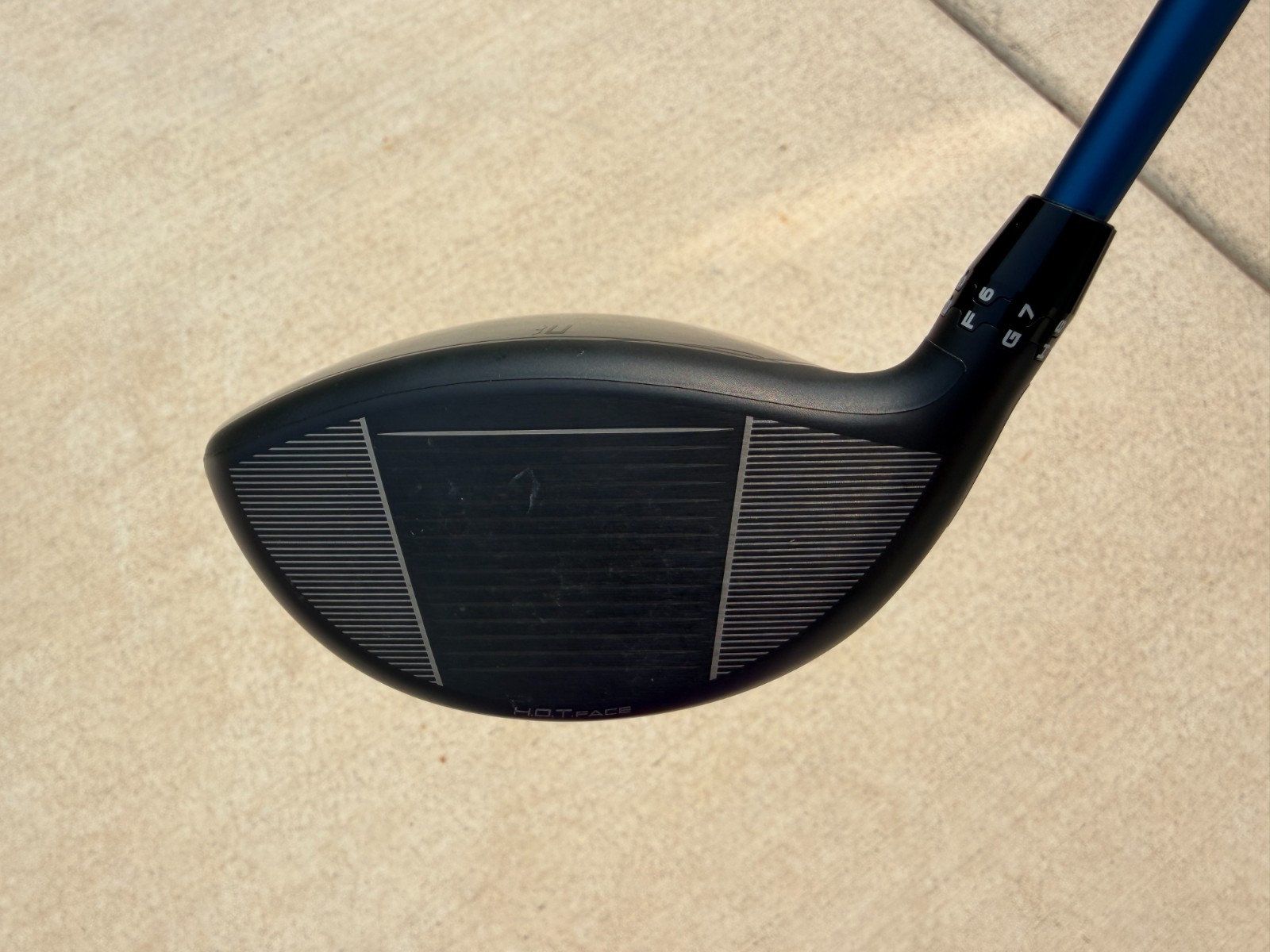
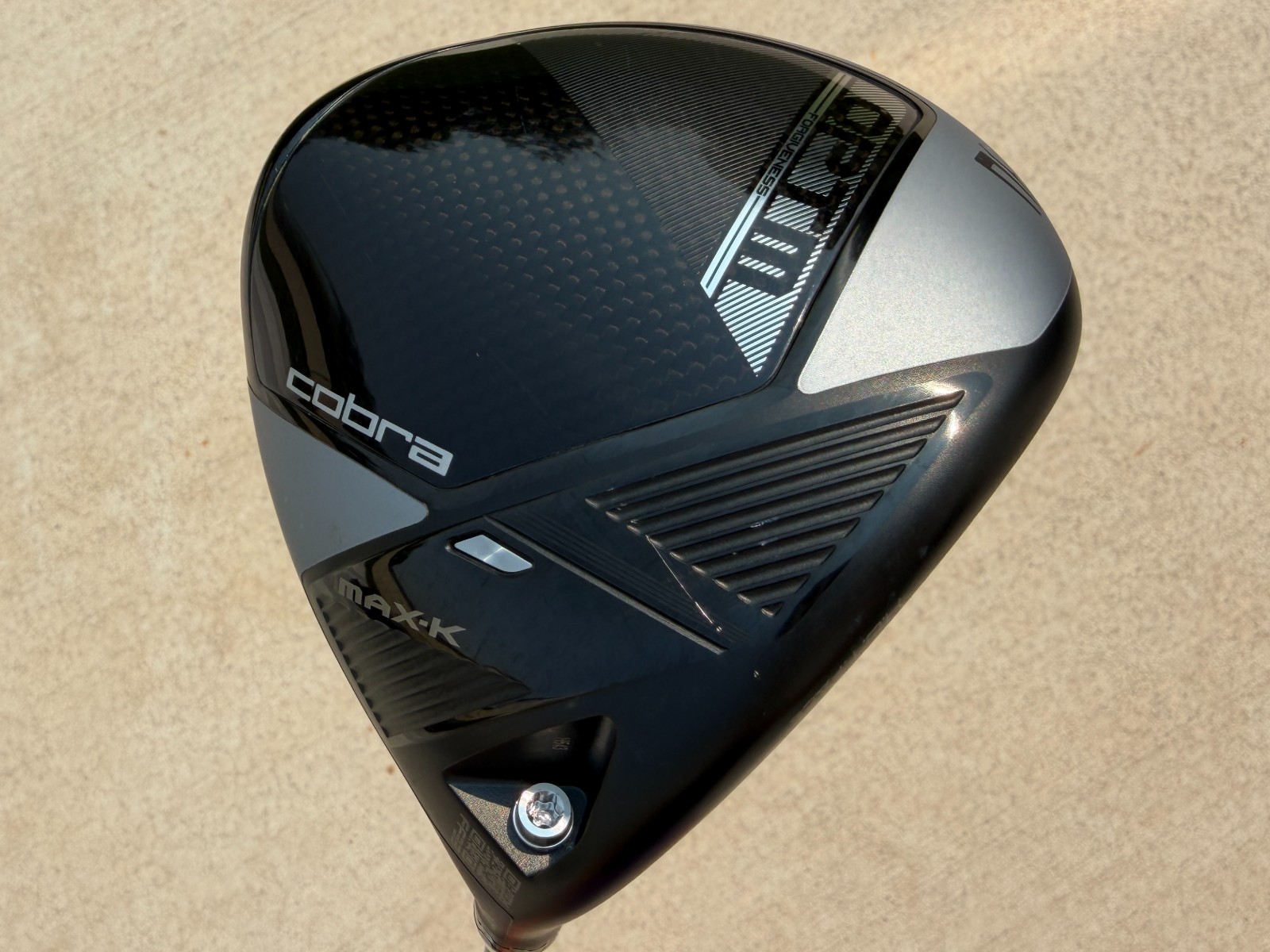
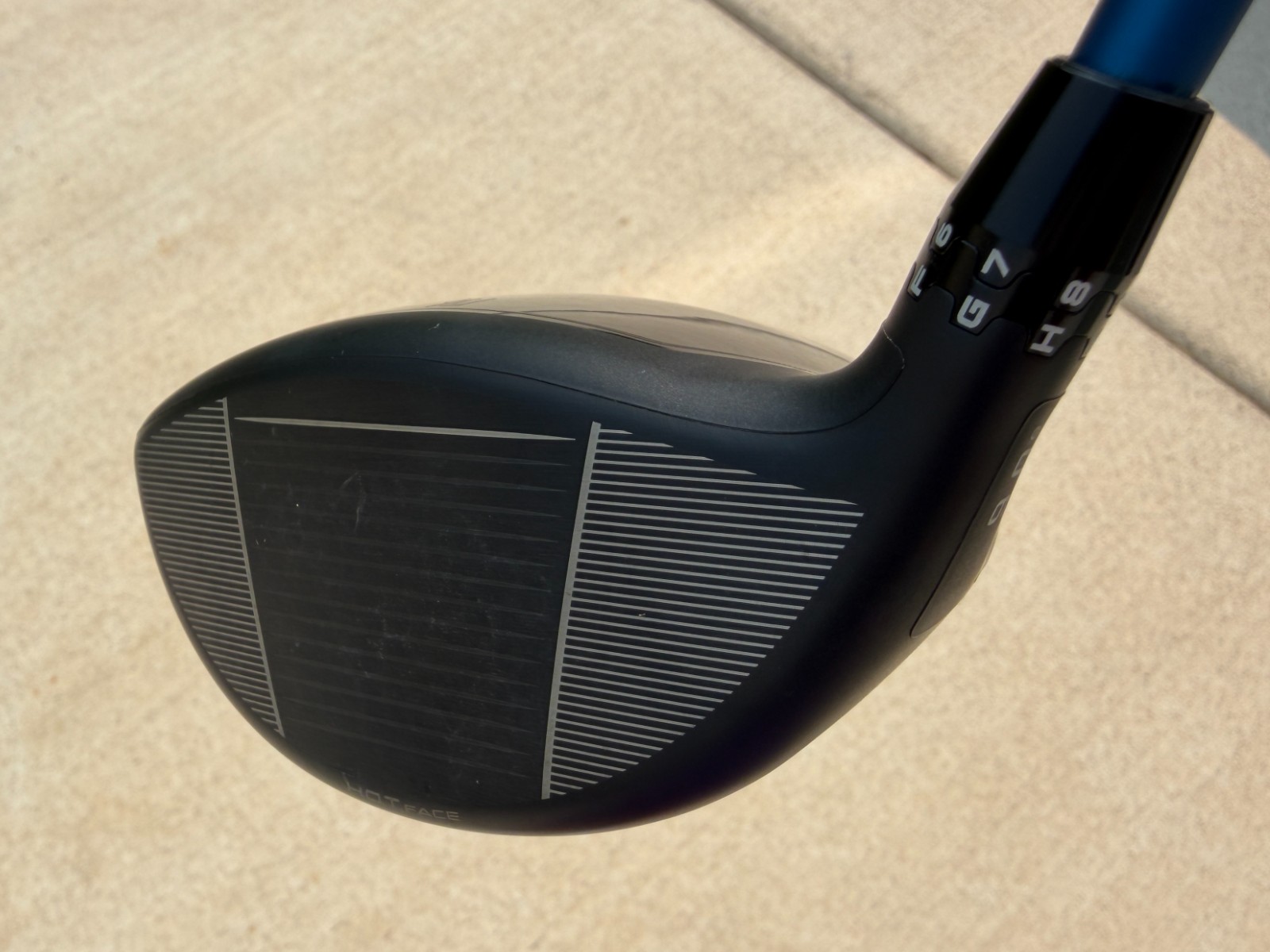
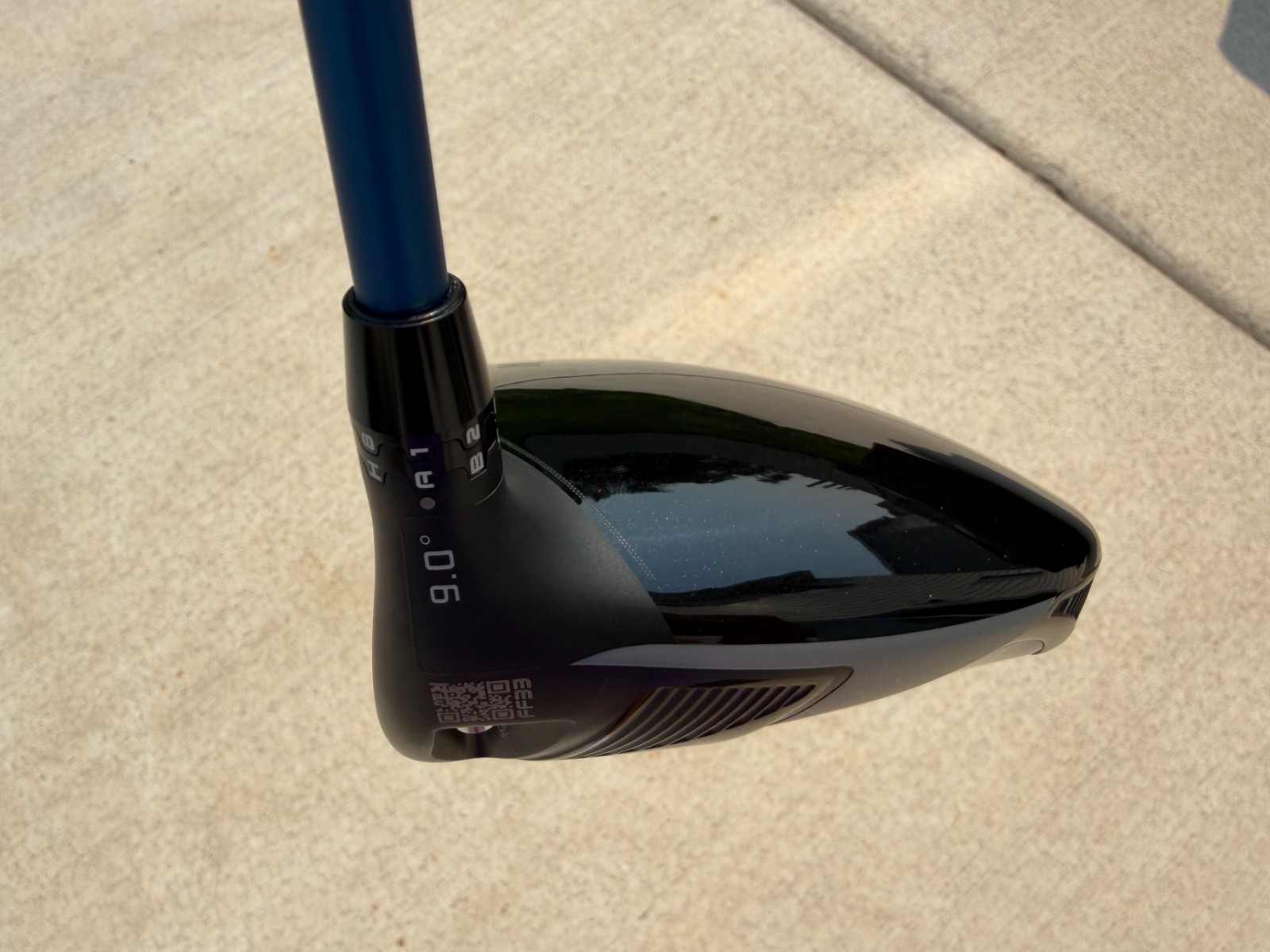
That combination fits Cobra pretty well as a brand. The company has never been afraid to make equipment that looks different or show off some of the technology built into its clubs, but the MAX-K still looks clean where it matters most. At address, the overall package is modern, sleek and confidence-inspiring.
Feel and Sound: More Thwack Than Ting
Feel is always difficult to put into words with a driver, but one of the things I’ve appreciated most about the OPTM MAX-K is the amount of feedback I get at impact. I can generally tell where I struck the ball on the face before I look up to see the flight. If I catch it toward the heel or toe, I know it, and if I find the center, I definitely know it. There aren’t many strikes where the feedback from the club tells me one thing and the ball does something completely unexpected.
Centered contact is where the MAX-K really shines, as you’d expect. The sound isn’t the high-pitched metallic “ting” you can get from some drivers. It’s deeper and more substantial—more of a thick “thwack.” That’s probably not the most scientific description you’ll read in a driver review, but it’s the best way I can describe it. When you get that thwack and look up to see the ball heading straight down the middle of the fairway, it’s an extremely satisfying combination.
Performance: “Highly Addictive Accuracy” Actually Fits
This is where the OPTM MAX-K has separated itself for me over the last five months. After putting this driver into actual playing situations, Cobra’s “Highly Addictive Accuracy” slogan makes a lot more sense. I’m not talking about standing on a driving range and hitting the same tee shot over and over. I’m talking about getting onto the golf course, choosing a target and feeling increasingly confident that the ball is going to stay somewhere around that target.
I saw a great example of it during a tournament recently. We played four-ball on the first day and a scramble on the second, and throughout the weekend I kept seeing the same thing off the tee: predictable ball flights and golf balls finishing around the lines I intended.
Some of the fairways I missed weren’t because I hit particularly poor drives. I was hitting the ball far enough that it was running through fairways on lines I had grown accustomed to playing. I never thought hitting it too far was going to become one of my problems.
Compared with what I was seeing on the course and practice tee last year, I’ve experienced gains of more than 15 yards in the air with this setup. There are obviously a number of variables that go into distance on any individual swing, so I wouldn’t suggest that every golfer is going to put an OPTM MAX-K in the bag and immediately pick up 15 yards. What matters to me is that those gains have continued to show up over months of actual use rather than disappearing after one particularly good launch-monitor session.
The distance is only part of it. The bigger improvement has been combining that additional yardage with a level of accuracy that gives me more confidence to actually use it.
Don’t Let the “MAX” Label Scare You Away
The MAX-K is Cobra’s maximum-forgiveness option, and that description can sometimes steer better players or golfers with higher swing speeds toward another model before they ever hit it. I think that would be a mistake.
My driver clubhead speed averages just below 100 mph, and I’m seeing better performance from the MAX-K than I expected. On the other end of the spectrum, Gary Woodland provides an interesting example of how much speed can coexist with this type of high-stability design. Woodland has used a Tour-specific OPTM Max LS-K prototype derived from Cobra’s MAX-K concept, and the PGA TOUR currently lists him among its longest hitters, including third in its standard Driving Distance category and first in clubhead speed.
Obviously, Gary Woodland and I are not delivering the golf club under remotely similar circumstances, but that’s exactly the point. You shouldn’t automatically associate forgiveness with slow swing speeds. Stability can be valuable whether you swing at 85 mph, just under 100 mph or at PGA TOUR speed. What changes is the combination of head, loft, weighting and shaft needed to produce the right launch and spin conditions for that player.
The MAX-K is not Cobra’s lowest-spinning head, so golfers who need to significantly knock down launch or spin should also test the OPTM LS or OPTM X. That’s why I wouldn’t choose between these drivers based solely on how Cobra categorizes them on the website. Get fit and let the ball flight decide.
Five Months Later: My Final Take
After five months, the biggest compliment I can give the Cobra OPTM MAX-K is that I don’t spend much time thinking about my driver anymore. I pick a target and swing.
The combination of stability, forgiveness and distance has given me more confidence from the tee, but it has also changed the way I can approach a golf course. The added carry makes me more comfortable playing longer courses, while shorter setups suddenly present opportunities to be more aggressive. More distance can mean shorter clubs into greens, reachable par 5s and different options on short par 4s, but that distance becomes considerably more useful when you have some idea where the golf ball is going.
If there’s one thing I would tell someone considering the MAX-K, it’s to put your ego aside before the fitting. Don’t assume the most forgiving head is beneath your game, don’t assume you know how much loft you need and don’t pick a model simply because it sounds like the one designed for your swing speed. I made some of those assumptions before my fitting, and I was wrong.
Five months later, the Cobra OPTM MAX-K remains in my driver rotation. I’m carrying the ball farther than I was last season, finding the lines I’m trying to hit more consistently and standing on the tee with considerably more confidence than I had before.
Golf is a lot more enjoyable when you’re hitting it farther and looking for your ball in the middle of the fairway. Maybe “Highly Addictive Accuracy” isn’t such a bad way to describe it after all.