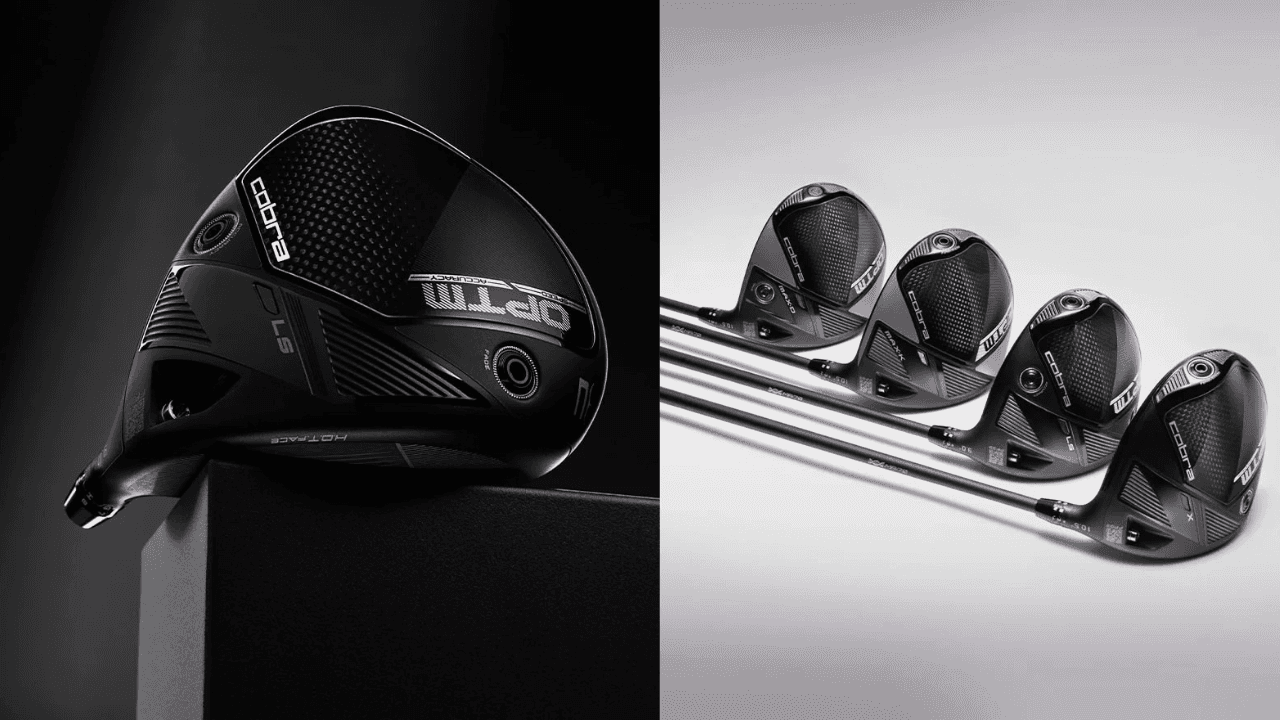
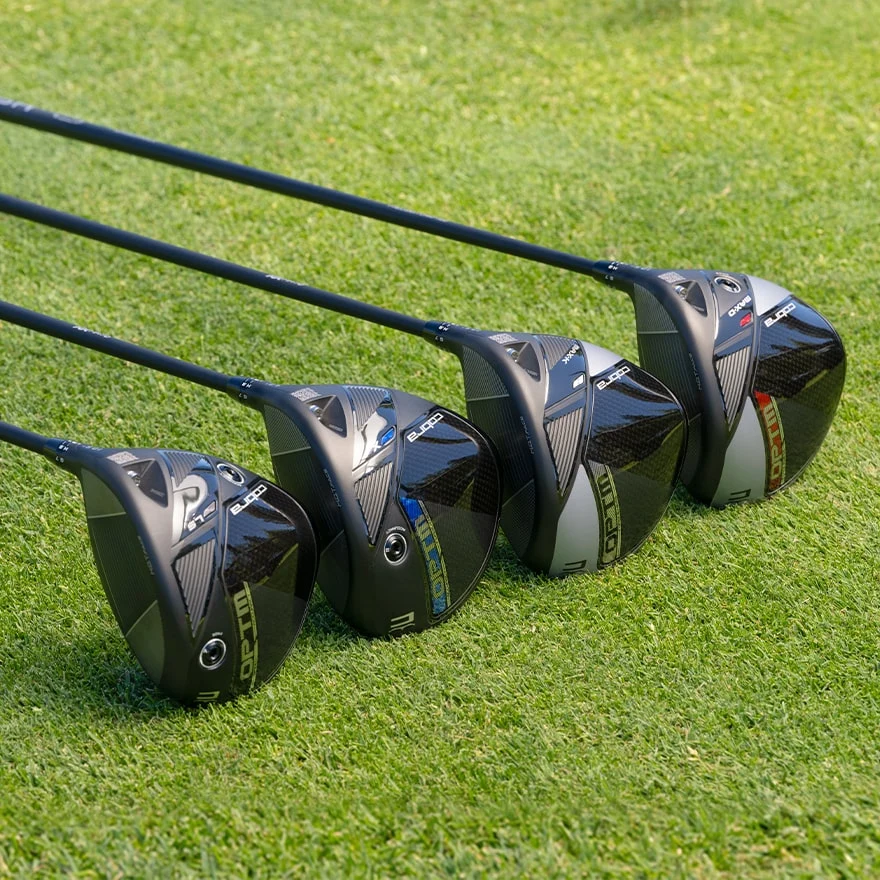
Cobra's OPTM driver lineup gives golfers four different heads to choose from: LS, X, MAX-K and MAX-D. They share much of the same underlying technology, but they are designed to solve very different problems off the tee.
That makes choosing the right one less about finding the "best" OPTM driver and more about identifying what you need from the clubhead.
Do you generate too much spin? Do you want forgiveness without giving up a more traditional shape? Is keeping the ball in play your biggest priority? Or are you fighting a slice?
Answer those questions and the OPTM lineup starts to make much more sense.
Cobra OPTM Drivers at a Glance
| Model | Head Shape | Loft Options | Weighting | Best Fit |
|---|---|---|---|---|
| OPTM LS | Compact 460cc | 9°, 10.5° | Three movable weights | Lower launch, lower spin and maximum trajectory control |
| OPTM X | Traditional 460cc | 9°, 10.5° | Two movable weights | Low-spin performance with additional forgiveness |
| OPTM MAX-K | Oversize 460cc | 9°, 10.5°, 12° | Fixed 11g back weight | Maximum stability and forgiveness |
| OPTM MAX-D | Oversize 460cc | 9°, 10.5°, 12° | Fixed 11g heel weight | Draw bias, higher launch and slice correction |
Cobra positions the LS as its low-launch, low-spin control head; the X as a blend of low spin and forgiveness; the MAX-K as the highest-MOI model in the lineup; and the MAX-D as the most draw-biased option.
What's the Same Across the OPTM Lineup?
Before getting into the differences, there are several technologies found throughout the lineup.
A major focus of OPTM is Cobra's use of Products of Inertia, or POI, alongside the more familiar Moment of Inertia measurement. Cobra uses head shaping and strategic weight placement to reduce resistance to twisting across multiple axes, with the goal of reducing unwanted side spin and tightening dispersion.
Each model also uses a forged face insert with H.O.T. Face technology, designed to maintain ball speed across a larger portion of the face.
Then there is FutureFit33, Cobra's adjustable hosel system. Golfers have 33 loft and lie combinations, with adjustments available up to two degrees in either direction. Cobra's SMARTPAD design is intended to keep the face sitting square throughout those settings.
The head, however, still establishes the foundation.
Cobra OPTM LS: For Lower Spin and More Control
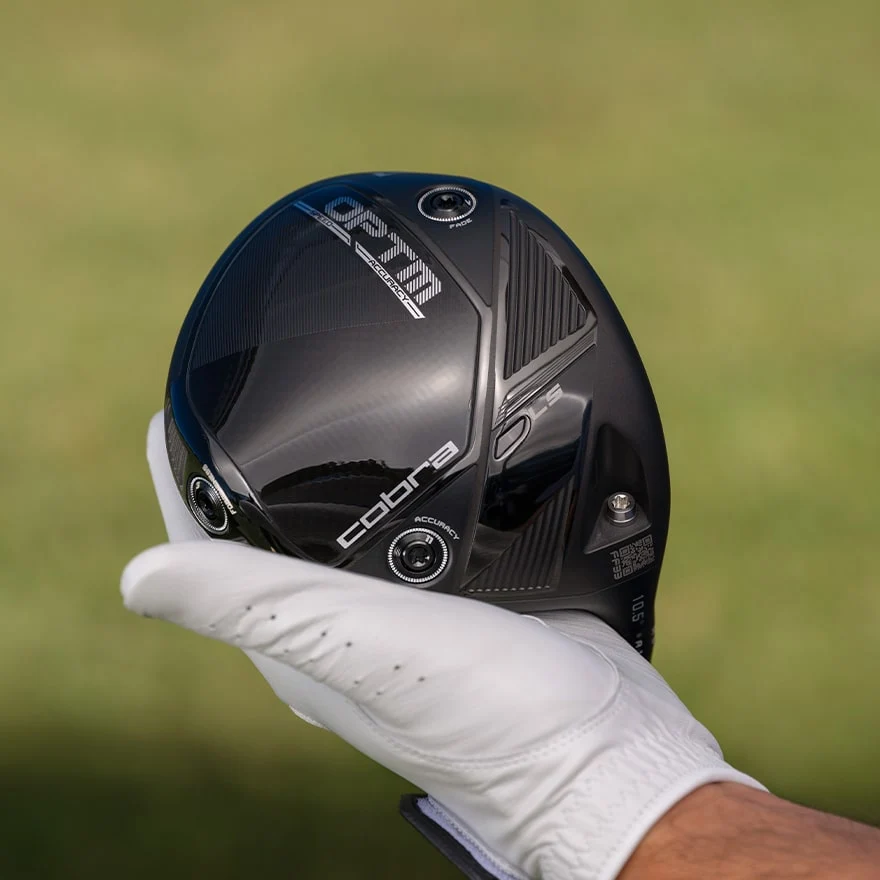
The OPTM LS sits at the lowest-spin end of the lineup.
Its compact 460cc shape and forward center of gravity are designed for players looking to bring launch and spin down while maintaining speed. Cobra also calls it the most aerodynamic head shape in the OPTM family.
The LS also gives golfers the most control over weight placement. Three weights — 11, 7 and 3 grams — can be repositioned around the head. Putting the 11-gram weight in the back creates a more neutral setup with additional forgiveness, moving it toward the heel promotes draw bias, and moving it toward the toe promotes fade bias.
The LS makes the most sense if:
You already launch the driver high or generate excessive spin.
You want a more compact shape behind the ball.
You prioritize trajectory control.
You want the ability to alter draw and fade bias through movable weighting.
You consistently strike the center of the face well enough to take advantage of a lower-spin setup.
LS shouldn't simply be viewed as the "better player" driver. A golfer who needs more launch, spin or stability could give up performance by moving into a head that is too low spinning.
Cobra OPTM X: The Middle Ground
For a lot of golfers, the OPTM X could be the logical starting point for a fitting.
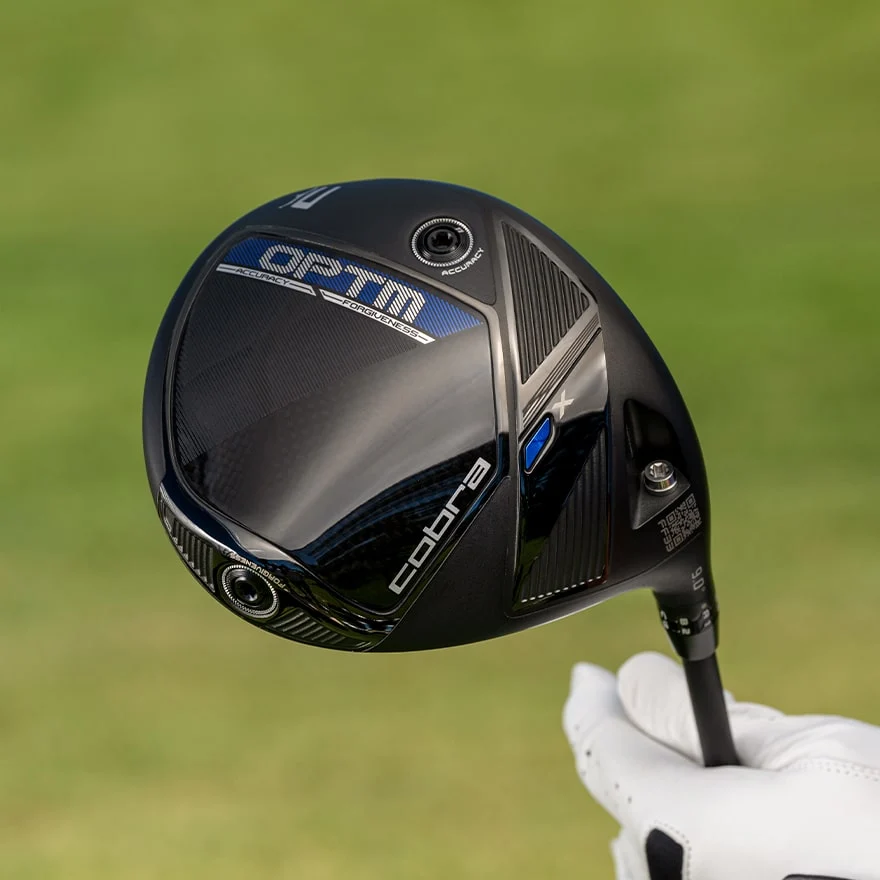
It maintains a low-spin design but moves into a slightly larger, more traditional-looking profile than the LS. Cobra designed the X to balance speed, stability and forgiveness rather than pushing one characteristic to the extreme.
The X uses two movable weights at 11 and 3 grams. With the heavier weight in the back, the head is configured for a more neutral flight. Moving the 11-gram weight into the toe creates additional fade bias.
The X makes the most sense if:
You want lower-spin performance but don't necessarily need the LS.
You want more forgiveness on off-center strikes.
You prefer a traditional driver profile at address.
Your ball flight is relatively neutral and you don't need significant draw assistance.
You want some movable-weight adjustability without the more specialized characteristics of LS, MAX-K or MAX-D.
Think of the X as the most balanced member of the family. It sits between the precision-oriented LS and the maximum-forgiveness MAX models.
Cobra OPTM MAX-K: When Forgiveness Is the Priority
The OPTM MAX-K takes the lineup in a different direction.
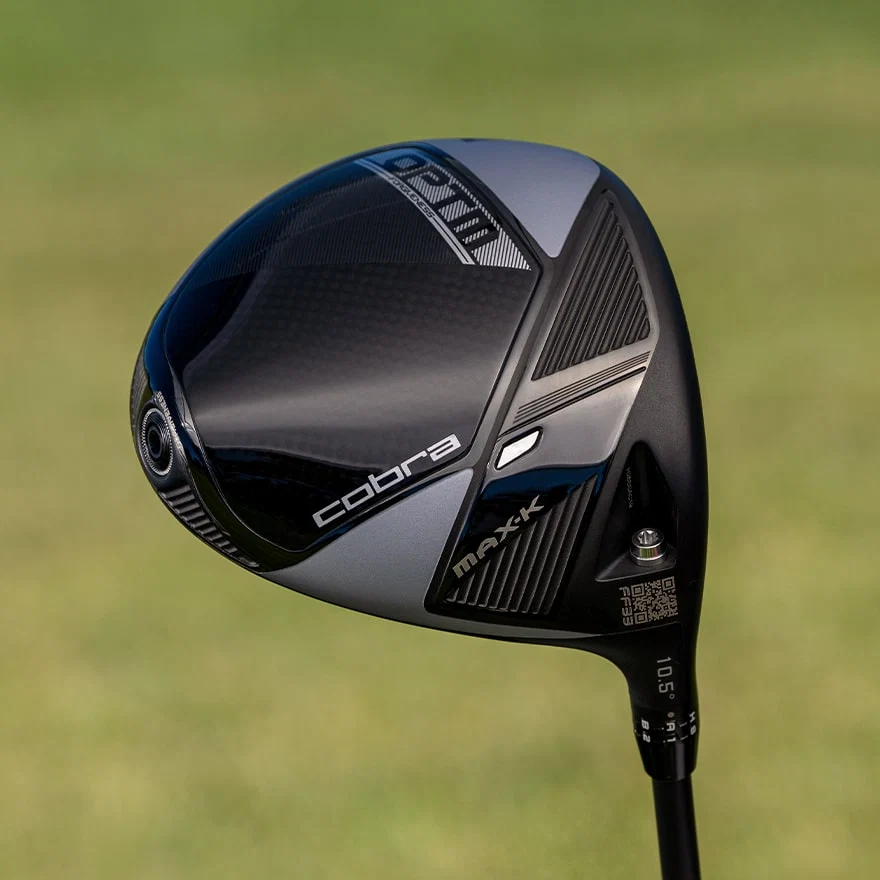
Rather than using movable weighting to alter shot shape, Cobra places a fixed 11-gram weight in the rear of the head. That pushes the center of gravity low and back and helps MAX-K achieve the highest MOI of any OPTM driver.
The objective is simple: preserve stability and ball speed when impact moves away from the center of the face.
Its larger footprint can also provide more confidence at address for golfers who prefer seeing more clubhead behind the ball.
The MAX-K makes the most sense if:
Your strike pattern moves around the face.
Dispersion is a bigger concern than manipulating shot shape.
You value stability and forgiveness.
You prefer an oversized driver profile.
You want additional loft options, including a 12-degree head.
And MAX-K shouldn't automatically be considered a high-handicap or slower-swing-speed driver. A competitive player whose primary goal is keeping more tee shots in play can have just as much reason to test the highest-MOI option.
For many golfers, the driver that produces the best score isn't necessarily the one that produces the single longest shot. It's the one that makes the bad swings less costly. Find my full, long-term review of the Max-K here.
Cobra OPTM MAX-D: For the Golfer Fighting the Right Side
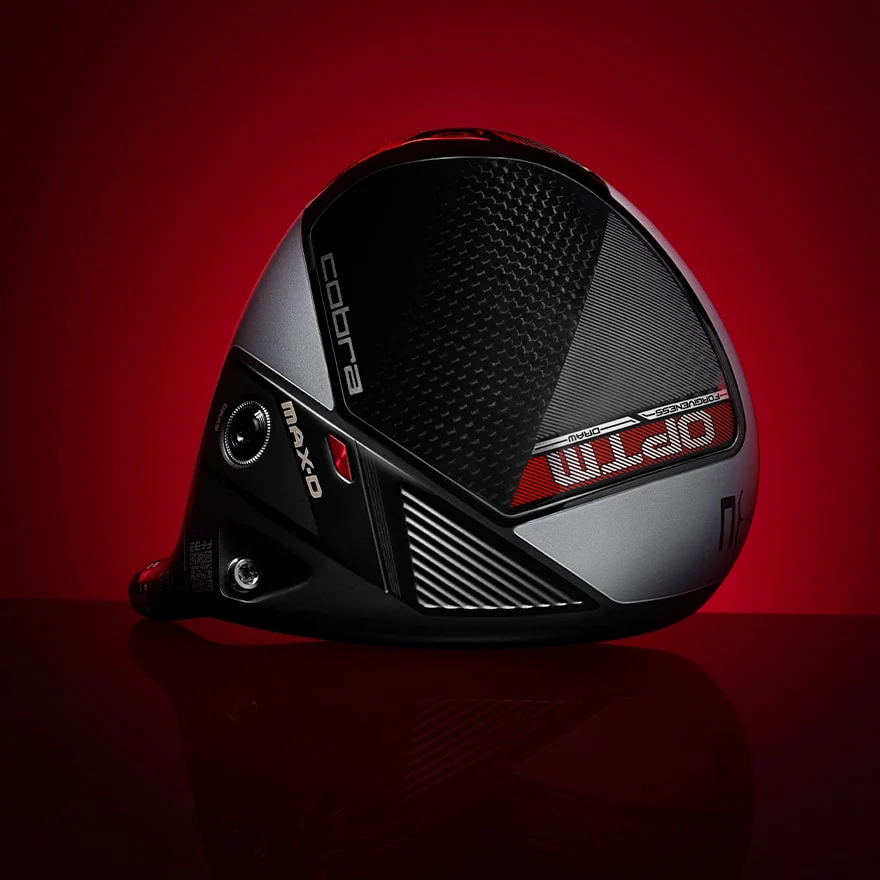
If your common miss is a slice or a shot that continually leaks to the right for a right-handed golfer, the OPTM MAX-D has the most specialized purpose in the lineup.
Cobra uses a fixed 11-gram heel weight to move the center of gravity closer to the hosel. That configuration is designed to make the clubface easier to close while also helping increase launch, creating the strongest draw bias in the OPTM family.
Like MAX-K, it uses an oversized 460cc shape and is available in 9-, 10.5- and 12-degree lofts.
The MAX-D makes the most sense if:
Your predominant miss is a slice.
You struggle to square the face through impact.
You want additional help producing a right-to-left ball flight.
You need help launching the driver higher.
Forgiveness and directional correction matter more than movable weighting.
Golfers who already hit a draw or struggle with a left miss should be careful with MAX-D's additional draw bias. For the golfer it is designed for, however, that bias is exactly the point.
LS vs. X Might Be the Toughest Decision
Of the four models, LS versus X is probably the comparison that will require the most testing.
Both are low-spin designs. Both offer movable weighting. Both come in 9- and 10.5-degree lofts. Both are also available from Cobra in shorter 44.5-inch Tour Length configurations.
The difference is what you're willing to trade.
LS pushes farther toward a compact shape, lower spin and trajectory control. X adds stability and forgiveness while retaining much of the low-spin performance golfers are looking for.
If you are debating those two heads, launch-monitor numbers such as launch angle, spin, ball speed and dispersion become especially important.
MAX-K vs. MAX-D Comes Down to Your Miss
The distinction between the two MAX heads is much clearer.
If you simply want maximum stability, start with MAX-K.
If you want stability but also need meaningful slice correction, MAX-D is designed specifically for that job.
MAX-K puts its weight in the back to maximize stability. MAX-D moves its weight into the heel to influence how the club delivers and closes through impact.
That makes the direction of your miss one of the quickest ways to separate the two.
Don't Forget About FutureFit33
Choosing the head is only the beginning of an OPTM fitting.
FutureFit33 allows loft and lie to be adjusted independently through 33 settings, covering a range of plus or minus two degrees. That gives a fitter considerable room to fine-tune launch and directional tendencies after establishing which head provides the right starting point.
The movable weights in LS and X add another layer of fitting possibilities.
That's also why choosing solely from a spec sheet has limitations. Two golfers with the same handicap and swing speed may need completely different heads based on delivery, strike location, launch conditions and predominant miss.
Find our full guide on how to use the FutureFitt 33 system to dial in your best ball flight here.
Which Cobra OPTM Driver Should You Choose?
The simplest way to narrow the lineup is to start with what you're trying to improve.
Choose OPTM LS if reducing launch and spin while gaining trajectory control is the priority.
Choose OPTM X if you want a blend of low spin, speed and forgiveness without moving into an oversized MAX head.
Choose OPTM MAX-K if stability and forgiveness across the face are at the top of your list.
Choose OPTM MAX-D if the right side of the golf course is your problem and you want the strongest draw bias in the lineup.
From there, a fitting can determine loft, lie, weighting, shaft and length.
Four heads may initially make the OPTM lineup look complicated, but each one has a fairly specific job. The key isn't finding the most advanced or demanding model. It's finding the one whose design matches the ball flight you already produce — and the miss you're trying to eliminate.