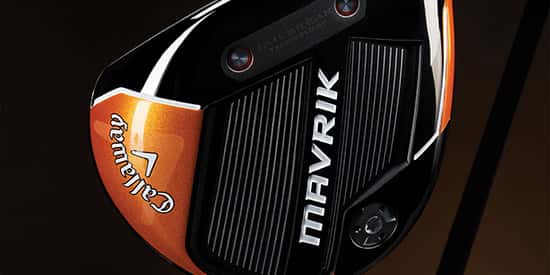
Callaway MAVRIK Fairways are the first fairways the company has turned out with faces fully optimized by Artificial Intelligence. Using the company’s second-generation supercomputer and machine learning, thousands of iterations of potential face designs are (virtually) suggested and tested, with 99.9% of just a few surviving to be turned into physical prototypes. That’s far cry from the old days, when models were made and tested by actual golfers.
The benefit for the golfer? Now Callaway’s MAVRIK fairway woods are being even further refined to maximize their distance, launch, and forgiveness, the same way that drivers were starting with the Epic Flash.
Further, each of Callaway’s three MAVRIK Fairway wood models has a face designed specifically for its size, shape, and CG location — enough variables to make their new supercomputer pay back a chance of it’s multi-million dollar investment. But these complicated (and thin) face design options which the machine “learned” to design require new materials to produce optimal ball flight and stand up to thousands of real-world shots.
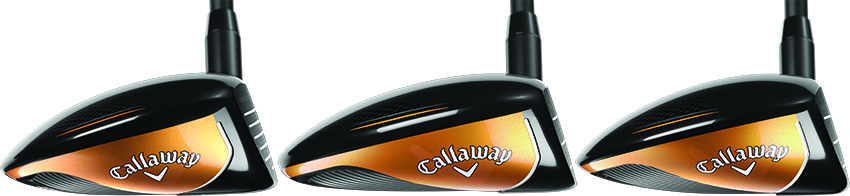
Now that we’ve discussed the shared benefits of the new line, here is a breakdown of the three new MAVRIK Fairway models:
MAVRIK Fairway Wood
|
- Callaway photo
|
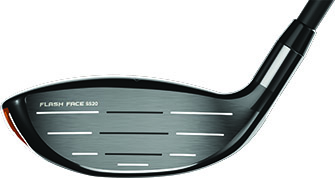
Technically, there are a few key features that make MAVRIK standard fairways tick. All lofts incorporate a single, visible, fixed weight in the sole, center-back, to pull the CG low and back in the head for that high launching but piercing trajectory I mentioned earlier. The progressive leading edge geometry adds to the ball speed design, and a generous heel camber is suited for versatility. You don’t want your heel getting stuck in the ground or pinched by light rough, after all.
The bottom line? MAVRIK standard is likely going to fit most low to mid-handicap golfers, and will definitely find its way into some Tour bags as well.
MAVRIK standard models of fairway woods can be ordered in 3+, 3-, 4-, 5-, and 7-wood.
MAVRIK Sub Zero Fairway Wood
|
- Callaway photo
|
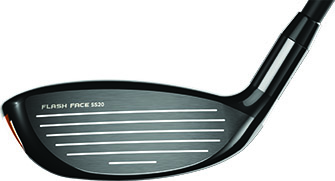
The MAVRIK Sub Zero fairway has the most compact head the three models, along with a face shape preferred by pros and lower handicap players. The leading edge architecture in the Sub Zero has been redesigned to be sharper and allow those who don’t have any trouble placing the club face on the ball consistently off the ground with the option to pinch it just right for better workability either way. MAVRIK Sub Zero fairways also have interchangeable weights (14g and 2g) in the sole at center-back and center-front to adjust launch angle and spin-rate.
They are available in 3+, 3-, 4-, and 5-wood.
MAVRIK MAX Fairway Wood
|
- Callaway photo
|
Another thing I like about the MAX is that you have the chance to experiment with lighter shafts. Those are coming into vogue in drivers, but haven’t been pushed as much in fairways. But why not? I found that lightweight 60g shaft in the MAX Fairway was really easy to swing.
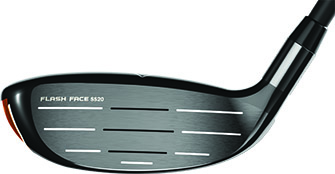
On the technical side, MAVRIK MAX fairways come with interchangeable weights in the sole at center-back to promote easy launch, and at the heel to promote a draw. The forgiveness I spoke about earlier comes from a significantly higher MOI measurement than Epic Flash Fairways. Also, the face is shaped with a wider radius at the bottom to create more hitting area in the lower heal and toe regions, where anyone that struggles with solid contact needs it. And the leading edge is noticeably lower for significantly better performance on shots that are hit low on the face.
The MAVRIK MAX can be ordered in 3+, 3-, 5-, Heavenwood, 7-, 9-, and 11-wood.
MORE INFORMATION
Pre-order date: January 14, 2020
Product at Retail: January 23, 2020
Pricing: $299 each