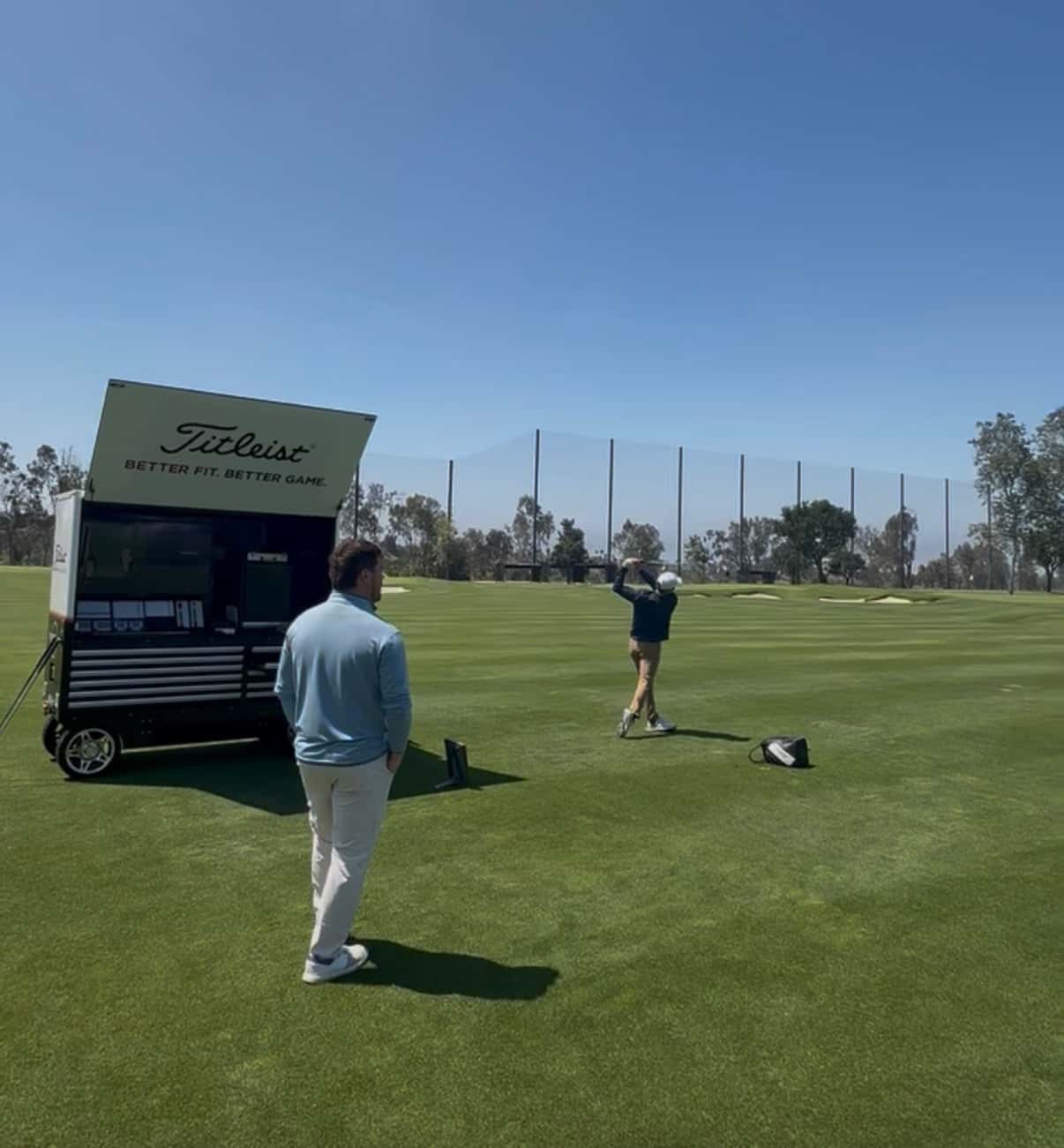

There's a particular kind of dread that lives in the right-handed player's miss off the tee. Mine was a low, hard, left-turning knuckler — the ball that leaves the face hot and never climbs, the one that finds the trees down the left side before you've even finished your follow-through. For a competitive amateur, that miss isn't just frustrating. It's the shot that quietly costs you tournaments.
So when Titleist's new GTS line dropped, I did what I should have done years ago. I booked a day at the Titleist Performance Institute in Oceanside, California, and went to get fit properly.
The Session
I'd braced myself for a marathon. What I got was 45 minutes of remarkably efficient work. The fitter watched a handful of swings, looked at the numbers, and started narrowing almost immediately — the data told a clear story, and there wasn't much hand-wringing about it.
The GTS family splits into four heads, and the differences are real rather than cosmetic. The GTS2 is the high-launch, low-spin forgiveness play. The GTS3 sits in the middle — mid launch, low spin, a traditional 460cc shape. The GTS4 is the sharp end of the line: mid-to-low launch, very low spin, built for players who deliver speed and need the head to get out of the way of it.
That's where I ended up — the GTS4, fit with a Graphite Design Tour AD F1 6 X.
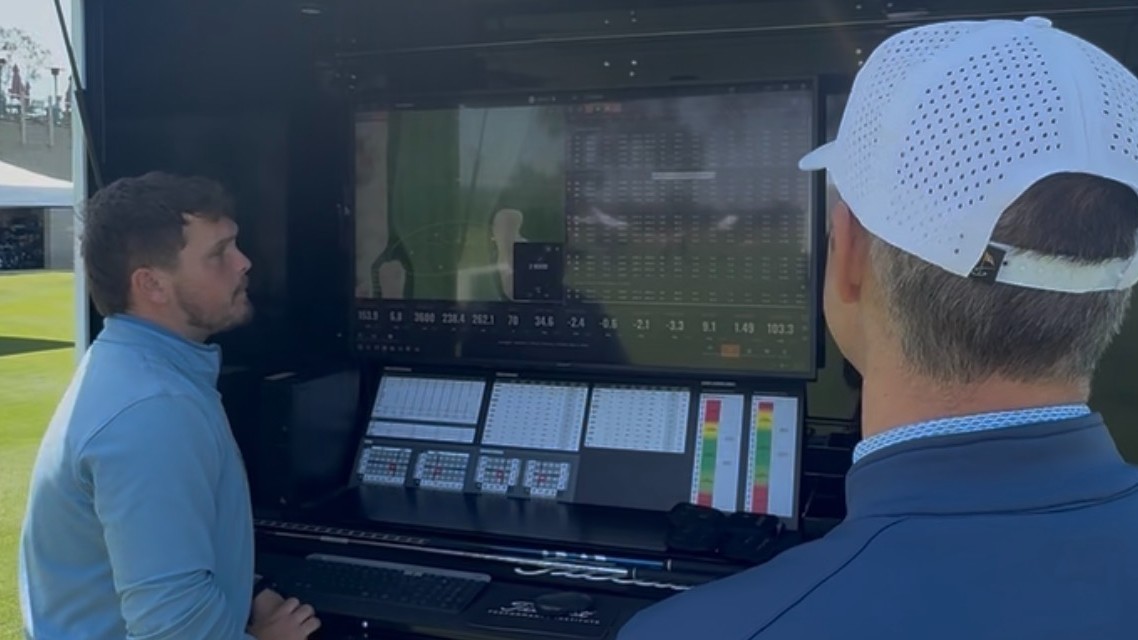
Why That Combination Worked
Here's the part that mattered to me, and the part I'd want any competitive player reading this to understand. My miss was a spin-and-face problem. The low knuckler off the tee is what happens when the ball comes off too hot, too low, with the face doing the wrong thing through impact.
The GTS4's very low spin profile combined with the F1 6 X was the answer. The Tour AD F1 6 X is a 68-gram, low/mid launch, low/mid spin shaft with 3.2° of torque — a genuinely stout, player's-spec stick. It's not a shaft that lets the head flip closed on you. Through the fitting, that low knuckler simply stopped appearing. The shots that had been getting me in trouble off the tee were gone, replaced by a tighter, more predictable ball flight I could actually trust under pressure.
And then there's the look. I don't know how else to say it: I just love the view down on this driver at address. Traditional shape, clean, the kind of head that sits behind the ball and quiets the mind. For a tee shot you have to hit when it counts, that comfort is not a small thing.
How the Three GTS Heads Differ
It's worth understanding the GTS line as a spectrum, because the wrong head will undo a good fitting. All three share the traditional 460cc footprint, but Titleist positions the center of gravity differently in each to move launch and spin in steps:
GTS2 — High launch, low spin. The most forgiving head in the line and the easiest to get airborne. If you need help launching the ball or your speed is more moderate, this is the starting point.
GTS3 — Mid launch, low spin. The middle of the range. A penetrating, controlled flight without giving up much forgiveness — a lot of good players will land here.
GTS4 — Mid/low launch, very low spin. The sharp end. This is the head for players who deliver speed and need spin taken out of the equation, not added. It's offered in only three lofts (8°, 9°, 10°), which tells you who it's built for.
Head Launch Spin Lofts GTS2 High Low 8°, 9°, 10°, 11° GTS3 Mid Low 8°, 9°, 10°, 11° GTS4 Mid/Low Very Low 8°, 9°, 10°
That spin profile is exactly why I ended up in the GTS4. My problem off the tee was never getting the ball airborne — it was a low, hot ball that spun and turned the wrong way. A maximum-forgiveness, higher-spinning head would have made that miss worse. The GTS4's very low spin, paired with a stout player's shaft, was the combination that took the bad ball out of my hands.
If you take one thing from this: the GTS4 is not the "game-improvement" driver in the line — that's the GTS2. The GTS4 is the specialist's tool. Get on a launch monitor before you assume it's the one for you.
Putting It in Play
I put the GTS4 straight into the bag for my State Amateur. No long break-in period, no second-guessing. It felt comfortable in my hands from the first competitive round, and it held up when the tournament tightened — which is the only real test that matters.
A Note for Fellow Competitive Amateurs
If you're a player with speed who fights a low, hot, left miss, the GTS4 is worth your attention — but get fit, because the head is only half the equation. A few things I'd flag from the experience:
The shaft is doing real work here. The Tour AD F1 6 X is a low-torque, mid-weight player's shaft, and it's an exotic, upcharge option — not a stock pull. If your miss is more of a high, weak ball, you may not need to go this low on spin; the GTS3 (mid launch, low spin) or even the GTS2 (high launch) might fit you better. The point of the day at TPI was that the numbers, not my ego, picked the head.
For competitive players especially, the fitting is the investment, not the driver. Forty-five minutes of good data did more for my tee game than any range session in the last two seasons.
I walked off that fitting tee in Oceanside with a different feeling about the longest club in my bag — and a few weeks later, I had the State Am scorecard to back it up.