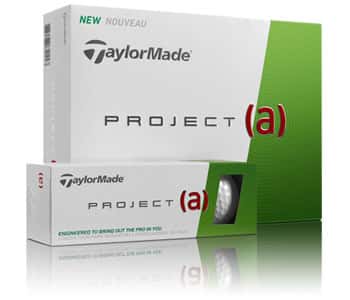
Designed specifically for amateurs, the Project (a) ball uses the company’s “React Core” to maximize a golfer’s length off the tee and the “Soft Tech” cast urethane cover to bump up the spin rate on short shots played around the green. TaylorMade’s ball also has a “Spin Mantle” middle layer that helps regulate spin on shots played outside the usual scoring zone.
TaylorMade engineers studied the tendencies associated with the typical recreational player and concluded that on average, amateurs generate 50 percent less spin than tour pros. So while your prototypical tour pro is hitting a dozen greens per round, an amateur is dancing for birdie only four to six times (depending on handicap). Whether it’s landing the ball short or hitting a screamer with a long iron that trundles off the back of the green, an amateur is working to save par about 75 percent of the time.
That’s a whole lot of opportunities to get up and down. With that in mind, the shot- stopping power of the Project (a) golf ball kicks in where you need it most - from 30 yards and in. Based on robot testing, the Project (a) ball generated an more than 2000 rpm of additional backspin on 30-yard shots over its nearest three-piece ball competitor and an impressive 3000 rpm over the competition from a 60-yard distance.
Of course golfers aren’t robots, so we at AmateurGolf.com recommend that you take the Project (a) ball ($31.99 per dozen) and other high-quality three-piece models out for a spin on the golf course to find the right ball for your game. Some excellent options within the same price bracket as the Project (a) include: Titleist’s NXT Tour and NXT Tour S, the new Chrome Soft ball from Callaway and Bridgestone’s eSeries.