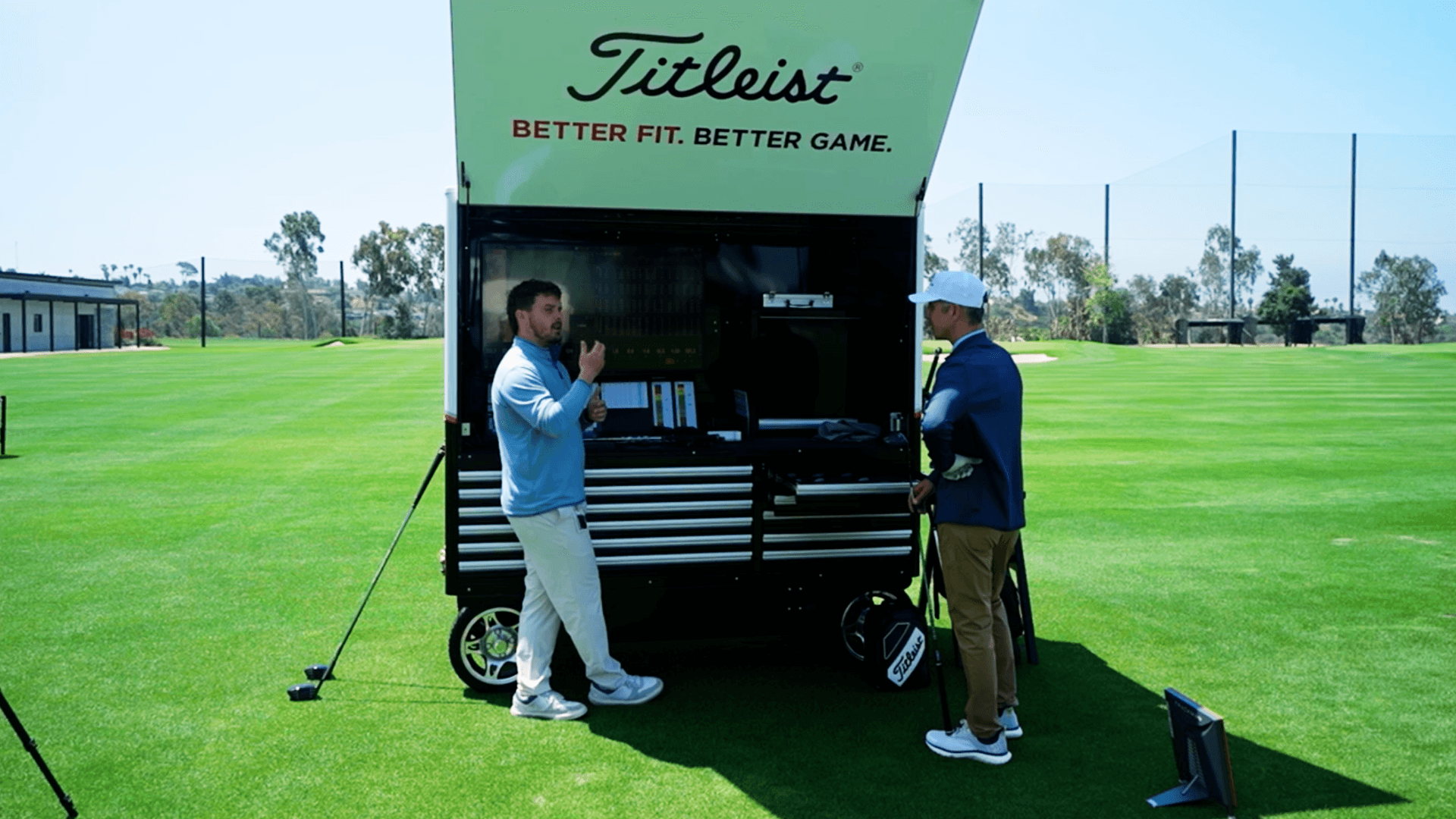
I've never carried a 3-wood. For years, my answer at the top of the bag was a 5-wood — easier to launch, easier to hold greens, and theoretically the more scoreable club. But this season, the theory stopped matching the results. I wasn't getting the height or the spin I needed for the 5-wood to actually do its job. Second shots into long par 5s were running through greens or leaking into trouble, and the eagle looks I wanted just weren't materializing.
That was the brief I brought into my fitting: I don't need another club that goes far. I need a fairway wood that gives me control and spin — something that turns long holes into real scoring opportunities and keeps my second shot in play when I miss.
The answer turned out to be the new Titleist GTS2 fairway at 16.5 degrees, paired with a Graphite Design Tour AD F1 shaft in extra stiff — the same shaft family I was fit into with my GTS driver, which keeps the top of the bag feeling like one continuous set rather than a collection of clubs.
Why the GTS2
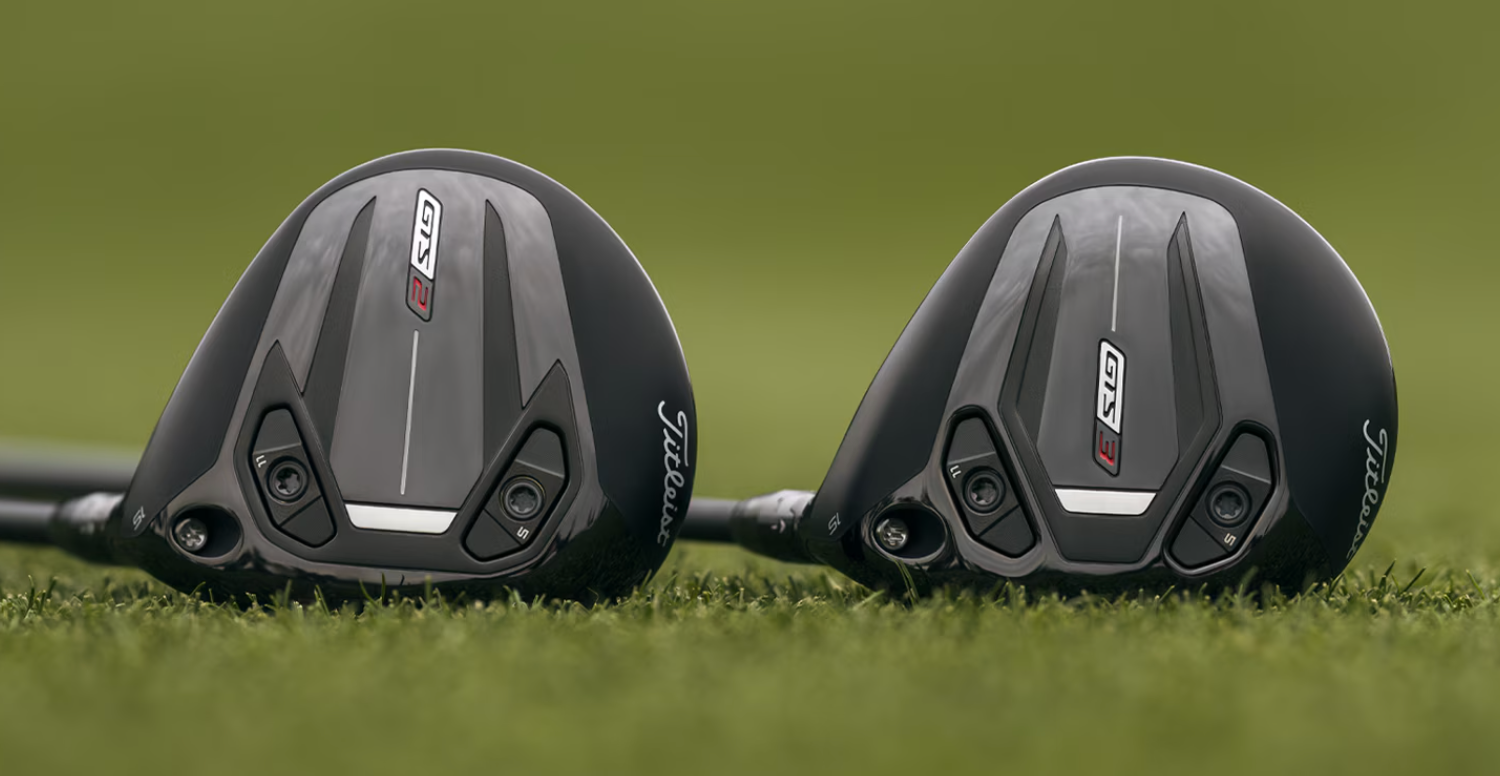
Titleist builds the new GTS fairway line around two head shapes. The GTS3 features a deeper face suited to steeper, more downward deliveries. The GTS2 is the shallower-faced, larger-profile head designed for sweepier swings and players who tend to catch it low on the face — which, off the deck, describes most of us more often than we'd like to admit.
The design story is genuinely different from the previous generation, and it starts with a number: 16 grams. Where the prior GT fairways used a flat composite crown sitting on a steel body, the GTS fairways wrap the composite around the perimeter of the head and down toward the sole. According to Stephanie Luttrell, Titleist's Senior Director of Metalwood R&D, that crown wrap freed up roughly 16 grams of discretionary weight — mass her team repositioned lower and deeper to hit the CG targets that define this club. The result is a center of gravity that sits closer to the actual point of impact: faster ball speed, higher launch, lower spin, and remarkable stability on strikes that aren't perfect.
The second piece is the re-engineered L-Cup face — not a marketing name but a forged, high-strength stainless steel insert that wraps under the leading edge to form an L-shaped cup around the bottom of the face. Its entire job is to preserve ball speed and launch conditions on low-face contact, the most common fairway wood miss off the turf for tour players and amateurs alike. And a new dual weighting system — an 11-gram weight in the heel and 5-gram in the toe as standard — gives the fitter direct heel-to-toe CG control on top of the 16-setting SureFit hosel.
On paper, that's exactly the recipe for a shallower swing looking for height and stopping power. On the launch monitor, it showed up immediately.
What the fitting revealed
The first thing I noticed had nothing to do with numbers: how the GTS2 sits. Across the whole fairway lineup, nothing sat closed to my eye. If anything, it sat a touch open — and as my fitter pointed out, even if that's the miss, that's a miss that stays in play. For a club whose entire job is keeping long second shots on the property, that matters.
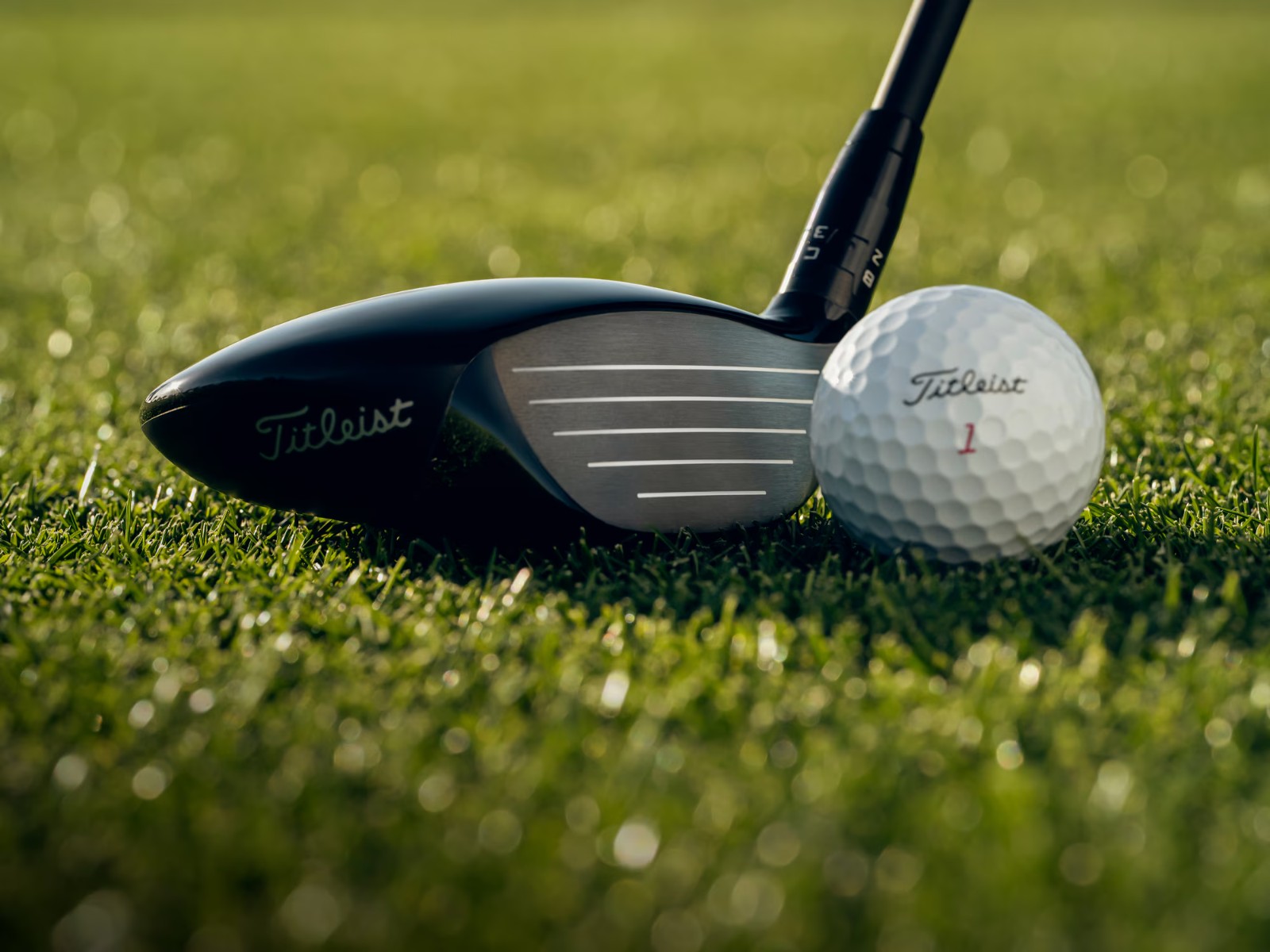
The new tour-inspired polished silver face — arguably the biggest visual change Titleist has made to a metalwood in years, replacing the dark titanium finish of past generations — helps here too. You can actually see the loft sitting behind the ball, which invites you to hit down and commit rather than trying to help the ball into the air. In a fitting built around adding launch, that visual is doing real work.
Then came the numbers. Ball speed was sitting at 150 mph, but the stat that sold me wasn't the speed — it was the rollout. A thinned shot, the classic low-face fairway wood miss, rolled out just 11 yards. That's the shallow face and that steel L-Cup insert doing exactly what they were engineered to do: preserving speed and launch on low contact so the miss behaves like a center strike. And when I put a full, high flight on one, it stopped in four yards. Four. That's a fairway wood landing like a mid-iron, which is precisely the eagle-chance profile I walked in asking for.
The 16.5-degree logic
The most interesting part of the fitting was the loft conversation. Rather than forcing the 3-wood-or-5-wood question, my fitter split the difference: a 16.5-degree head that uses the expanded SureFit adjustability as a range rather than a fixed point.
Playing a long course where height doesn't matter and I just need to keep it out there? Knock the loft down and it plays closer to a 3-wood. Facing a firm green where I want to bring it in soft? Loft it up and it becomes the high-launching 5-wood I used to carry. One head, two identities — and critically, it closes the distance gap to my driver, so if I ever need to chase after one, the club is actually there.
As my fitter put it, it's aggressive — in the right way.
The bigger picture
There's a reason Titleist swung this hard at the fairway category. The company's drivers have been the most played on professional tours for years, but its fairway woods never quite commanded the same market position — the GTS2 and GTS3 are a deliberate attempt to close that gap, and the early returns suggest it's working. The two models began their worldwide tour rollout in April at the RBC Heritage and the LPGA's JM Eagle LA Championship, following a GTS driver launch that saw more than 40 PGA TOUR players make the switch in the first three weeks. Cameron Young and Johnny Keefer were among the early fairway adopters, both putting GTS3 7-woods in play before the models were even officially seeded, and the GTS2 fairway has since collected independent hardware, including a spot in Golf Monthly's 2026 Editor's Choice awards on the strength of its dispersion and spin consistency.
The GTS2 retails at $399 ($599 with premium shafts) and is offered in 13.5, 15, 16.5, 18 and 21 degrees — the widest loft spread in the lineup, which is exactly what makes the split-the-difference fitting philosophy possible. My 16.5 sits dead center of that range for a reason.
For the competitive amateur, though, the takeaway from my fitting is simpler: the most scoreable club at the top of your bag might not be a loft decision at all. It might be a face-profile decision. If your misses live low on the face and your 5-wood has stopped holding greens, the GTS2 is worth an hour on a launch monitor — mine turned a gap in the bag into the club I'm now most excited to hit.
