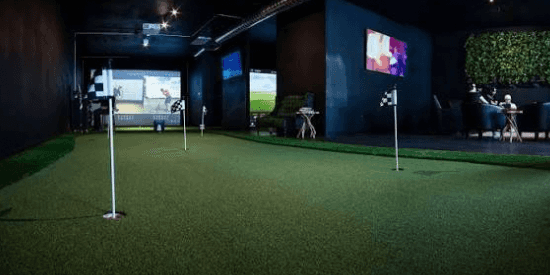
Golf looks like it’s booming—and in many ways it is. But beneath the headline growth is a quieter, more important story: the game is still fighting a retention problem. Tons of people try golf. Far fewer keep playing.
That’s where simulators matter most. Not as a winter novelty, not as a high-tech toy, and not as “golf’s replacement.” Simulators are becoming the bridge that helps new players stick long enough to become real golfers.
Golf is great at getting first-timers—then loses most of them
Traditional golf asks a lot upfront: time, money, etiquette, pace-of-play pressure, and a public learning curve. For beginners, one rough experience can be enough to walk away.
When millions try the sport but only a fraction become consistent players, the industry doesn’t just need more marketing. It needs a better on-ramp.
Why simulators succeed where the course often fails
No dress-code anxiety. No strangers behind you. No pace-of-play guilt. No lost balls. Beginners can swing freely without feeling like they’re “ruining the day” for a group.
Simulators naturally fit how non-golfers want to experience golf: as a shared activity with conversation, music, food, and laughter—without needing “golf competence” on day one.
New players get immediate validation: distance, ball speed, flight, and pattern recognition. It turns “I’m terrible” into “I’m improving,” which is the foundation of retention.
The bridge effect: confidence first, course later
The most important role simulators play isn’t “letting golfers play Pebble Beach in January.” It’s delaying the moment a new player has to commit to the hardest version of golf.
And because many simulator users are non-golfers—and many indicate they’re likely to return—the indoor format is increasingly where the “sticking” starts.
Bottom line
If the industry wants long-term growth, it has to stop thinking only about getting people to try golf—and start thinking about how to keep them.
That’s why simulators matter. They don’t replace tee times. They create golfers.