
Special thanks to Club Historian Fred Waterman for showing us around.
Here are some amateur stories from The Country Club that aren't often told.
Lawson Little and the 14 club rule
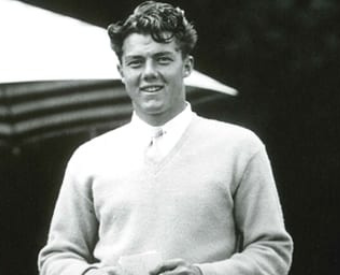
Lawson Little
The 1941 U.S. Women's Amateur champion had only been playing golf for four years when she arrived at The Country Club. Her victory catapulted Newell into a life of golf. She was the co-founder of The Women's Professional Golf Association which gave birth to the LPGA, where she acted as a tournament director, publicist, and photographer.
Jess Sweetser
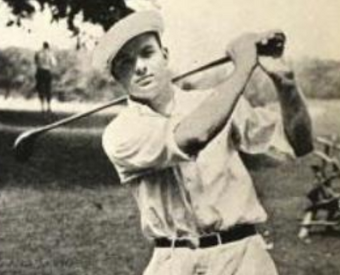
Jess Sweetser
Ouimet and Sweetser return as Walker Cup captains
In 1932 Ouimet was a victorious playing captain in the Walker Cup. In 1973, Sweetser returned 71 years after his U.S. Amateur triumph to earn a victory and revenge for a 1971 loss at St. Andrews to the Great Britain and Ireland team.
A phenom flames out
Eddie Pierce was supposed to be the next big thing in golf. He dominated the 1968 U.S. Junior Amateur championship with his strength and skill. The dazzling amateur, however, couldn't live up the title of "The next Nicklaus" and instead lived the fast life. He skipped high school classes to play big money games. He never won as a professional and later said, "I lived it 120 percent. Man, I had a good time."
Military Men
The 1954 U.S. Amateur final was played between Air Force Lt. Hillman Robbins and Bud Taylor, a dentist who spent time in the military, even working on General Eisenhower's teeth days before the D-Day invasion. Taylor was 40 years-old. He was no match for Robbins in the final, as the high heat and long week caught up with the dentist.
Jay Sigel's accidental amateur status
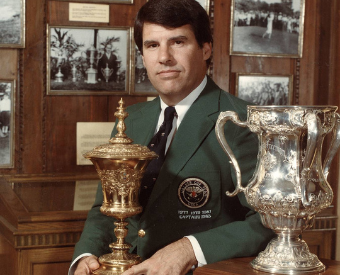
Jay Sigel
Champion, instructor, and author
Genevieve Hecker won the 1902 U.S. Women's Amateur championship at The Country Club. She was 18 years old and was known as "America's first female golfing sensation." The 1902 win was her second in a row. Two years later, Hecker wrote the first golf book specifically for women, presenting "The royal and ancient game to the feminine inquiring mind."
Edward Stimpson's new tool
Edward Stimpson attended the 1933 U.S. Open at Oakmont. It generated a rather disappointing result as local club pro Sam Park Jr. won the tournament. Why did Parks outlast and outwit the best golfers in the world? He played Oakmont regularly in preparation for the championship and understood the variation of speed from green to green. It was a drastic enough difference that other players couldn't figure it out in time. Hence, Parks was the national champion in 1933.
The Stimpmeter was born. But not without a lot of consternation. The USGA deemed the simple device not scientific enough, as it was simply a 36 inch wooden ramp with a groove for the ball to travel down 30 inches of this ramp.
It took 40 years for the USGA to crack and admit that the Stimpmeter was the right tool for the job, and at the 1976 U.S. Open at the Atlanta Athletic Club all the greens were dialed to a speed of 7 on the stimpmeter.