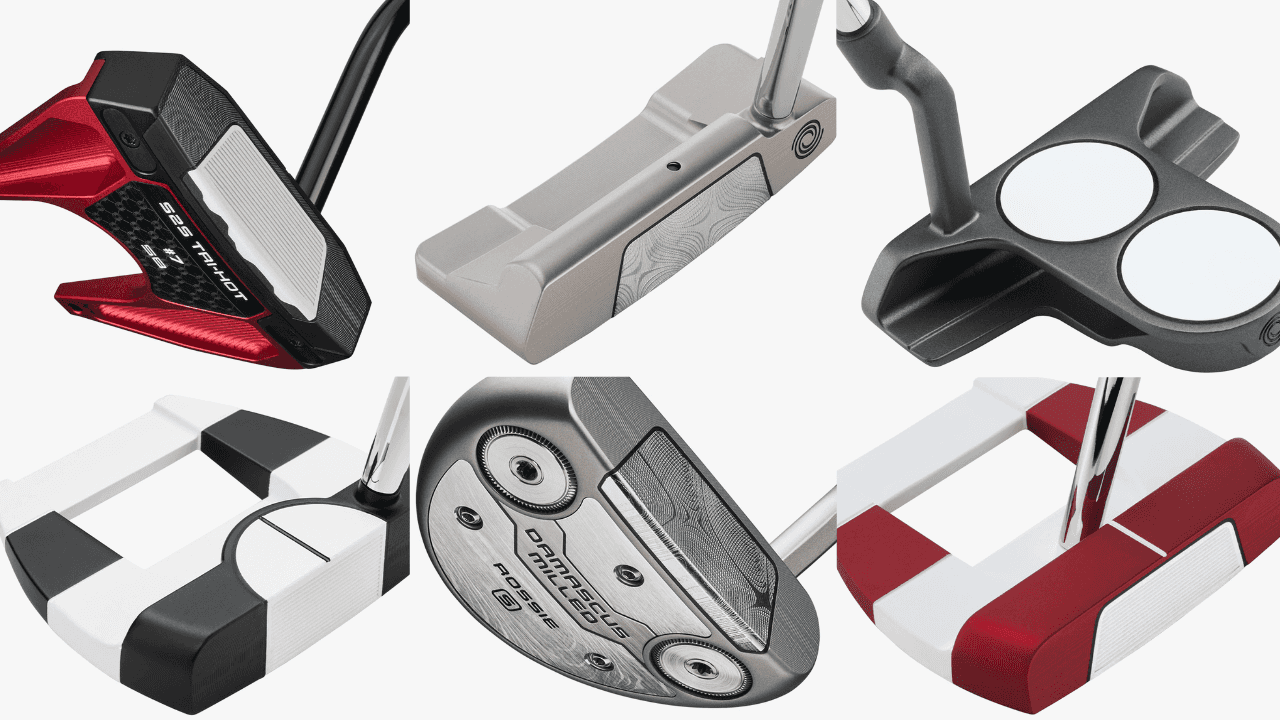
The putter is the most used club in the bag, but it is also one of the most personal. Head shape, face feel, alignment, hosel design, length, and grip can all change how a putter looks, feels, and performs.
Odyssey offers a wide range of putters, from traditional blades to high-MOI mallets, soft insert faces, milled designs, multiple alignment systems, and several hosel options. The goal is not simply to find the “best” putter. It is to find the Odyssey putter that best fits your stroke, setup, and preferences.
Head Shape: Mallet vs. Blade
One of the first decisions is head shape.
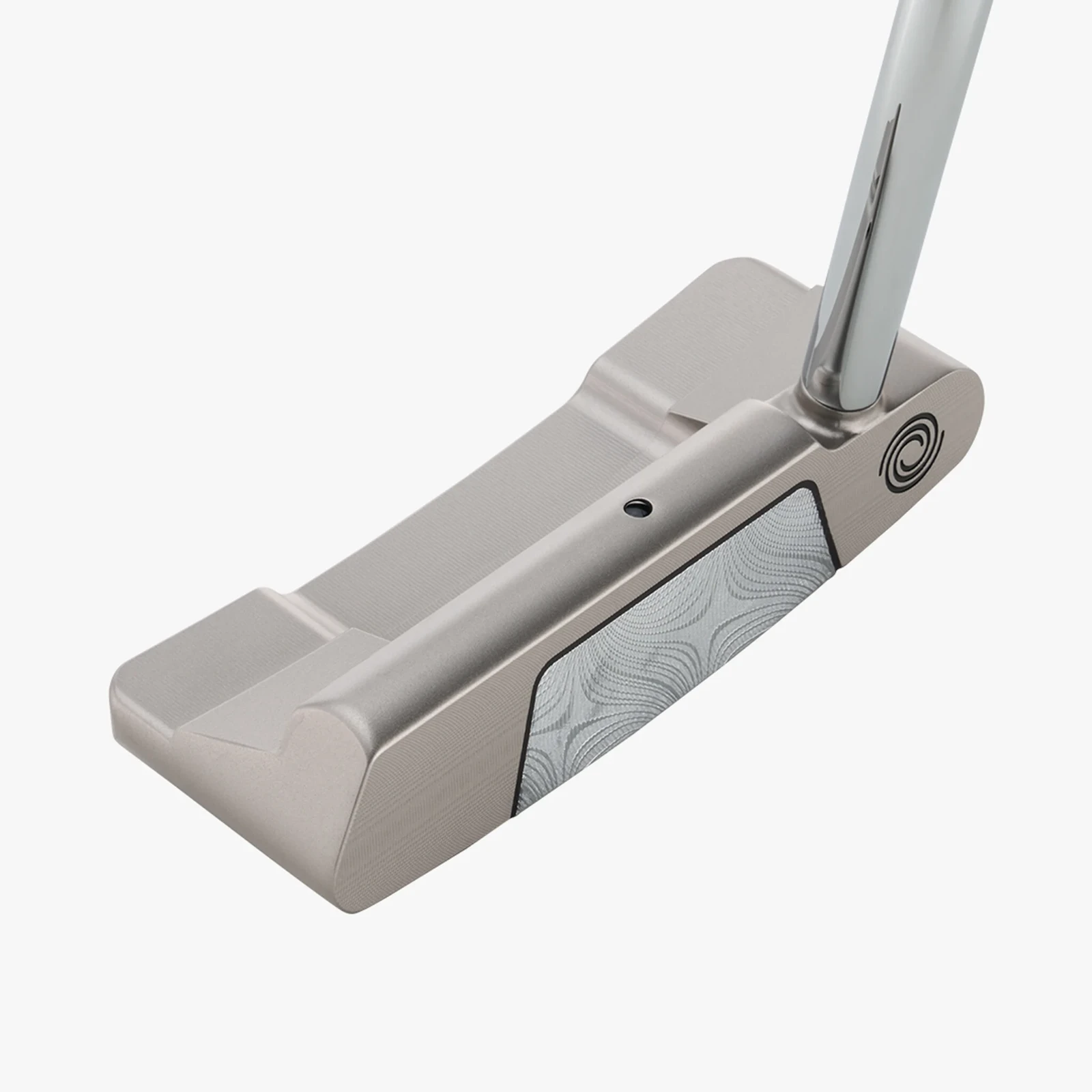
Blade putters have a traditional, compact look and are often preferred by golfers who like more feedback and a cleaner profile at address. They usually work well for players with some arc in their stroke, where the face naturally opens and closes.
Mallet putters are larger and generally more forgiving. Their size allows more weight to be placed around the perimeter of the head, which can improve stability on off-center strikes. Many Odyssey mallets also include stronger alignment aids, making them a good fit for golfers who want help aiming the face and starting putts online.
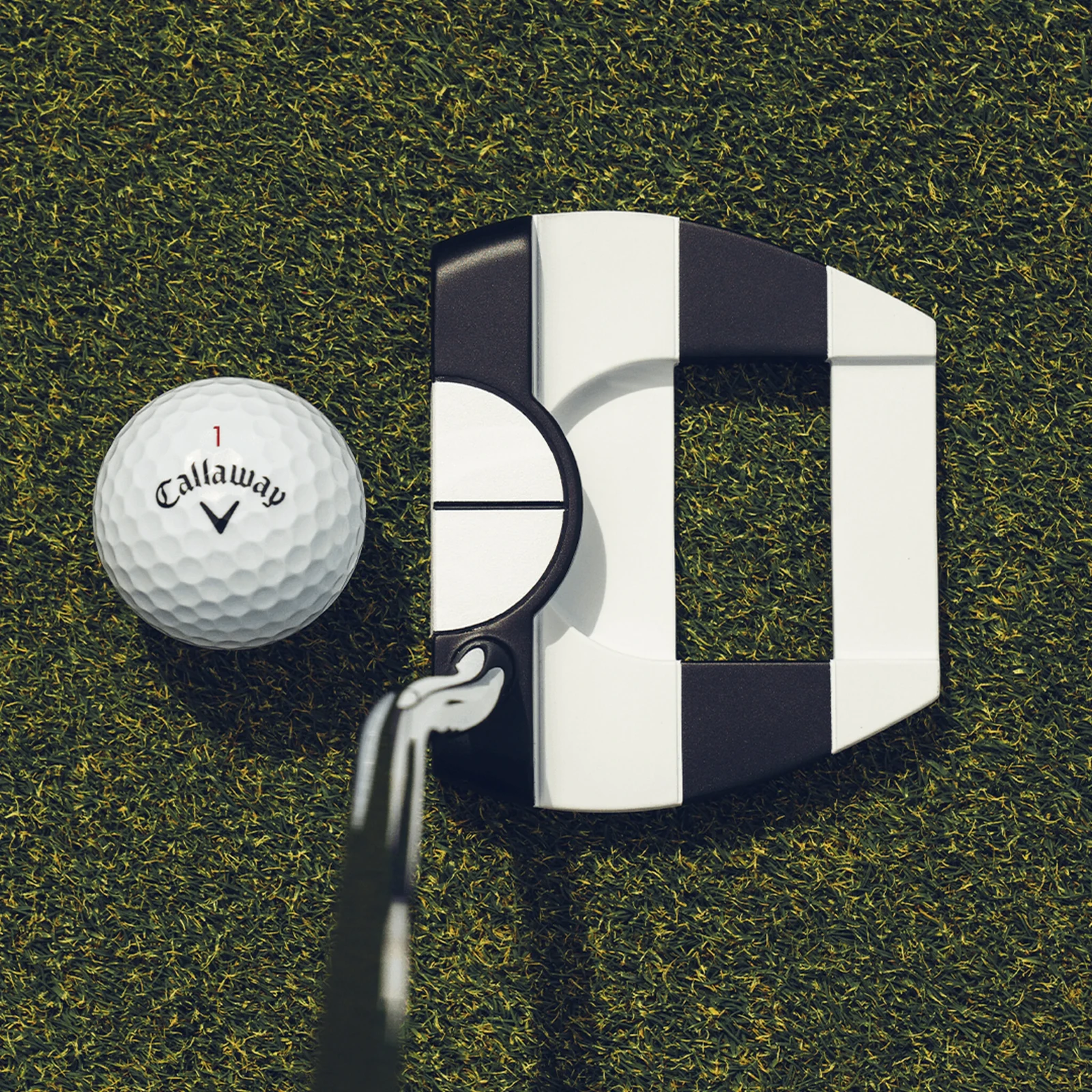
A blade may be the better fit if you prefer a simple look, more feedback, and a putter that releases naturally. A mallet may be better if you want more forgiveness, stability, and alignment help.
Alignment Aids: What Looks Best to Your Eye?
Alignment is a major reason golfers choose Odyssey putters. The right visual aid can help you square the face, aim more confidently, and start more putts on your intended line.
Odyssey offers several alignment styles. The Two-Ball alignment system uses two circular discs behind the face to help golfers visually connect the putter to the golf ball. It is one of Odyssey’s most recognizable designs and can be especially helpful for players who struggle with aim.
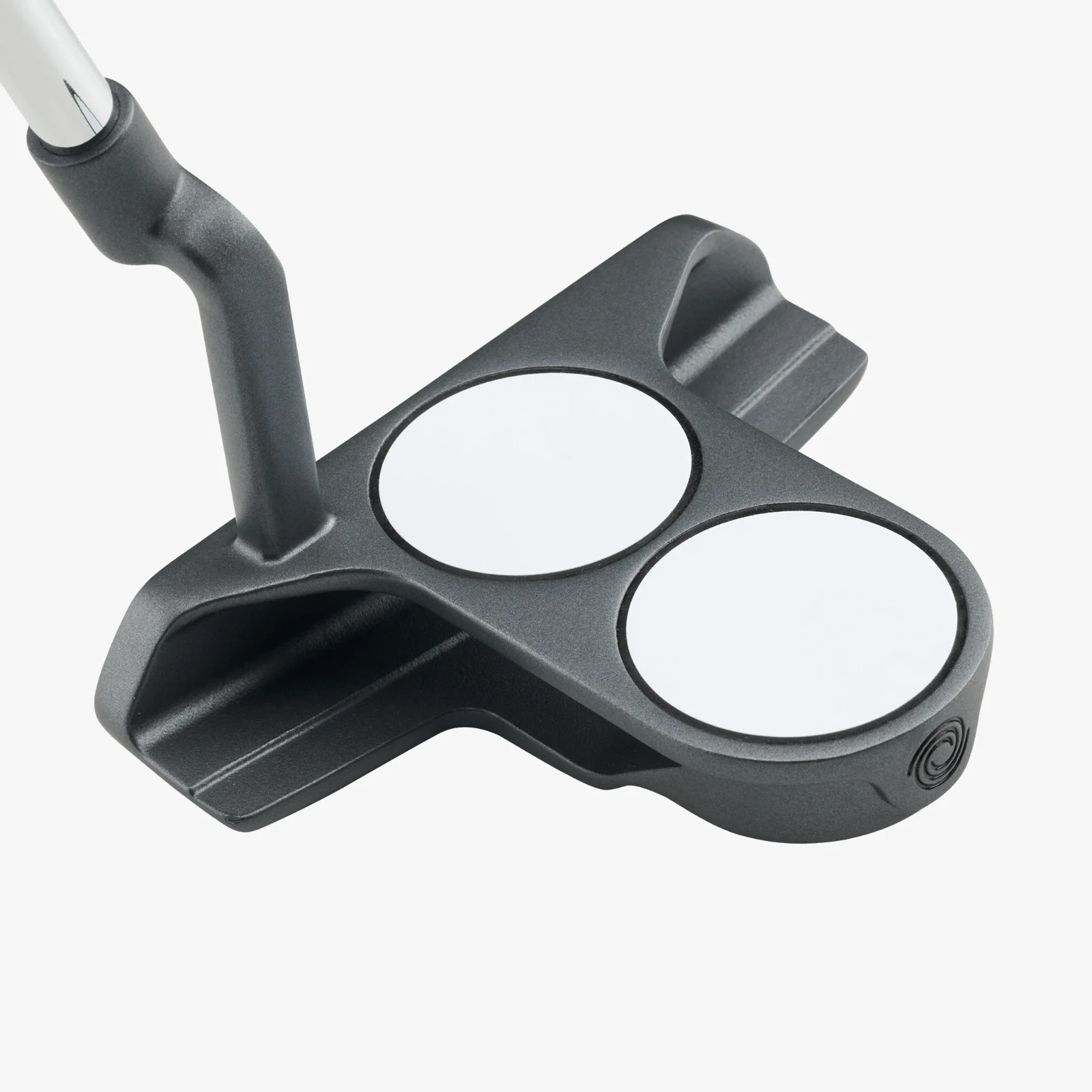
Half-ball alignment offers a similar concept in a slightly cleaner look. It can frame the ball without feeling as visually bold as the full Two-Ball design.
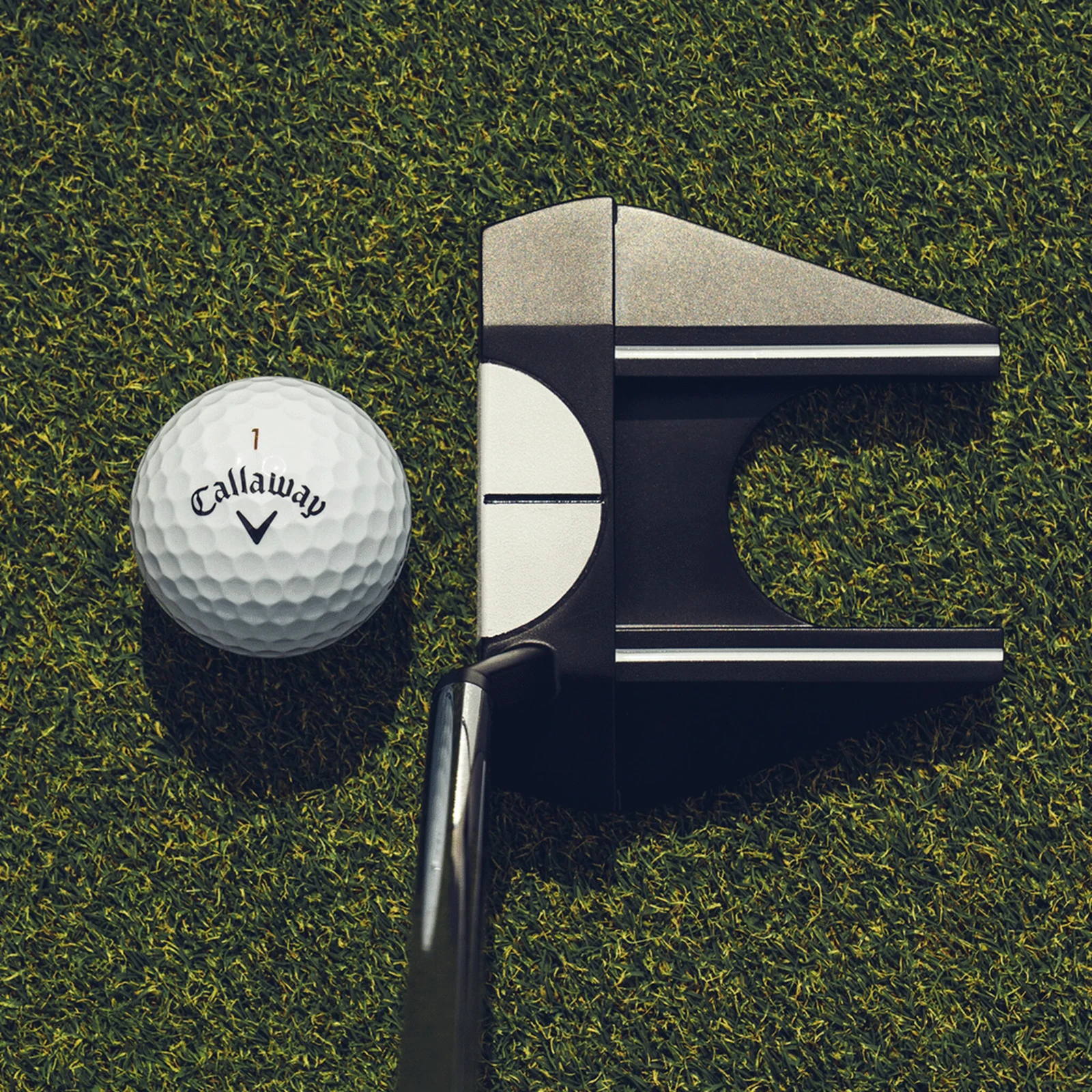
More minimal options, like a short straight sight line or small three-dot alignment aid, give golfers a cleaner look at address. These styles can work well for players who already aim the putter well or prefer less visual distraction.
The best alignment aid is the one that makes the putter look square without making you overthink the stroke.
Face Design: Milled vs. Insert
Face design affects feel, sound, and speed control.
Odyssey is best known for its insert putters, which typically offer a softer feel and quieter sound at impact. Insert faces can be a strong fit for golfers who want a smooth response off the face and prefer a softer sensation on the greens.
Milled putters usually provide a firmer, more direct feel. They can offer more feedback on strike location and may appeal to golfers who like a traditional sound and a clearer connection to impact.
Choose an insert if you prefer soft feel and smooth roll. Choose a milled face if you prefer firmer feedback and a more traditional response.
Hosel Design: Toe Hang vs. Face Balanced
Hosel design influences how the putter hangs, how much the face rotates, and how naturally it matches your stroke.
Face-balanced putters are often best for golfers with a straighter-back, straighter-through stroke. These putters are designed to reduce face rotation and help the face stay more square during the stroke.
Toe-hang putters are often better for golfers with an arcing stroke. The more arc you have, the more toe hang you may prefer.
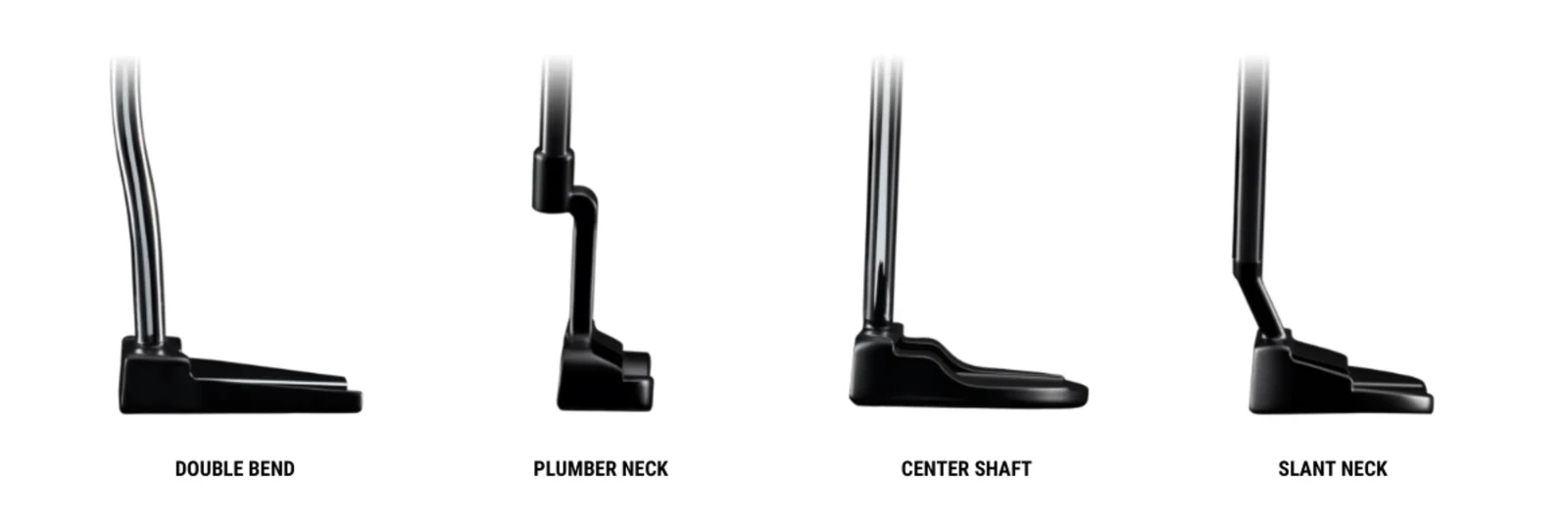
Odyssey offers several common hosel styles:
A double bend, or S-bend, is commonly used in face-balanced putters and is a good fit for golfers with minimal face rotation.
A plumber neck, or L-neck, usually creates moderate toe hang and works well for players with a slight to moderate arc.
A center-shafted putter can help golfers who want the shaft and face to feel more directly connected, often with minimal face rotation.
A slant neck typically creates more toe hang and is useful for golfers who like the forgiveness of a mallet but still need the putter to release through impact.
Putter Length: Finding the Right Setup
Putter length affects posture, eye position, arm hang, and stroke mechanics. A putter that is too long or too short can make it harder to aim, control the face, and make a natural stroke.
Golfers without access to a professional fitter can estimate a starting length by standing upright with their arms at their side and having someone measure from the ground to their wrist. Wearing golf shoes will make the measurement more accurate.
Subtract two inches from that wrist-to-floor measurement to find a baseline putter length.
From there, test putters in one-inch or half-inch increments to see what feels most comfortable. If possible, test on a putting green or putting mat and pay attention to posture, eye position, alignment, and whether the stroke feels natural.
Putter length is personal, but the right length should help you set up comfortably and repeat your stroke with confidence.
Grip Style: Standard, Oversized, Pistol, and Flat
Grip style can change the feel of the entire putter.
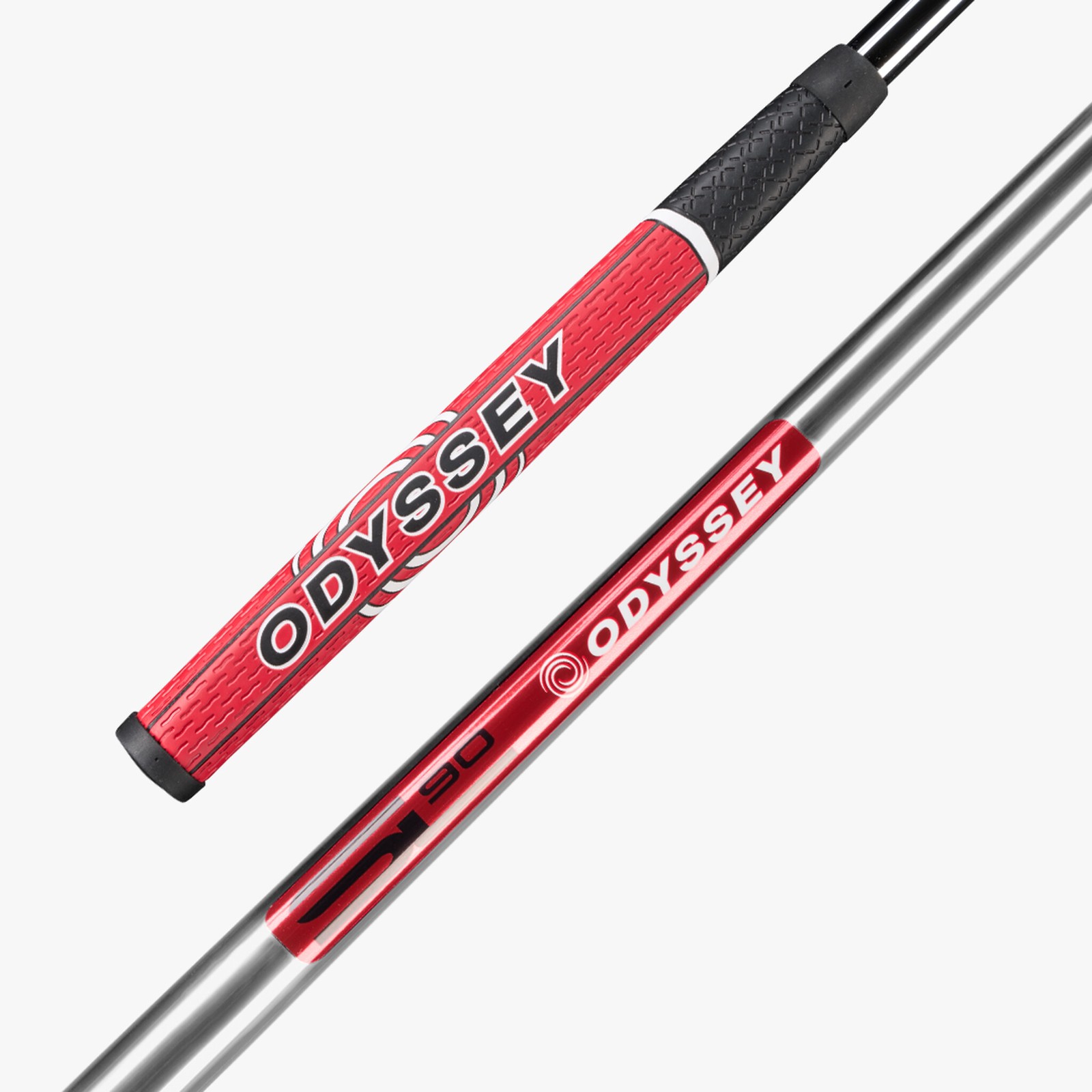
Standard grips are thinner and provide more feedback and club control. Golfers who like to feel the putter head throughout the stroke may prefer this style.
Oversized grips are designed to reduce wrist movement and quiet the hands. They can help golfers who struggle with excess face rotation or inconsistent start lines.
Pistol grips have an ergonomic shape that narrows at the top and widens toward the bottom. They offer a traditional feel while helping golfers maintain consistent grip pressure.
Flat grips feature at least one flat side and are designed to improve hand placement and face awareness. They can be a good option for golfers who want help setting their hands consistently.
How to Choose the Right Odyssey Putter
Start with your stroke.
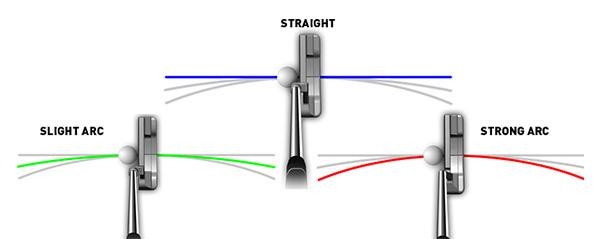
Golfers with a straighter stroke may want to begin with a face-balanced mallet, double-bend hosel, and a grip that helps keep the hands quiet.
Golfers with a slight arc may prefer a blade or compact mallet with a plumber neck and moderate toe hang.
Golfers with a stronger arc may benefit from more toe hang, often found in slant-neck models or traditional blade shapes.
From there, narrow the choice by feel, alignment, length, and grip. Some players will aim best with a bold Two-Ball or half-ball alignment system, while others will prefer a short sight line, three-dot setup, or minimal visual aid. Some will like the soft response of an Odyssey insert, while others will prefer the firmer feedback of a milled face.
The right putter should help you aim the face consistently, start the ball on your intended line, and control speed from different distances.
Final Thoughts
Buying an Odyssey putter is not about choosing the newest model or the shape used by the most tour players. It is about finding a putter that fits your stroke, looks right to your eye, feels comfortable in your hands, and gives you confidence over the ball.
Start with head shape, then narrow your search by alignment, face design, hosel style, length, and grip. Whenever possible, test multiple options on a real putting surface and pay attention to what helps you aim better, roll the ball consistently, and feel confident from short, mid-range, and long-distance putts.
The best Odyssey putter for you is the one that makes setup feel natural, the stroke feel repeatable, and the ball roll on your intended line more often.
Check out Odyssey's Putter Selection Tool
