Your kid likes golf. Maybe they love it. And somewhere between the first range bucket and the question "are there tournaments I can play?", you've realized there is no map — just a scatter of tour websites, ranking acronyms, recruiting deadlines, and price tags that nobody lays out in one place.
This is that map. It follows a junior golfer from the first competitive round at age seven to a college roster spot, and it tells you the truth at each stage: what to do, when to do it, what it costs, and which events actually matter. We cover a lot of competitive amateur golf at amateurgolf.com — junior, college, mid-am, and the national amateurs that sit above them — so we'll also show you where your child's path connects to the wider game, and how to find the events near you that fit where they are right now.
One promise up front: this is a roadmap, not a sales pitch. The honest answer to "should my kid chase this?" is usually "play, have fun, and let ambition reveal itself." Everything below assumes you want to support that without overspending, overscheduling, or guessing.
Find junior events near you. Our junior tournament search lists current, open events you can filter by state and date. Start there, then come back to figure out which ones are worth entering.
The five stages, at a glance
Junior golf isn't one thing. It's five distinct phases, and the most common, most expensive mistake parents make is treating an eight-year-old like a recruit. Here's the whole arc before we go deep on each.
- Getting started (ages ~5–10). Fun, fundamentals, and team formats. The goal is a kid who wants to come back.
- The developmental years (ages ~10–13). The move from recreational to individual stroke play. First real tournaments, first scores that stick.
- High school and the climb (ages ~14–18). National tours, rankings that count, and the schedule that builds a record.
- College recruiting. A timeline with hard NCAA dates and clear benchmarks — most of which happen earlier than parents expect.
- The pro path. Real, rare, and almost always routed through college first.
You do not need to think about stage four when your child is in stage one. But knowing the whole arc keeps you from over-investing early and under-preparing late.
Stage 1 — Getting started (ages ~5–10)
At this age, the only metric that matters is whether your kid asks to go back. Scores are noise. The job is to build a swing they own and a relationship with the game that survives a bad day.
Three on-ramps do this well, and they're inexpensive relative to everything that comes later:
- PGA Jr. League. Team golf with jerseys, a scramble format that hides individual pressure, and a PGA coach running the show. For 2026 the league added a 9-and-under division built specifically for the youngest players — shortened holes and games designed for fun. It's the single best first competitive experience for most kids.
- First Tee. Curriculum-based, character-forward, and often the most affordable structured program in a given town. Frequently runs the local PGA Jr. League teams.
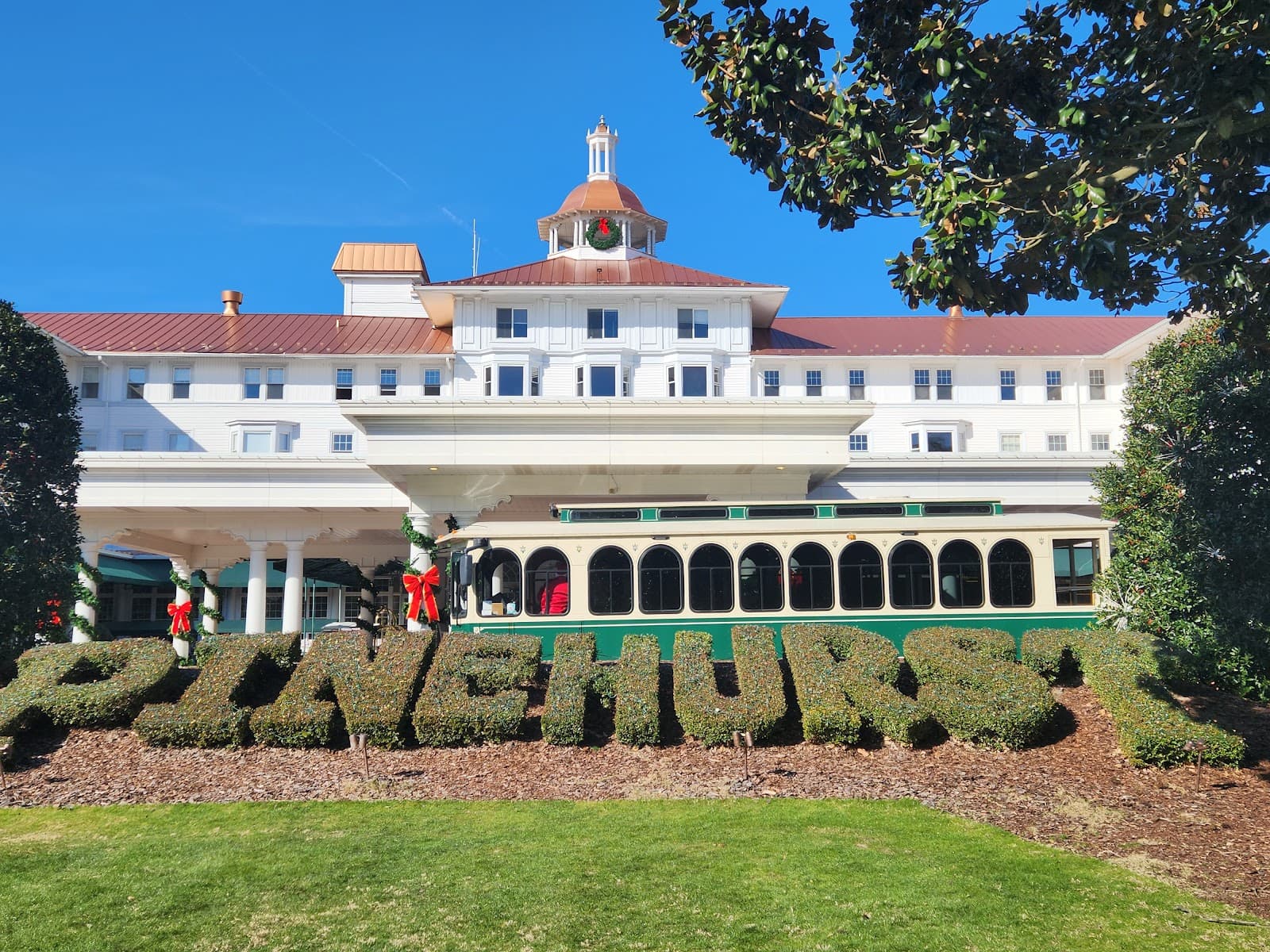
- US Kids Golf Local Tours. Beginner-friendly individual events for ages 5–14, grouped by age and skill, with right-sized yardages. Play four events on the same Local Tour in a season and you earn Priority Status, which is the first rung toward US Kids' bigger multi-day invitationals and, eventually, the World Championship in Pinehurst.
Equipment, briefly: get clubs that fit. A properly sized, lightweight junior set matters far more than brand. Don't cut down adult clubs — they're too heavy and they teach a bad swing.
What "good" looks like here: showing up, short-game curiosity, and the ability to lose without melting down. That's it.
Going deeper on getting started? See the Getting Started guide for the first-year plan.
Stage 2 — The developmental years (ages ~10–13)
This is the transition that separates "plays golf" from "plays tournaments." It's also where parents start spending real money, so it's worth being deliberate.
The shift is from team and scramble formats to individual stroke play, where your child posts a number that's theirs alone. That's a real psychological step. Ease into it with low-stakes events before chasing anything with a ranking attached.
Two structures dominate this stage:
- US Kids Golf multi-day events, the natural progression from Local Tours.
- The Hurricane Junior Golf Tour (HJGT) — the largest open junior tour in the world, with 275-plus two- and three-day events across more than 20 states. Its open events are exactly that: open registration, no qualifying, anyone can enter. That makes Hurricane the easiest way to get genuine tournament reps. Success in open events earns invitations to the tour's invitationals and the Hurricane Cup.
This is also where a sane schedule starts to matter. Eight to twelve events across a season is plenty. The aim is reps and resilience, not a ranking. Mix nearby one-day events with a couple of two-day tournaments so your kid learns to grind a second round.
Build the first real schedule. Filter our junior event search to your state, then read How to Build a Junior Golf Schedule for the season-construction logic.
Stage 3 — High school and the climb (ages ~14–18)
Now the events have consequences. High school is where a golfer either builds a competitive record or doesn't, and the currency of that record is rankings earned at ranked events.
The tours that matter most:
- The AJGA (American Junior Golf Association) is the premier national stage and the one college coaches watch closest. You don't simply enter AJGA events — you earn into them through Performance-Based Entry (PBE), accumulating Performance Stars by finishing well at recognized state, regional, and national events and AJGA qualifiers. New AJGA members start on the Preview Series, then work toward the Open and Junior All-Star series, and the strongest players reach Invitationals. AJGA membership (Junior or Junior Plus) is required to apply and to use earned status.
- State and regional junior circuits run by your state golf association — these are where most Performance Stars are actually earned, and they're closer to home and cheaper than chasing national events cold.
The rankings, decoded (the full breakdown is in Junior Golf Rankings Explained):
- Rolex AJGA Rankings — point-based, a rolling 52-week window, weighted toward strength of field and strength of finish. This is the one college coaches lean on most.
- Junior Golf Scoreboard — a long-running national ranking using a scoring differential.
- WAGR (World Amateur Golf Ranking) — the global amateur ranking across all ages on a 104-week cycle; juniors appear here once they start beating older amateurs, and it's the ranking that carries into college and beyond.
The climb in practice: play your state circuit to earn stars, convert those into AJGA starts, and let your scoring average and ranking do the talking. A focused 10–14 event season beats a frantic 25-event one every time.
See where it connects. Many of the premier junior and amateur events we cover are searchable in our tournament catalog — including AJGA-tier events. This is the stage where your child's results start showing up in the same ecosystem as college and elite amateur golf.
Stage 4 — College recruiting (the timeline that surprises everyone)
The single most important thing to understand about college golf recruiting: the dates are fixed, and they arrive earlier than you think.
For NCAA Division I, the gates are:
- June 15 after sophomore year — the first day coaches can personally contact a recruit: calls, texts, emails, direct messages, and verbal offers.
- August 1 before junior year — when official and unofficial visits can begin.
Two cautions. First, coaches treat June 15 as a checkpoint, not a starting gun — they've been quietly tracking players since freshman year through results and rankings. The work that earns the June 15 call happens in the two years before it. Second, the 2026 landscape has shifted: smaller D1 rosters, the transfer portal, and the new roster-cap era have made spots tighter and recruiting more data-driven. (We go deep on this in our article College Golf Recruiting in 2026 — What's Actually Changed.)
What coaches actually evaluate: scoring average against real fields, Rolex AJGA / WAGR ranking, strength of the events you've played, and your trajectory. Beyond D1 there's a deep, often-overlooked world of D2, D3, NAIA, and JUCO programs where a great fit beats a marginal D1 bench spot.
The benchmarks — the actual scoring averages and rankings by division — are specific enough that we've put them in the member section below, because that's where planning turns into action.
Recruiting reading: the full timeline lives in College Recruiting.
Stage 5 — The pro path (honestly)
Here's the part most junior-golf marketing won't say plainly: the odds of turning professional are very long, and almost every player who makes it goes through college golf first. College is not a detour from the pro path — it is the pro path's on-ramp.
For the small number who keep climbing, the modern routes are clearer than they used to be: PGA Tour University rewards top college players with direct status, and from there the ladder runs through the Korn Ferry Tour, Q-School, and the mini-tours. Amateur status and a strong WAGR carry real weight through all of it. The elite amateur events we cover — see our Elite Amateur Series — are where much of this pipeline actually runs.
The healthy way to hold this stage: chase the next milestone, not the dream. Be a great high school player. Then a recruited college player. The pro question answers itself, later, on its own.
Going deeper: The Pro Path.
What this all costs (the number nobody quotes)
Junior golf can cost almost nothing or a small fortune, and the difference is mostly ambition and travel — not talent.
Rough, honest benchmarks for a competitive season:
- Entry fees: about $100–$300 per tournament, 8–15 events a year.
- Coaching: anywhere from $1,000 to $10,000 a year depending on how much and how high-end.
- Travel: the swing factor. Flights, hotels, practice rounds, and rental cars are what turn a $3,000 season into a $15,000 one.
Add membership at a course, equipment, lessons, and travel, and a genuinely competitive year runs north of $10,000. A family running the full national AJGA path for five years can spend on the order of $50,000.
You do not have to spend that. A kid who plays a strong state circuit, drives to events, and keeps coaching efficient can build a college-worthy record for a fraction of it. The detailed budgets — local, regional, and national, with line items — are in the member section, and in What Junior Golf Actually Costs.