
2015 Game-Improvement Irons ROUNDUP: AmateurGolf.com Staff Review
2/1/2015 | by Rusty Cage
see also: Equipment Reviews
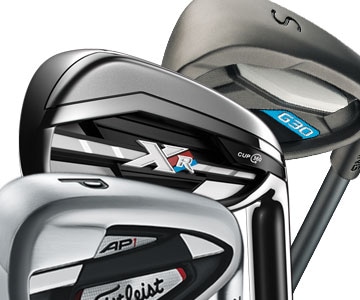
New 2015 game improvement irons from Titleist, Callaway, Ping and other companies offer distance, forgiveness and great looks.
Across the board, all the irons reviewed in this category are the beneficiaries of improvements made to enlarge the hitting area. Some of those innovations include the use of stronger and lighter materials, designing longer irons with a thicker topline while progressively reducing the sole for the scoring clubs, adding tungsten and other steel inserts for a maximum spring-like effect, combined with other measures we’re more accustomed to seeing in fairway woods and drivers. If you can’t picture yourself throwing a set of game improvement irons into your bag because you can’t stand the look of them, you better think again. Today’s GI clubs can be called many things, but distance shovels isn’t one of them.
Titleist AP1 Irons
As a brand, Titleist has long been recognized as a market leader in developing performance equipment for highly-skilled players in the amateur and professional ranks. Of course that type of achievement might mistakenly cause a lot of mid-range handicappers to take themselves out of consideration for a set of AP1 irons.
While the AP1 irons might look like they belong in the bags of scratch golfers everywhere, they really have plenty of forgiveness for a wider range of players. The AP1 irons have a high MOI design. Tungsten weighting is placed into a deep, undercut, dual-cavity design that improves ball speeds across the face. On longer irons, a lower center of gravity maximizes the carry distance. Shorter irons have a narrower sole and raised CG which flattens the trajectory.
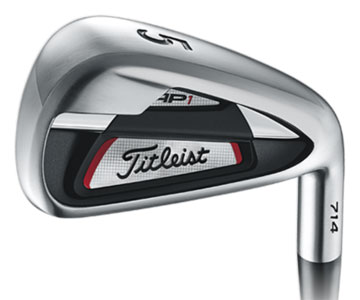 |
Titleist AP1
irons |
Along with progressive CG placement and blade length, the AP1s are known for their solid feel and smooth turf interaction. Three different shafts come standard: the True Temper XP95 and Mitsubishi Kuro Kage Series Low Balance 65 and 50. A wide range of aftermarket shafts are available standard or with an up-charge.
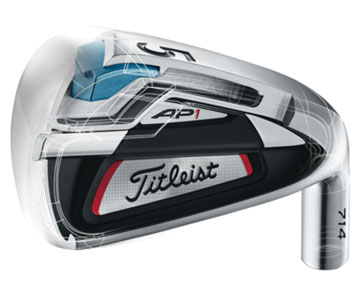 |
Titleist AP1 iron
technology |
Callaway XR / XR Pro Irons
Callaway’s Face Cup 360 technology was first introduced in the hollow-bodied Big Bertha Irons. Face Cups allow Callaway engineers to control the thickness of the irons and surround the iron hitting surface like a spring, improving ball speed on all shots, but especially on those struck low on the face. While the Big Bertha irons are Callaway’s solution for golfers on the higher-end of the handicap spectrum, the XR series is much more inline with what better players look for in an iron set.
The XR irons have a very modest offset and a super clean look at address. They have a slightly muted sound on well struck shots that some players will prefer and just enough feel to let good golfers know when they’ve hit it on the button as well as when they haven’t. The XR irons, as you would expect, are aggressively long. An independent weight pad that Callaway calls an Internal Standing Wave does several things: it lowers the center of gravity, increases the MOI and gives those face cups the ability to flex more and deliver better distance.
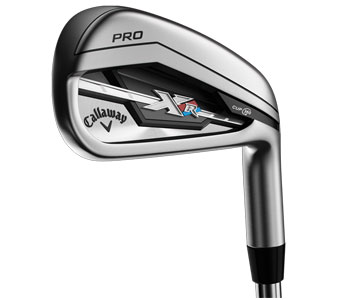 |
Callaway XR Pro
iron |
The XR Pro models are packed with the same technological innovations but have a thinner top line and narrower sole width that better players will prefer. The XR irons ship with the True Temper Project X SD shaft (L, R, S) while the Pro models give you the option to play them with either the KBS Tour V90 (R, S, XS) or True Temper TT Speed Step 80 (R, S).
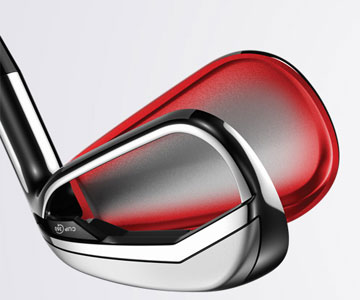 |
Callaway XR Cup 360
technology |
Ping G30 Irons
Compared to the G25 irons, the new G30 models from Ping are longer and better feeling due to a softer elastomer badge in the set. In terms of length, shots hit off the 4 iron fly about seven yards longer than the previous generation of irons according to Ping estimates and the 7 iron is roughly three yards longer.
Those distance gains can be attributed to a number of factors. Ping gave the G30 irons slightly longer shafts to help golfers get a little bit more clubhead speed. They also strengthened the lofts on their longer irons. For example, the loft on a G30 6 iron is 27 degrees while the same club from the G25 set is 29. To help golfers achieve better distance on all shots, including those that miss the center of the face, Ping widened the soles of their G30 irons repositioning center of gravity a little lower and deeper. Those changes allow the G30 irons to launch the ball higher while maintaining a high MOI for increased stability at impact.
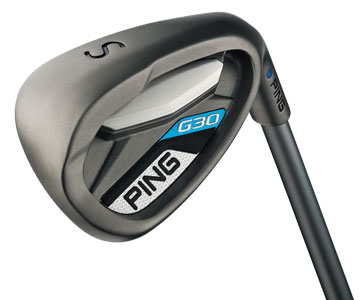 |
Ping G30 iron
|
Several shafts come standard with the G30 irons and are available in multiple flexes. By default, the Ping G30 irons are outfitted with CFS distance shafts (SR, R, S, XS). True Temper XP 95, TFC 4191 and TFC 801 are also available.
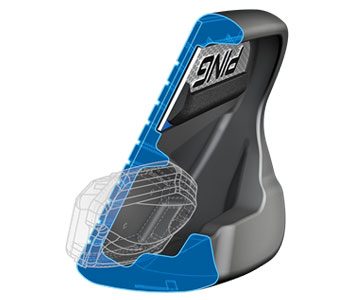 |
Ping G30 custom
tuning port |
TaylorMade RSi 1 Irons
From the same company that introduced the Speed Pocket, TaylorMade came up with the crazy notion to carve a pair of vertical FaceSlots directly into you guessed it - the face of their irons. Feel free to dismiss TaylorMade’s revolutionary design as gimmicky. Believe me, they’ve heard all the gripes. But consider the following tidbit: in studies conducted by TaylorMade, the company has shown that 76% of shots hit by golfers are mis-hits. Frankly, the percentage itself is debatable but end result is the same - golfers need help on misses.
To that end TaylorMade’s FaceSlot technology provides uniform flexion across the face causing the ball to lose less speed whether you hit it near the toe, heel or just low on the face. Combine that with a deep undercut cavity and an ultra-thin face and you get a club that’s longer than the company’s Speed Blade irons released a year ago. And that’s not just my opinion; independent tests have shown that the RSi 1 irons help golfers pick up additional clubhead speed over their predecessors.
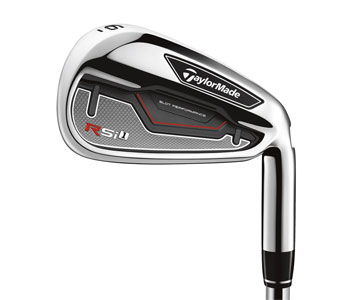 |
TaylorMade RSi 1
iron |
TaylorMade’s RSi 1 irons come stock with True Temper Reax 90 shafts (R,S) for a mid-to-high ball-flight trajectory.
Nike Vapor Speed Irons
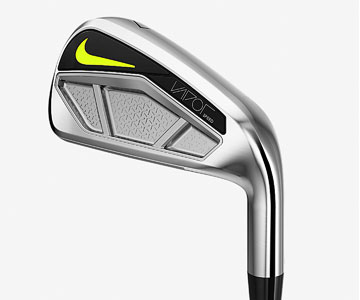
Let’s see how long I can go without mentioning Nike’s use of their vibrant green colorway called Volt. Okay, so technically- speaking, that was a really poor effort. But now that I got that out of the way we can focus on why Nike’s new Vapor Speed irons deserve a look.
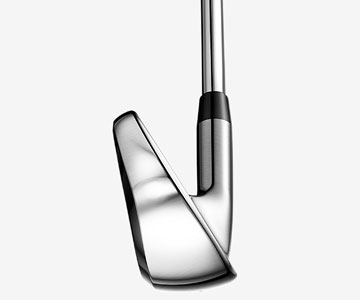
In person, these irons do not look like traditional game improvement clubs. Nike’s Volt branding on the back of the clubs is surprisingly subtle, and the moderate sole width and beveled leading edge are just the sort of design features better players gravitate towards. In hand, these irons are filthy long and easy to hit. FlyBeam reinforced hollow cavity long irons are low and deep weighted to maximize launch while offering plenty of forgiveness. For the scoring clubs, Nike chose a RZN-injected cavity to improve feel.
 |
Nike Vapor Speed
iron |
The entire set benefits from having ultra-fast, super-thin (just 2.7 millimeters in the center) steel faces and machine-milled X3X grooves for enhanced spin control. The Vapor Speed irons are equipped with True Temper Dynalite 105 shafts (R, S). These lightweight 120-gram shafts promote increased ball speed and a high-trajectory flight.
 |
Nike Vapor Speed
iron
profile |
Mizuno JPX-850 Forged / MP-H5 Irons
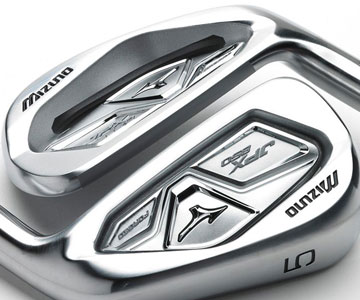
The JPX-850 forged iron is the first of it’s kind for Mizuno. Traditionally the company uses 1025E carbon steel during it’s forging process. Now we have Boron - a material that’s 30 percent stronger than carbon steel allowing Mizuno to forge the faces of their irons much thinner. By doing so, Mizuno took all that discretionary weight (5 grams from the face and 21 grams from the pocket cavity) and placed it into the perimeter where it works to increase distance and forgiveness.
The JPX- 850 forged irons do feature a somewhat busy badge (by Mizuno standards) but it’s offset by a very classy nickel-chrome plated finish. The irons come stock with True Temper’s XP 115 shaft (R, S), but customers can upgrade at no up-charge.
 |
Mizuno JPX-850
forged
iron |
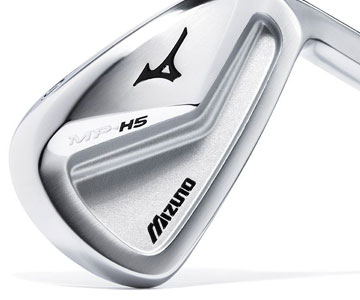
By way of contrast, Mizuno’s MP-H5 irons fall much closer in line to what accomplished players expect from a typical Mizuno iron offering. The MP-H5 has a more conventional blade size (compared to the JPX-850 forged) and is progressively designed. The long irons are fully hollow and are coupled with a high COR maraging steel face for better control and longer distance. As you progress towards the scoring irons, the pocket cavity naturally decreases for enhanced shot-making and superior feel.
 |
Mizuno MP-H5
iron |
Although these irons are categorized as game improvement clubs, you’ll still need a pretty good golf game to get the most enjoyment out of them. The MP-H5 irons ship with the KBS C-Taper LITE shafts (R, S, X) and like the JPX-850 forged, additional shaft options are available at no up-charge.
Cobra Fly-Z Irons
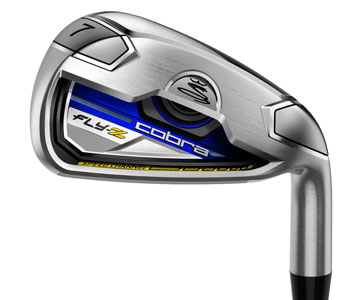
When designing the new Fly-Z irons, Cobra looked to their metal woods for inspiration. These irons feature a Speed Channel that runs across the sole of the club and around the perimeter of the back cavity. It minimizes face thickness and increases flex. The spring-like effect delivers greater distance across the entire face.
 |
Cobra Fly-Z
iron |
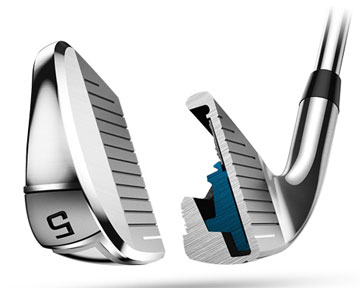
Distance is further enhanced by Cobra’s deepest undercut cavity in any iron they’ve offered. It’s paired with a harmonic cavity insert that dampens vibration and improves feel. In typical Cobra style, the Fly-Z irons can be ordered in five different colors and come with KBS CPI-1005 shafts (R, S).
 |
Cobra Fly-Z iron
harmonic
cavity insert |
Srixon Z-545 Irons
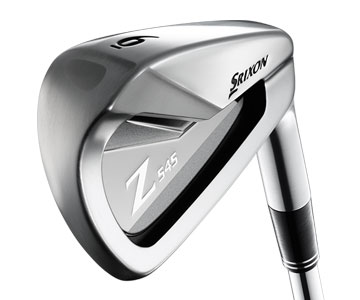
Golfers who may have overlooked Srixon irons in past years may be taken aback by the classy Z-545 irons that combine old-school looks with modern technological advancements benefiting golfers across a wide range of playing abilities.
Forged from soft 1020 carbon steel, golfers can expect an exceptionally responsive and smooth feel at impact. Srixon’s Tour V.T. sole which increases the leading bounce while simultaneously decreases the trailing bounce reduces turf resistance.
 |
Srixon Z-545
iron |
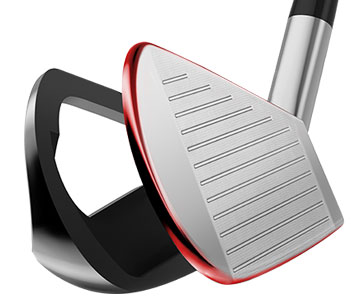
The longer clubs in the set (3 to 6-iron) feature a tungsten toe weight that deepens the center of gravity and maximizes distance. Double laser-milled faces throughout the set improve distance control from every kind of lie encountered on the course. The Z-545 irons come stock with True Temper’s Dynamic Gold shaft (R, S, X).
 |
Srixon Z-545
advanced
construction |
Most Popular Articles
2025 PGA TOUR Q-School Guide: Sites, Scores, and Who Advanced
Dec 5, 2025Second Stage is complete and Final Stage awaits at Sawgrass — follow every Q-School leaderboard and the players still chasing
2025 LPGA TOUR Q-Series: Final Qualifying Stage FINAL SCORING
Dec 8, 2025Helen Briem earns medalist honors, 31 players headed to the LPGA next year
2025 PGA TOUR Q-School Final Stage: Ewart Leads Five New TOUR Card Winners
Dec 14, 2025A.J. Ewart topped Final Stage at TPC Sawgrass, leading five players who secured PGA TOUR membership for 2026.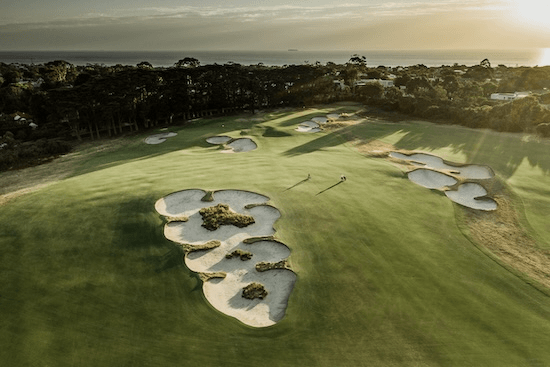
Australian Open at Royal Melbourne: Preview, amateur bios, and how to watch
Nov 30, 2025Rory McIlroy headlines one of the championship's top fields in years - at least four amateurs will have their chance at glory
Luke Ringkamp Cruises to Rolex Tournament of Champions Title at TPC San Antonio
Nov 26, 2025One week after committing to Pepperdine, Luke Ringkamp won the Rolex Tournament of Champions by nine shots.Loading latest news...