Want to Putt Like Zach Johnson? Here's How
6/3/2010 | by Pat O'Brien

The whole idea in putting is to return to square at impact without thinking about it. That’s true for everybody, not just Zach Johnson
By James Achenbach of Golfweek
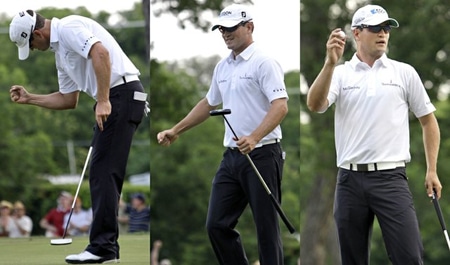
In winning the Crowne Plaza Invitational at Colonial Country Club in Fort Worth, Texas on May 30, Zach Johnson sank more than 100 feet of putts during the final nine holes of the tournament. He made 24 birdies in 72 holes.
Here’s what Johnson’s putting instructor, Pat O’Brien, said about his pupil’s putting stroke:
“He’s kind of old school. He holds the putter in the palm of his left hand. I advocate holding it in the fingers, but there is no way I would try to change somebody like Zach.
“The accommodation we make for his grip is to cup the left wrist a little bit at setup. This locks him in, so nothing breaks down.
“I learned this from Payne Stewart. He was always a streaky putter until the last year of his life. He started cupping that wrist. He got a foundation and a system, and he became one of the best putters in the world.”
O’Brien’s simple philosophy: “The whole idea in putting is to return to square at impact without thinking about it. That’s true for everybody, not just Zach Johnson.
“Zach came to me with that grip. We met in 2000 at a Buy.com event in Richland, Washington. We started working together in 2001. Right away I asked him to cup that left wrist.”
Johnson has became a poster boy for addressing the ball with the putter shaft angled slightly backwards.
“Sometimes I have to get him more (straight) up and down (with the shaft),” O’Brien said, “but he does so many things so well. Success in putting is all about setup, about flow and proper fundamentals, about allowing the putter to go where it is supposed to go.
“With Zach and many good putters, the mechanics are there. Nothing is going to get away. It (making putts) happens because of the flow of things, the timing and the rhythm.”
O’Brien stresses a putting stroke without swing thoughts: “I teach golfers (mostly amateurs) all the time who focus endlessly on mechanics and positions and swing thoughts – all that garbage. You can’t play golf that way. Good putting is all about physically calming yourself down and allowing that freedom of motion.”
Johnson’s SeeMore FGP putter is 34 inches long with 2.5 degrees of loft. Johnson is so smooth and technically sound, according to O’Brien, the putter head is never manipulated during the stroke.
“The stroke just happens,” said O’Brien, who teaches at Lakewood Country Club in Dallas, Texas. “Zach allows it to happen. The putter is designed to swing (perfectly) on a plane.”
Besides O’Brien, the Johnson support team includes swing instructor Mike Bender, named 2009 National Teacher of the Year by the PGA of America, and sports psychologist Morris Pickens.
Speaking candidly, O’Brien said, “When it comes to putting, sports psychology will only work if you have an inherent belief that the putter will get back to square. This will happen only if you have the proper setup and fundamentals.”
Johnson has it, and O’Brien says you can, too.
“People can learn to putt,” O’Brien said. “I believe this with all my heart and soul. On my website (www.patobriengolf.com), I practically give all my information away. I am passionate about helping all golfers improve.
“Maybe most golfers can’t hit the ball as straight and far as Zach, but they can learn to putt like he does. I believe this. I really believe it.”
Zach's Grip
By now, you have heard from most commentators about Zach's grip and how he angles the shaft slightly behind the ball at address. I want to thank Ian Baker Finch, Nick Faldo and Jim Nantz from CBS for taking the time to talk to me about it. I appreciate that it is unusual, and I will explain why.

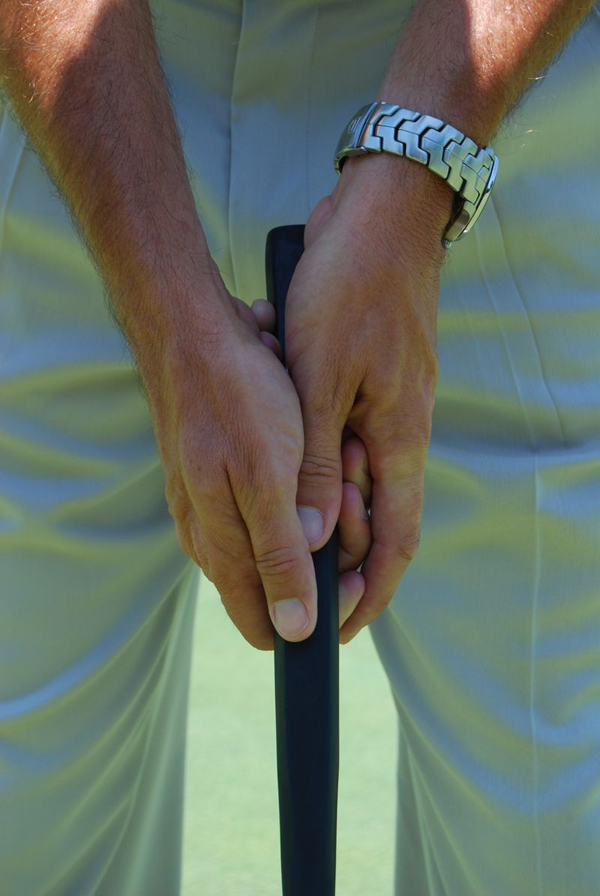
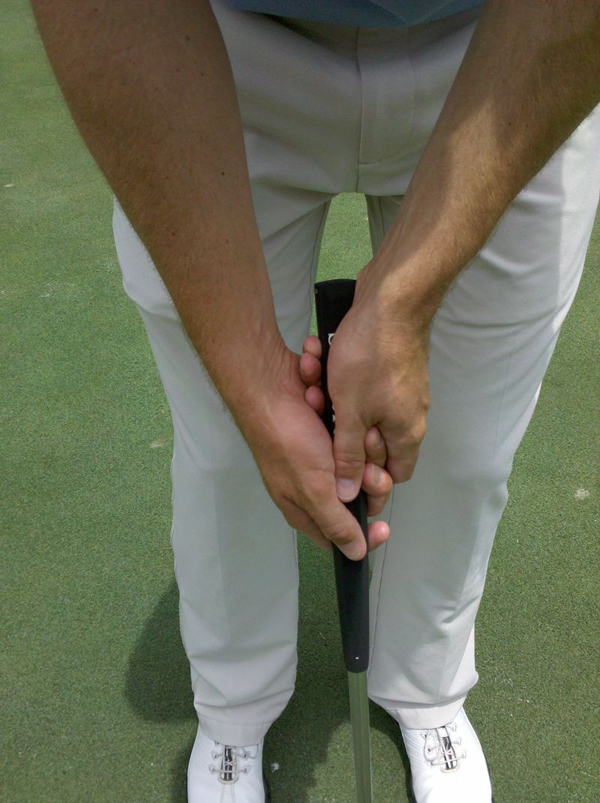
This is a picture I took of Zach's grip Wednesday of Colonial. Little did I know that I would be commenting on it again by Sunday! I took it because he made a small adjustment on his off week, where he placed a little sliver of his left heel pad on top of the grip. This gave him a "locked in" feeling, without tension of course, and I wanted to document it for future reference.
If you are familiar with my teaching, this is not the grip that I advocate. Below is my grip.

My left heel pad is more on top, and my right heel pad covers more of my left hand fingers. I believe you have better leverage with the left hand this way, and the left wrist is less likely to break down through impact. The right hand is less likely to dominate as well.
The main similarity between the two is that both of us have our forearms square to our target line. Zach turns his right hand more under to achieve this, and it matches the feeling he has in his strong full swing grip.
When we first started working together, in 2001, I let him keep his grip out of comfort and familiarity. I did, however, remember a tip that Payne Stewart told me when he putted his best in 1999. He felt a slight cup in his left wrist at setup, and he maintained that angle throughout the stroke. When I told Zach this, he liked the feeling and it has remained that way ever since.
If Zach were to keep his grip and get the shaft and his hands even with the ball, or slightly ahead of the ball, there would be way too much wrist play on the backswing. He would create too much shaft angle, taking loft off of the putter. He would then have to put that loft back on the putter before impact, or get a putter with 6 degrees of loft as a compensation. His left wrist would break down or cup on the way through, giving a scooping sensation. This is exactly why people go to left hand low, or the claw, because they are tired of the sensation of the right hand taking over and the left hand collapsing.
So, in essence, we start with that cup and we maintain it. He has 2.5 degrees of loft on his putter. He probably starts with 4 degrees and it is the same at impact. When we put the ball on a camera,it rolls the way we want it to. That is about as technical as I get. I probably get beat up on the technical forums, but I'm ok with that. Putting is an art, not a science.
If you told me I could not grip the putter the way I wanted to, I would use Zach's grip. It obviously works for him, and I am proud of his reputation from his peers as one of the best putters on tour. Although his style of grip is not what I teach, everything else he does is textbook. I am smart enough to recognize that he is special, and my thanks to the late, great Payne Stewart for preparing me to teach Zach, in a way. I do not think that any of this is coincidental- the big Man upstairs gets all the credit!
In winning the Crowne Plaza Invitational at Colonial Country Club in Fort Worth, Texas on May 30, Zach Johnson sank more than 100 feet of putts during the final nine holes of the tournament. He made 24 birdies in 72 holes.
Here’s what Johnson’s putting instructor, Pat O’Brien, said about his pupil’s putting stroke:
“He’s kind of old school. He holds the putter in the palm of his left hand. I advocate holding it in the fingers, but there is no way I would try to change somebody like Zach.
“The accommodation we make for his grip is to cup the left wrist a little bit at setup. This locks him in, so nothing breaks down.
“I learned this from Payne Stewart. He was always a streaky putter until the last year of his life. He started cupping that wrist. He got a foundation and a system, and he became one of the best putters in the world.”
O’Brien’s simple philosophy: “The whole idea in putting is to return to square at impact without thinking about it. That’s true for everybody, not just Zach Johnson.
“Zach came to me with that grip. We met in 2000 at a Buy.com event in Richland, Washington. We started working together in 2001. Right away I asked him to cup that left wrist.”
Johnson has became a poster boy for addressing the ball with the putter shaft angled slightly backwards.
“Sometimes I have to get him more (straight) up and down (with the shaft),” O’Brien said, “but he does so many things so well. Success in putting is all about setup, about flow and proper fundamentals, about allowing the putter to go where it is supposed to go.
“With Zach and many good putters, the mechanics are there. Nothing is going to get away. It (making putts) happens because of the flow of things, the timing and the rhythm.”
O’Brien stresses a putting stroke without swing thoughts: “I teach golfers (mostly amateurs) all the time who focus endlessly on mechanics and positions and swing thoughts – all that garbage. You can’t play golf that way. Good putting is all about physically calming yourself down and allowing that freedom of motion.”
Johnson’s SeeMore FGP putter is 34 inches long with 2.5 degrees of loft. Johnson is so smooth and technically sound, according to O’Brien, the putter head is never manipulated during the stroke.
“The stroke just happens,” said O’Brien, who teaches at Lakewood Country Club in Dallas, Texas. “Zach allows it to happen. The putter is designed to swing (perfectly) on a plane.”
Besides O’Brien, the Johnson support team includes swing instructor Mike Bender, named 2009 National Teacher of the Year by the PGA of America, and sports psychologist Morris Pickens.
Speaking candidly, O’Brien said, “When it comes to putting, sports psychology will only work if you have an inherent belief that the putter will get back to square. This will happen only if you have the proper setup and fundamentals.”
Johnson has it, and O’Brien says you can, too.
“People can learn to putt,” O’Brien said. “I believe this with all my heart and soul. On my website (www.patobriengolf.com), I practically give all my information away. I am passionate about helping all golfers improve.
“Maybe most golfers can’t hit the ball as straight and far as Zach, but they can learn to putt like he does. I believe this. I really believe it.”
Zach's Grip
By now, you have heard from most commentators about Zach's grip and how he angles the shaft slightly behind the ball at address. I want to thank Ian Baker Finch, Nick Faldo and Jim Nantz from CBS for taking the time to talk to me about it. I appreciate that it is unusual, and I will explain why.

This is a picture I took of Zach's grip Wednesday of Colonial. Little did I know that I would be commenting on it again by Sunday! I took it because he made a small adjustment on his off week, where he placed a little sliver of his left heel pad on top of the grip. This gave him a "locked in" feeling, without tension of course, and I wanted to document it for future reference.
If you are familiar with my teaching, this is not the grip that I advocate. Below is my grip.

My left heel pad is more on top, and my right heel pad covers more of my left hand fingers. I believe you have better leverage with the left hand this way, and the left wrist is less likely to break down through impact. The right hand is less likely to dominate as well.
The main similarity between the two is that both of us have our forearms square to our target line. Zach turns his right hand more under to achieve this, and it matches the feeling he has in his strong full swing grip.
When we first started working together, in 2001, I let him keep his grip out of comfort and familiarity. I did, however, remember a tip that Payne Stewart told me when he putted his best in 1999. He felt a slight cup in his left wrist at setup, and he maintained that angle throughout the stroke. When I told Zach this, he liked the feeling and it has remained that way ever since.
If Zach were to keep his grip and get the shaft and his hands even with the ball, or slightly ahead of the ball, there would be way too much wrist play on the backswing. He would create too much shaft angle, taking loft off of the putter. He would then have to put that loft back on the putter before impact, or get a putter with 6 degrees of loft as a compensation. His left wrist would break down or cup on the way through, giving a scooping sensation. This is exactly why people go to left hand low, or the claw, because they are tired of the sensation of the right hand taking over and the left hand collapsing.
So, in essence, we start with that cup and we maintain it. He has 2.5 degrees of loft on his putter. He probably starts with 4 degrees and it is the same at impact. When we put the ball on a camera,it rolls the way we want it to. That is about as technical as I get. I probably get beat up on the technical forums, but I'm ok with that. Putting is an art, not a science.
If you told me I could not grip the putter the way I wanted to, I would use Zach's grip. It obviously works for him, and I am proud of his reputation from his peers as one of the best putters on tour. Although his style of grip is not what I teach, everything else he does is textbook. I am smart enough to recognize that he is special, and my thanks to the late, great Payne Stewart for preparing me to teach Zach, in a way. I do not think that any of this is coincidental- the big Man upstairs gets all the credit!
Most Popular Articles

2025 PGA TOUR Q-School Guide: Sites, Scores, and Who Advanced
Dec 5, 2025Second Stage is complete and Final Stage awaits at Sawgrass — follow every Q-School leaderboard and the players still chasing
2025 LPGA TOUR Q-Series: Final Qualifying Stage FINAL SCORING
Dec 8, 2025Helen Briem earns medalist honors, 31 players headed to the LPGA next year
Australian Open at Royal Melbourne: Preview, amateur bios, and how to watch
Nov 30, 2025Rory McIlroy headlines one of the championship's top fields in years - at least four amateurs will have their chance at glory
2025 PGA TOUR Q-School Final Stage: Ewart Leads Five New TOUR Card Winners
Dec 14, 2025A.J. Ewart topped Final Stage at TPC Sawgrass, leading five players who secured PGA TOUR membership for 2026.
Luke Ringkamp Cruises to Rolex Tournament of Champions Title at TPC San Antonio
Nov 26, 2025One week after committing to Pepperdine, Luke Ringkamp won the Rolex Tournament of Champions by nine shots.Loading latest news...