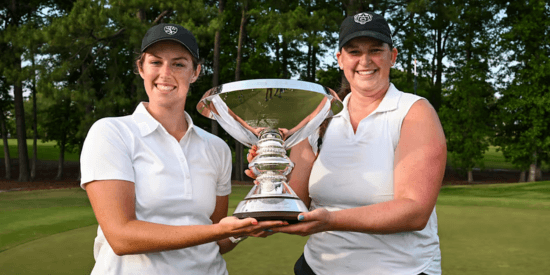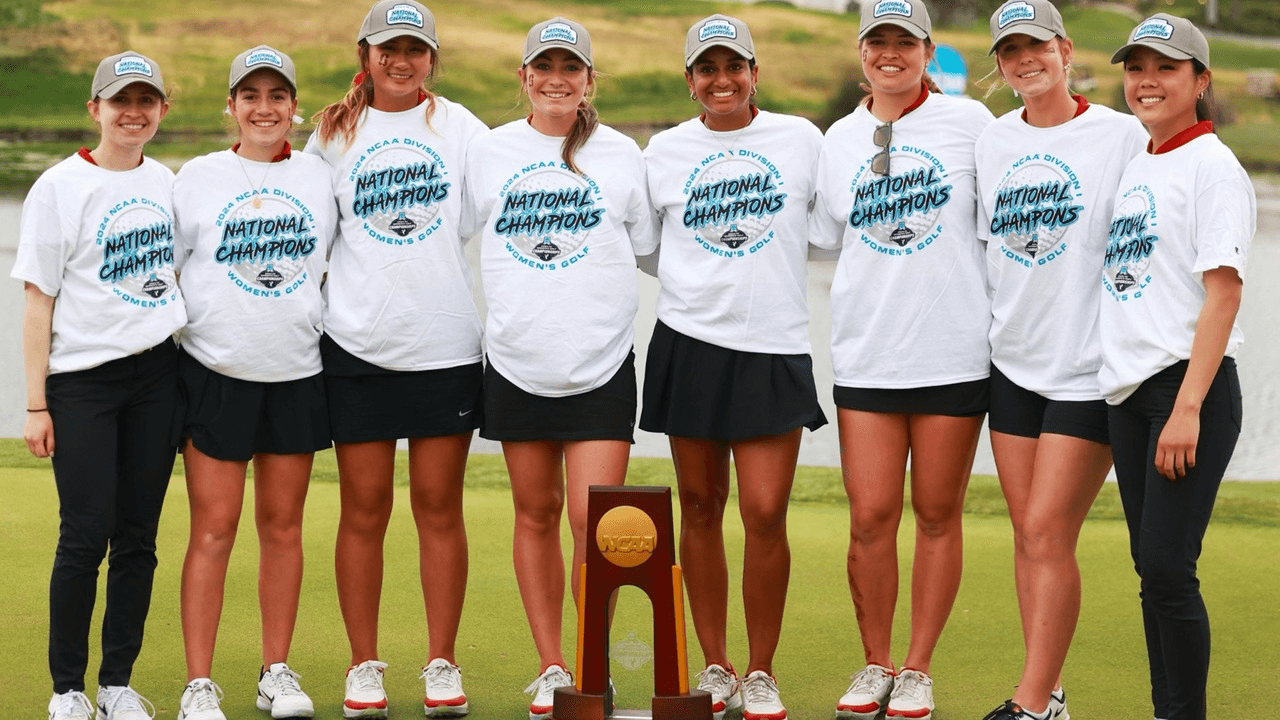

A year ago, Stanford walked off the closing holes at Omni La Costa Resort & Spa one match short of a national championship, watching Northwestern celebrate the first title in program history. On Friday, the Cardinal return to the same fairways with the same goal — and, this time, the look of a team built to finish the job.
The 2026 NCAA Division I Women’s Golf Championship runs May 22–27 at La Costa, where 30 teams and six individual qualifiers will chase a trophy that has rarely been harder to forecast. Texas serves as the championship host, and the GOLF Channel will carry the final three rounds live.
A Format Built to Test Everyone
The path is famously grueling. All 30 teams open with 54 holes of stroke play before the field is trimmed to the top 15 squads and the top nine individuals not on an advancing team. One more stroke-play round crowns the 72-hole individual champion and narrows the team race to eight. From there it is pure match play — three days of head-to-head golf, with the national champion decided Wednesday. It rewards stamina as much as ball-striking: a season’s work distilled into a string of one-on-one duels under the California sun.
Championship at a Glance
- Dates
- May 22–27, 2026
- Site
- Omni La Costa Resort & Spa — Carlsbad, Calif.
- Field
- 30 teams · 6 individual qualifiers
- Format
- 54 holes stroke play, then a cut to 15 teams; team title decided by match play
- Defending
- Northwestern (first title, def. Stanford 3–2)
- Most titles
- Arizona State, 8
- TV
- GOLF Channel (final three rounds)
Stanford Is the Standard
No team enters with a stronger case than Stanford. Anne Walker’s program won six times during the 2025–26 season, capped by an ACC Championship, and its depth chart reads like a national ranking unto itself: Paula Martín Sampedro, Andrea Revuelta, Megha Ganne, Meja Ortengren and Kelly Xu all sit inside the top 18 individually. Revuelta arrives in form, having claimed the Stanford Regional for her second regional title of the season, while Ortengren’s six top-10 finishes have given the Cardinal the week-to-week consistency that wins match play.
What Stanford does not have is closure — and the memory of last May’s 3–2 loss is its own kind of motivation.
The Host Has Other Ideas
Standing in the way is a host with ambitions of its own. Texas, the Chapel Hill Regional champion, leans on Farah O’Keefe, the clubhouse leader for the ANNIKA Award and a WGCA Player of the Year contender who has finished inside the top 10 in all 11 of her starts this season — three of them victories. When O’Keefe is on, the Longhorns are a problem for anyone, and a national title on home-state turf would be the program’s signature moment.
Texas A&M may be the deepest team in the bracket. The Aggies rolled through the Waco Regional behind sophomore Vanessa Borovilos, who ran away with medalist honors and arrives as a genuine individual-title threat. Add Florida, an SEC tournament champion this spring; Auburn, fresh off a Louisville Regional win; Wake Forest, the 2023 national champion and Tallahassee Regional victor; and Southern California, the Ann Arbor Regional champion and a perennial contender — and the field has no obvious soft spots.
Six Regions, Six Champions


The Race Within the Race
The individual chase may be the week’s best subplot. O’Keefe and Borovilos headline a group of players capable of going low for four straight days, and Stanford’s quintet ensures the medal could be decided within a single locker room. Because the 72-hole champion is crowned before match play even begins, the individual title rewards the player who can stay sharp through a long, hot stretch — a separate prize, decided on its own clock.
History favors the bluebloods. Arizona State has won the championship a record eight times, and Stanford, Duke and Southern California have combined for much of the modern era. But the match-play format, adopted in 2015, has proven a great equalizer. Northwestern’s breakthrough last spring was the reminder: the team playing best in late May, not the one seeded highest in April, is the one that lifts the trophy.
That is the pull of La Costa. Five days, 30 teams, one course, and a format that turns months of work into a series of one-on-one duels. Stanford has the talent and the motivation. Texas has the host’s edge and a Player of the Year frontrunner. Everyone else has five days to prove the seedings wrong. Play begins Friday.