

Thirteen venues.
One longest day.
The road to Shinnecock.
For most of the year, golf's professional tour looks like a closed shop — exempt categories, Korn Ferry graduates, sponsor exemptions, a maze that rewards the already-credentialed. Then, for one Monday in June, the U.S. Open kicks the door open. Anyone with a 0.4 handicap or better can enter. Anyone who survives an 18-hole local qualifier earns the right to walk into a 36-hole final and, if their nerves and their putter and their lunch hold, walk out with a tee time at Shinnecock Hills.
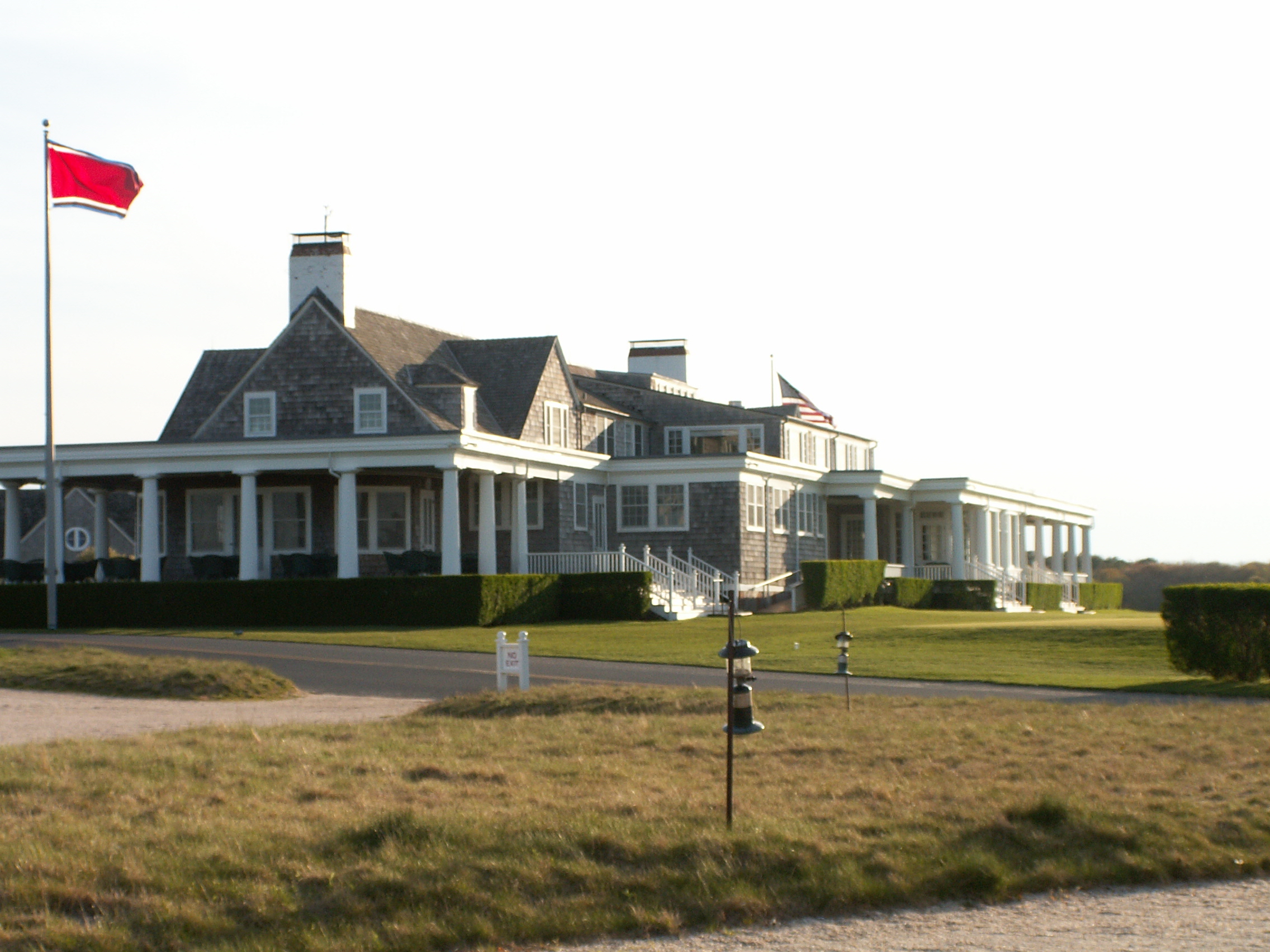
The 2026 U.S. Open will be contested June 18–21 at Shinnecock Hills Golf Club in Southampton, New York. To get there, 13 final qualifying sites across three continents will host a 36-hole gauntlet known reverently in golf circles as "Golf's Longest Day." The bulk of those venues — 10 of them — will play their qualifier on the same Monday, June 8, while Walton Heath and Dallas Athletic Club take care of business three weeks earlier on May 18, and Hino Golf Club in Japan gets its own date a week after that.
This is a deep-dive preview of every venue on the schedule. We've built it for two readers at once: the player chasing a tee time, who needs course intelligence and prep notes, and the fan watching from a couch, who just wants to know what makes each of these places special enough to host one of the most consequential days in golf. Pour a coffee. Settle in.
What is Final Qualifying?
The U.S. Open prides itself on being "the most open championship in golf," and the math backs it up. In 2025, the championship accepted 10,202 entries — the fourth time in history the entry total exceeded 10,000. From that pool, the field gets cut to 156 through a two-stage qualifying funnel.
Local qualifying — 109 sites this year, played April 20 through May 13 — is the first stage. It's an 18-hole sprint, typically with three to six qualifying spots and two alternates per site. Survive that, and you're invited to Final Qualifying.
Final Qualifying is the second stage, and it's a beast: 36 holes in one day, often in conditions that range from windy to brutally hot, at venues set up to U.S. Open-grade firmness and speed. The 13 venues for 2026 will collectively send roughly 60–70 players to Shinnecock (the exact number per site is set by the USGA based on field strength and entry counts). Other players in the championship field arrive via exemption categories — major winners, top OWGR rankings, defending champions, USGA event winners — but the qualifying pathway is the heart of the U.S. Open's egalitarian spirit.
Format reminder. Final Qualifying is 36 holes stroke play, same day, two different setups if your site is at a 36-hole club. Tee times typically begin at dawn; the back nine of round two often finishes in fading light. Most venues use modified tee times rather than shotgun starts.
Carry policy. Carts are not permitted; you walk both rounds. Caddies are allowed (and at this level, strongly recommended).
Playoff format. If multiple players are tied for the final qualifying spot or for alternate positions, the USGA uses a hole-by-hole sudden-death playoff — historically the most pressure-soaked moment in amateur and professional golf alike.
Of the 13 venues, three play their qualifier ahead of the main wave: Walton Heath and Dallas Athletic Club on May 18, and Hino Golf Club on May 25. These early sites largely serve the international and regional contingents who can't easily travel to a U.S.-based Monday in June. We'll start there.

Walton Heath is golf's quietest cathedral. Twenty-five miles south of central London, on a chalk-and-sand plateau in Surrey, it has hosted the Ryder Cup (1981), five European Opens, the 2011 Senior Open, and most recently the 2023 AIG Women's Open, where Lilia Vu won on a composite of the Old and New courses. It has appeared in the World Top 100 every year since rankings began in 1938.
The Old Course, built by Herbert Fowler in 1904 — an amateur golfer who was Tom Simpson's friend and whose work would later include Saunton and The Berkshire — plays firm, open, and exposed. Heather and gorse line the corridors. Greens are small, often elevated, and demand a Scottish-style ground game. There is little forgiveness for a high, soft American flight; this is a player's puzzle that rewards low, running approaches and precise lag putting.
"The first really fine inland golf course designed from start to finish by an amateur golfer."— Tom Simpson, on Walton Heath
For 2026 Final Qualifying, expect a composite layout drawing the strongest 18 from the Old and New, similar to the 2023 Women's Open setup. The wind off the heathland defines the day; even on a calm morning, gorse takes errant shots permanently.
Course intelligence. Bunkers are deep and revetted in the British championship style — your safe miss is short, not long, and never sideways. The greens are small enough that long-iron approaches to back pins demand commitment.
Equipment note. Bring a low-bullet 3-iron or driving iron for wind off the tee on the par 4s. Standard American-spec wedges with high bounce will struggle out of the firm bunkers — consider lower-bounce options.
Local advantage. European Tour pros and Walton Heath members will have a meaningful read on this site. Travel light, scout in advance, and trust your putter — slope reads are subtler than American mid-Atlantic parkland.
Dallas Athletic Club carries a piece of Jack Nicklaus's competitive history. The Blue Course hosted the 1963 PGA Championship, the searing-hot Texas major that delivered Nicklaus his first PGA title — a two-stroke win over Dave Ragan in conditions that pushed players to their physical limits. Twenty-three years later, the club brought Nicklaus back as an architect: he redesigned the Blue in 1986 and the Gold in 1989. Chet Williams added further renovations in 2015–2016.
Today's Final Qualifying setup will use both the Blue and Gold across the 36 holes, a format DAC has run for years. The Blue is the showpiece: 419 Bermuda fairways, bentgrass greens, and a signature 5th hole — a 428-yard dogleg right with a waterfall fronting the green that Nicklaus added in the '86 work. The Gold is the more strategic of the two, playing slightly longer with more water carries on the back nine.
Founded in 1919 in downtown Dallas and relocated east near I-30/I-635 in 1954 due to freeway expansion, DAC has been a fixture in Texas amateur and professional golf for a century. May 18 in Dallas means heat — historically into the high 80s — and the firm Bermuda fairways will run.
Two courses, two tests. Most successful qualifiers handle one of the two courses well and survive the other. The Blue rewards aggression off the tee; the Gold rewards patience around the greens.
Heat plan. Hydrate the morning of, then aggressively between rounds. The 36 holes in Dallas Bermuda will sap distance late in round two — club up earlier than you think on holes 28 through 36.
Reading bermuda. Grain matters more on the Blue (older, more established) than the Gold. Putts into the grain die; putts down-grain run. Locals account for grain before slope.
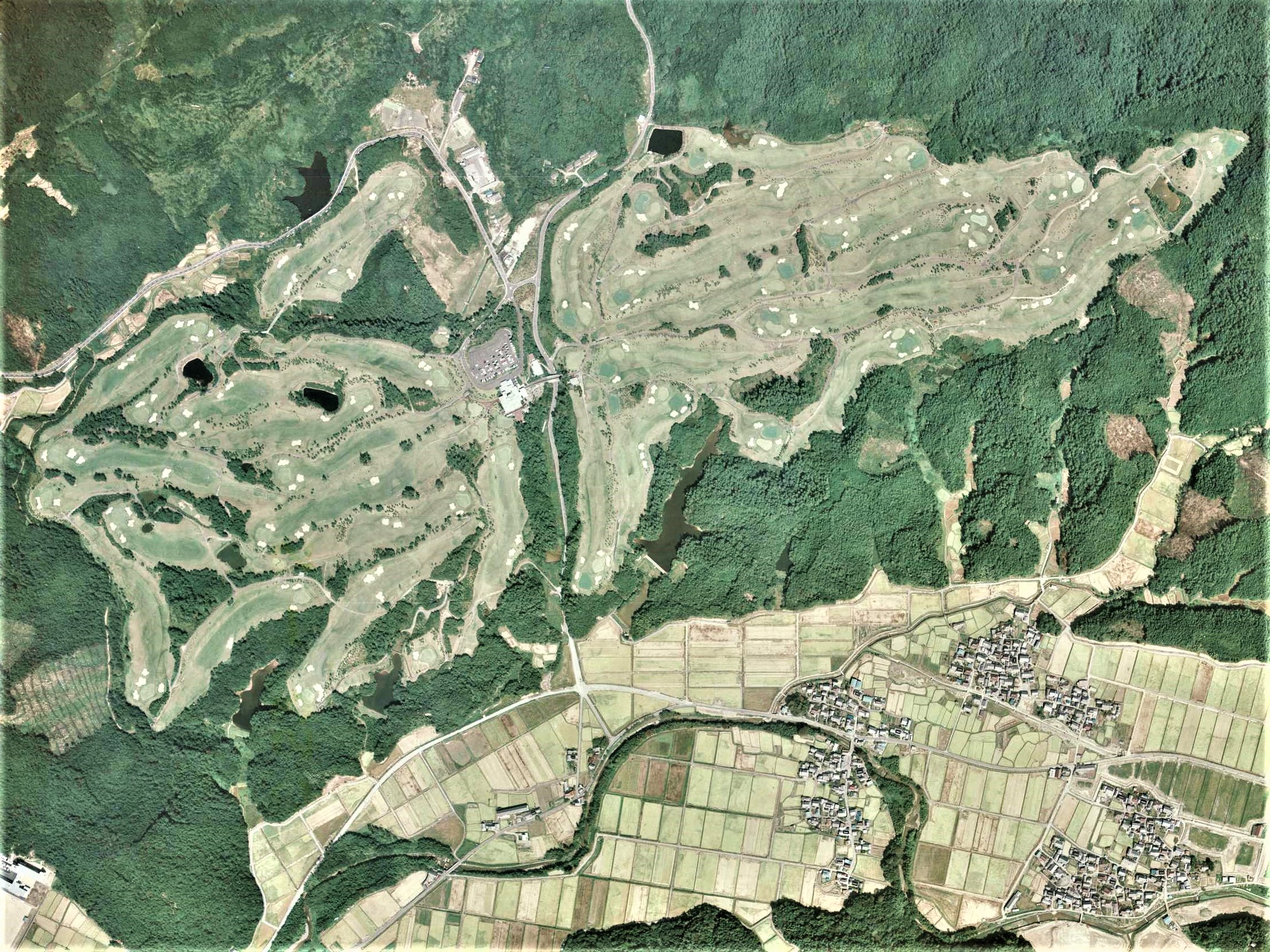
Hino Golf Club sits in rural Shiga Prefecture, tucked between Lake Biwa and the Suzuka Mountains, about an hour's drive east of Kyoto. The 36-hole facility opened in 1972 and has emerged in the last several years as the USGA's preferred site for U.S. Open Final Qualifying in Japan — a recognition of both the King Course's championship test and the JGA's reliable tournament operation.
The King Course plays 7,035 yards from the tips at par 72, draped across rolling foothills that produce considerable elevation change. Tee shots demand both length and directional discipline; the Japanese designers of the early 1970s favored corridor-style routing through stands of Japanese cedar and pine, and Hino is no exception. Greens are slick, small relative to U.S. championship standards, and contoured to reward conservative ball-striking.
This is the international-eastern gateway to Shinnecock. Many of Japan's top amateur and professional players who don't already have exemptions begin their U.S. Open journey here, joined annually by Korean, Taiwanese, and occasionally Southeast Asian players who travel in.
Travel and time-zone strategy. Players based outside Japan should arrive at least 3–4 days early. The terrain and bentgrass greens reward local knowledge; a scouting round or two pays off.
Caddie program. Hino has a long-tenured local caddie corps with deep course knowledge. Hire one — language barrier or not, their green reads are gold.
Architect uncertainty. The English-language record of Hino's original architect is incomplete. Players doing extensive research should ask the club directly; we're not publishing an unverified attribution.
MONDAY, JUNE 8
Golf's Longest Day.
Ten venues. Roughly 600 players. Seventy-two consecutive hours of tee times across four U.S. time zones. The most consequential Monday in American golf, and arguably the most dramatic single day in the championship calendar.
The phrase "Golf's Longest Day" entered the lexicon decades ago to describe the marathon nature of 36-hole U.S. Open Final Qualifying. Golf Channel has provided live coverage of the day for years, often beginning before sunrise on the East Coast and continuing past sunset on the West Coast. Playoffs for the final spots routinely run into the dark; over the years, players have hit shots by car headlight and by phone flashlight.
What follows is the field — 10 venues, each with its own architecture, its own scoring history, its own local heroes and travelers. The road to Shinnecock runs through every one of them.

Hawks Ridge is the late Bob Cupp's "consummate achievement," in his own words — a 550-acre exercise in dramatic Cherokee County, Georgia elevation, towering pines, and routing decisions that draw frequent comparisons to Augusta National. Founded in 1999 by childhood friends Mike Nixon and Joe Jillson, the club was acquired by Fort Worth-based Escalante Golf in 2024, an ownership change that has translated into noticeably elevated conditioning ahead of 2026.
The signature hole is the 15th — a 308-yard drivable par 4 with a cascading waterfall running the length of the right side of the green. It's photo-shoot material on any sunny morning and, when the pin is back-right, an exercise in nerve. The closing stretch climbs back toward the clubhouse with three demanding par 4s.
Hawks Ridge has hosted U.S. Open Final Qualifying eight times before 2026 — making this its ninth selection. That track record matters: the USGA returns to sites that perform, and the conditioning team here knows the U.S. Open setup standards.
Elevation reads. Cherokee County's rolling terrain means you'll be hitting from above and below the ball constantly. Trust your numbers — the elevation changes alter carries materially, sometimes a full club.
The 15th. Don't be a hero on the par 4 unless conditions are perfect. The waterfall right is a card-wrecker; the smart play is a tee shot to 100 yards and a wedge to the meat.
Heat plus humidity. Georgia in early June will be 85–95°F with significant humidity. Ice towels, electrolytes, and shade between holes are not optional.

Lambton G&CC is one of golf's quiet cathedrals north of the border. Founded in 1902 and routed in 1903 by Tom Bendelow, it sits along the Humber River valley on the west side of Toronto. Over the next century, nearly every major architect of consequence touched the place: A.W. Tillinghast, Harry Colt, Donald Ross, Stanley Thompson, Robbie Robinson, and Graham Cooke. Rees Jones completed a comprehensive three-phase restoration in 2012, sharpening the Bendelow/Ross bones and modernizing the conditioning.
The course hosted the Canadian Open four times — 1907, 1910, 1925, and 1941, with Sam Snead winning the latter. Lambton's first captain, George S. Lyon, won Olympic gold in golf at the 1904 St. Louis Games; the club's 9-hole Valley Course, completed in 1904, is reputed to be among the first courses designed specifically for women golfers.
For 2026 Final Qualifying, Lambton represents the lone Canadian venue and the natural gateway for Ontario, Quebec, and Maritimes amateurs who can't easily reach a U.S. site.
River-valley wind. The Humber valley funnels wind unpredictably — a hole that plays into wind in the morning can play downwind by afternoon. Track wind on every hole.
Greens recovery. Rees Jones rebuilt the green complexes with subtle modern contours layered over classic-era bones. Pin position matters more than slope; many greens have multiple distinct shelves.
Border logistics. American players: bring your passport, allow extra time, and confirm any equipment customs requirements. Canadian players: standard registration.
The Lakes G&CC in Westerville, Ohio, just north of Columbus, is one of the more interesting design stories in the rotation. The course was designed by Ed Sneed — yes, that Ed Sneed, the PGA Tour pro who came one stroke from winning the 1979 Masters before losing a sudden-death playoff to Fuzzy Zoeller. Sneed turned to course design later in his career, and The Lakes (1990) is one of his marquee credits. The course rates 74.1 with a slope of 134, making it one of the more demanding tests in the Columbus area.
True to its name, water hazards come into play on multiple holes, with bentgrass running tee-to-green and strategic bunkering that punishes tee shots placed on the wrong side of the fairway. The Lakes has been one of the OGA's most reliable Final Qualifying sites for nearly two decades.
Tee shot strategy. Sneed designed The Lakes with a strong-side / weak-side philosophy. Find the correct side of every fairway and the approach opens up; miss to the wrong side and you're playing recovery.
Water mentality. Multiple forced carries — the smart play is often to lay back and wedge in rather than try to clear hazards from awkward distances.
Ohio June weather. Storm risk is real. Final Qualifying has been delayed by weather here in past years. Plan a flexible logistics window.
Woodmont Country Club opened its North Course on July 26, 1950, designed by Alfred Tull. Arthur Hills handled a comprehensive 1999 renovation that replaced all 18 greens, and Joel Weiman returned in 2018–2020 to redesign the 18th hole and rebuild every bunker on the property. The result is a Maryland parkland test that retains its mid-century character while playing to contemporary U.S. Open Final Qualifying standards.
Woodmont has hosted Final Qualifying since 1987 — among the longest tenures of any current FQ site. The club has its own significant history: it was founded by Jewish business leaders barred from other Washington-area clubs of the era, and that founding story has informed its identity for three-quarters of a century.
The new 18th hole — a Weiman creation completed in 2020 — has become the conversation piece of any round at Woodmont. Players finishing their second 18 typically have one hard, do-or-die finishing hole that decides whether they're packing for Shinnecock or for home.
Greens speeds. Hills's 1999 green rebuild produced surfaces that hold approach shots when softened but get fast-and-firm when the USGA dials up the championship setup. Expect 12+ on the Stimpmeter for FQ.
Bunker rebuild. The 2018–2020 Weiman bunker work tightened the strategic risk-reward across the course. Long-time qualifiers will need to re-scout bunker placements; old assumptions don't hold.
The 18th. Save energy for it. Whatever your number is on 17, the 18th will demand a complete swing.
The BallenIsles East Course is a layered story: opened in 1964 as the PGA National Golf Club's Champions Course, designed by Dick Wilson and Joe Lee, host of the 1971 PGA Championship that Jack Nicklaus won (his second PGA title), and then — five decades later — comprehensively renovated by Nicklaus Design and unveiled in January 2023. The architect who won here in 1971 returned to reshape the place he conquered, expanding the championship yardage to a beefy 7,474.
The course was originally commissioned by developer John D. MacArthur as the PGA of America's headquarters layout. The PGA later moved to PGA National's Champion Course when relations soured, and the property was renamed BallenIsles in 1988. Beyond the 1971 PGA, the East hosted the 1971 World Cup, the Senior PGA Championship from 1966 to 1973, and the first-ever PGA Tour Q-School.
Water comes into play on roughly half the holes; palm and pine framing creates dramatic visual corridors. The Nicklaus 2023 rebuild reshaped greens and bunkering throughout, with particular attention to the closing stretch.
Length is real. 7,474 from the tips with Florida humidity in early June — this is one of the longest layouts on the Final Qualifying schedule. Plan club selection accordingly; even firm fairways won't bail out a short hitter.
Water management. The Nicklaus rebuild tightened margins on several water holes. Conservative tee shots beat hero shots in 36-hole stroke play.
Heat & afternoon storms. South Florida in June means classic afternoon thunderstorms. Weather delays are common; the qualifier may stretch deep into Monday evening.

The Purchase, New York Final Qualifying site is unique on the 2026 schedule: two clubs hosting jointly. Century Country Club, a Harry Colt and Charles Hugh Alison classic opened in 1926, sits across the road from Golf Club of Purchase, a Jack Nicklaus modern opened in 1996. Players will see one of each in the 36-hole format — a Golden Age design and a contemporary one, separated by 70 years and a stretch of Westchester County roadway.
Century plays par 71 at 6,807 yards. The signature stretch includes a 563-yard par 5 at the 11th and a daunting 451-yard par 4 at the 5th, the No. 1 handicap. Golf Club of Purchase plays par 72 at 6,876 yards, with strong closing par 4s that have decided more than one qualifier over the years.
Walter Travis recommended the 175-acre Fairchild property purchase for Century back in 1922, and the pairing of his vision with Jack Nicklaus's modern design makes this stop arguably the most architecturally diverse single Final Qualifying site on the entire schedule.
Two designs, one mind. Century is a strategic, classic-era puzzle that rewards angles and short-game artistry. GCP is a power-and-precision modern test. Players who can shift gears across rounds will outperform those who can't.
Walking distance. The clubs are close but not adjacent. Confirm your transit plan between the two — running tight on a shuttle is a real risk.
Westchester rough. June rough in the New York metro grows fast. Both clubs will have penal rough by Monday morning of FQ.
Gaston Country Club is a hidden Donald Ross school — Ellis Maples, the original 1958 designer, worked under Ross before launching his own practice, and his Ross-rooted strategic principles run through every hole here. In 2003, Kris Spence — a noted Ross restoration architect based in Greensboro — brought the course back toward its Golden Age character with a restoration that re-established broad fairways and re-articulated bunkering. Three reachable par 5s define the round.
The course has hosted the 57th NC Open (Carolinas PGA), the 59th NC Amateur Championship in 2019, and Wells Fargo Championship qualifying, among other events.
Reachable par 5s. Three of them. Eagle opportunities exist for the bold; bogey opportunities also exist for the imprecise. Course management here is about playing to your strengths on the 5s and surviving the 3s.
Ross-school greens. The Spence restoration emphasized classic Ross green-complex characteristics: short-grass surrounds, run-off areas, and pin placements that punish the wrong miss. Lag putting matters more here than on most southeast venues.
Piedmont heat. Mid-North Carolina in early June will be hot and humid but typically not extreme. Standard preparation suffices.
Del Paso Country Club is the oldest country club in Sacramento, founded in 1916 by Scotsman John L. Black. Herbert Fowler — the same Herbert Fowler who designed Walton Heath — added enhancements around 1922. Rick Phelps did work in 1998. But the transformation that defines the modern Del Paso is Kyle Phillips's comprehensive 2006 reimagining: a strategic, ground-game-friendly layout that's widely regarded as one of the best classic-course modernizations of the 2000s in California.
Del Paso has one of the deepest USGA championship pedigrees of any Final Qualifying site. The club hosted the 2015 U.S. Senior Open, the 1957 U.S. Women's Amateur, the 1960 U.S. Senior Women's Amateur, the 1976 U.S. Women's Amateur, and the 1982 U.S. Women's Open — five major USGA championships before the Senior Open made it six. Multiple U.S. Open Final Qualifiers round out the résumé.
The Phillips-rebuilt par 3s have drawn particular praise. Mature oaks frame the routing, but the greens contours and short-grass surrounds make the place play firmer and more strategic than its California parkland peers.
Ground game. Phillips designed Del Paso to reward players who can run a ball onto a green. Standard high, soft American flight will work — but the player who can also play a chase-up has a meaningful advantage.
Par-3 set. Don't waste energy on the 3s. They're individually demanding and collectively where Del Paso most often separates the field.
Sacramento heat. June heat in the valley can spike into the high 90s by afternoon round two. Bring the right gear.

Springfield Country Club is one of the most original and largely unaltered Donald Ross designs in the country — and one of the shortest tracks on the Final Qualifying schedule. The club itself was founded in 1898, but the current Ross routing dates to 1922, draped across a hilly Clark County site with strong par 3s and a dramatic finishing stretch. Don't let the 6,684 yards fool you; the Ross greens and the elevation changes mean par is a genuine test here.
Springfield has hosted U.S. Open Final Qualifying since 2008. It's one of Ohio's two FQ sites in the 2026 rotation, sharing that honor with The Lakes in Westerville.
The course is famous for what locals call "one of the wildest first holes in Ohio golf" and a par-3 set that routinely decides qualifiers. Length isn't the test here; precision is.
Short, not soft. 6,684 yards from the tips. Players will hit a lot of shorter clubs into greens — but the Ross greens punish the wrong miss as severely as any modern track.
The par 3s. Local lore holds that the par 3s decide the qualifier. Plan your strategy around making par on every one and looking for birdies elsewhere.
Tee selection on par 4s. Many of the par 4s offer "drive-it-or-don't" tee strategies. A confident long-iron tee shot can be the smarter play on holes where the fairway tightens at driver distance.
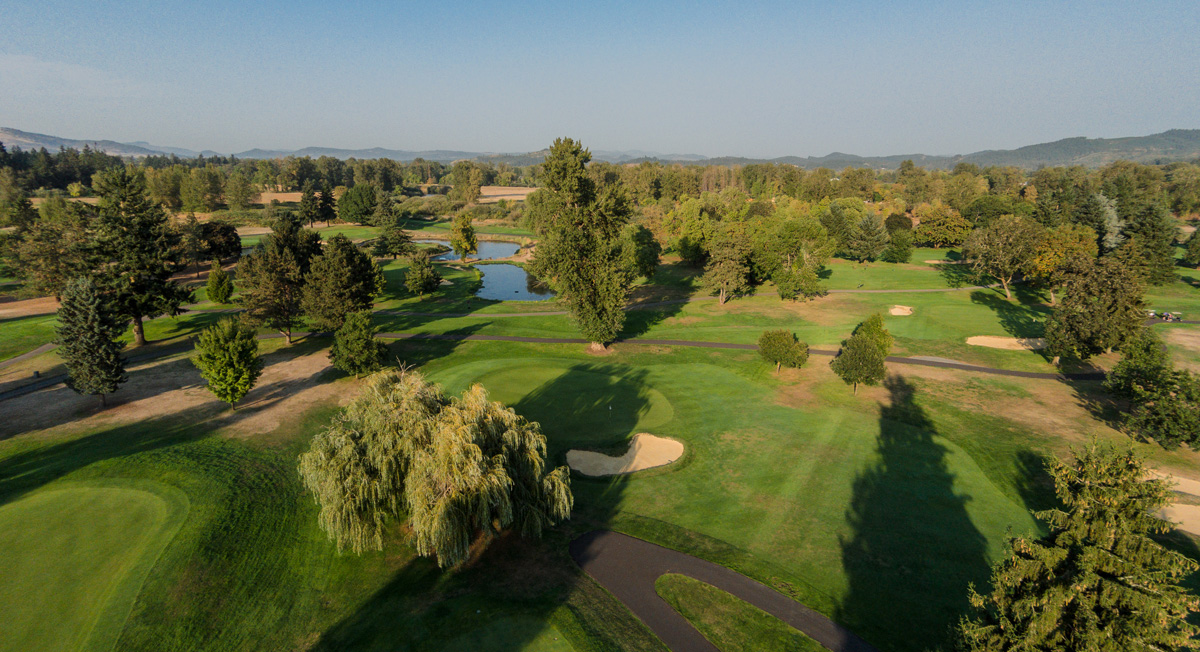
Emerald Valley sits in Creswell, Oregon, on the west bank of the Coast Fork of the Willamette River, draped across what was originally a 160-acre dairy farm. The clubhouse is converted from the original dairy barn. The course was built by Eugene developers James Russell and Marv Ruby starting in 1967 (front nine), with the back nine opening in 1968; the architect of record was Bob E. Baldock. Dan Hixson — who would later design Bandon Crossings and Wine Valley — refined the layout in 2002.
It is, for a long stretch, the home course of the University of Oregon men's golf program. It has hosted the Oregon Open and PNW PGA events. It is also the westernmost Final Qualifying site on the entire 2026 schedule — the last to start, the last to finish, and the venue from which "Golf's Longest Day" earns its full literal name.
River-side holes on the back nine are the visual highlight. Tall fir and pine framing defines the corridors. The Willamette Valley microclimate means cooler temperatures and the real possibility of rain even in early June.
Cool-weather prep. June in Creswell is typically 60–75°F, with morning fog and afternoon clearing. Layers matter. Bring rain gear.
River wind. The Willamette valley funnels wind down the river corridor. Wind direction will likely be consistent throughout the day, which actually simplifies club selection if you scout it.
Late finish. As the westernmost site, Emerald Valley typically finishes after most other Longest Day venues. Pace yourself for what could be a 14-hour day.
How to Watch & Track Final Qualifying
Golf Channel has historically provided live televised coverage of Golf's Longest Day, typically beginning in the late morning Eastern time and continuing into prime time as the Western sites finish. USGA.org provides live scoring across all sites simultaneously — the only way to follow leaderboards at all 13 venues in real time.
For amateur-specific coverage, AmateurGolf.com publishes site-by-site recaps within hours of conclusion, with full amateur tracking, alternate-position playoffs, and post-qualifier reporting on storylines from the day.
The first wave on May 18 — Walton Heath and Dallas Athletic Club — typically doesn't receive television coverage, with results aggregated by the USGA and partner outlets in the evening. The Hino site on May 25 similarly relies on written coverage. Television is reserved for the June 8 main event.
The Path to Shinnecock
From the 13 Final Qualifying sites, the USGA will fill roughly 60–70 spots in the 156-player field at Shinnecock Hills. The exact allocation per site depends on field strength: a site with more entries above a certain handicap threshold typically earns more qualifying spots.
Historically, only two players have won the U.S. Open after surviving both local and final qualifying: Ken Venturi in 1964 and Orville Moody in 1969. Many more have won after advancing through final qualifying alone — Gene Littler, Julius Boros, Jerry Pate, Steve Jones, Michael Campbell, and Lucas Glover among them.
Recent success stories at the championship from qualifiers include Carlos Ortiz (T4 at Oakmont 2025 after qualifying), Chris Gotterup, Matt Wallace, Rasmus Neergaard-Petersen, Victor Perez, and Emiliano Grillo. The dream of going from a Monday qualifier to a Sunday-at-Shinnecock contention remains very real.
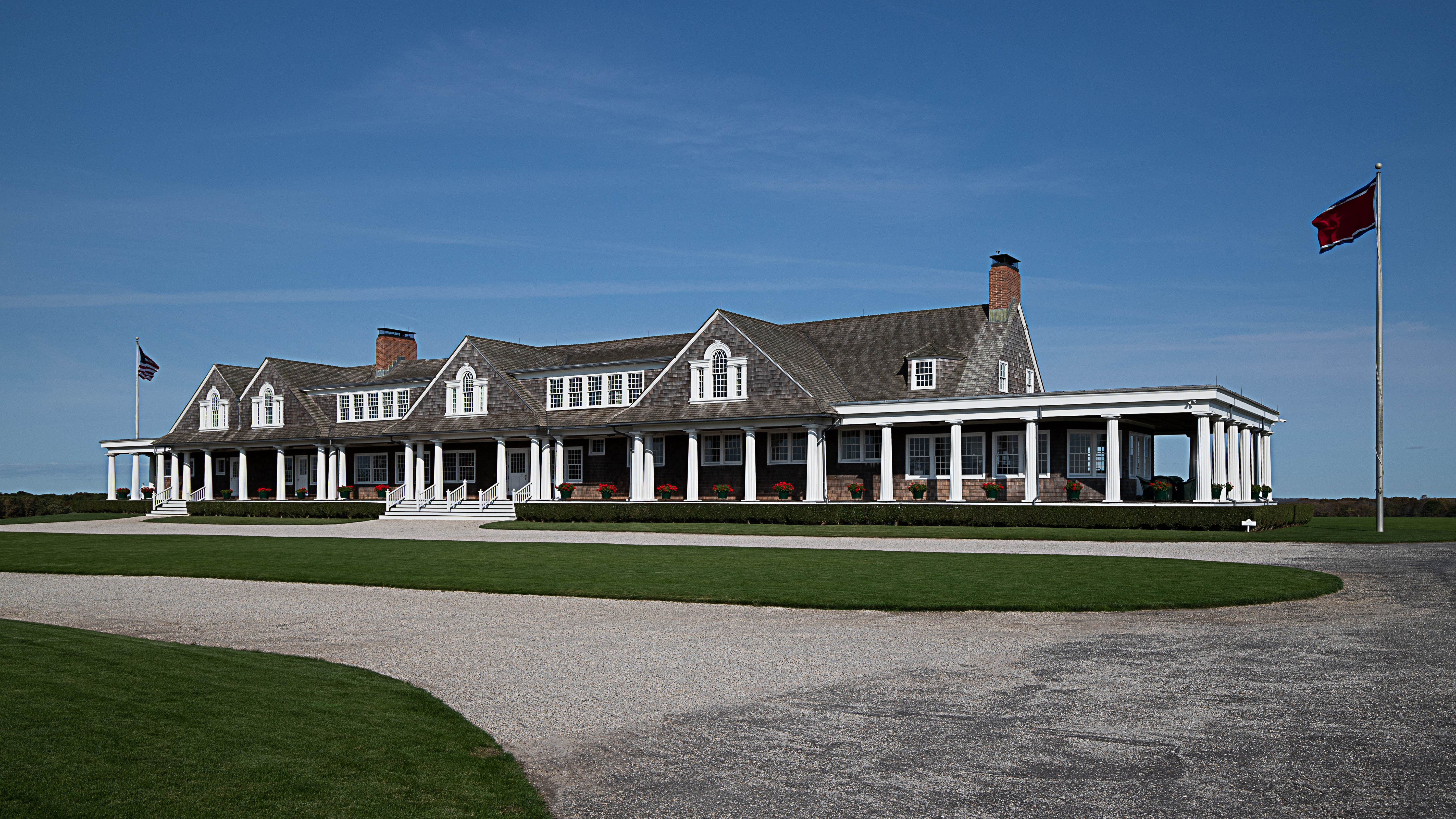
Shinnecock Hills itself will play 7,434 yards at par 70 for the 2026 championship. This is the club's sixth U.S. Open, and it remains the only course to have hosted the championship across three different centuries: 1896 (James Foulis), 1986 (Raymond Floyd), 1995 (Corey Pavin), 2004 (Retief Goosen), 2018 (Brooks Koepka), and now 2026.
"The road to Shinnecock starts in April. And it starts everywhere."— AmateurGolf.com
By the time the final group walks up Shinnecock's 18th on the evening of Sunday, June 21, every player in the field will have a story that traces back through one of these 13 venues. Some, like Walton Heath and Dallas Athletic Club, are storied. Others, like Hawks Ridge and Emerald Valley, have built their reputations exactly by being the kind of place where this day, every year, comes to mean something. All of them will be at the center of golf's calendar on June 8.
The dream is wide open. The dream starts everywhere. The dream runs through these 13 courses.