Loading article...

Loading...
Loading...
Loading article...
see also: NCAA Division I Men's Golf Championship, La Costa Resort and Spa - Champions Course
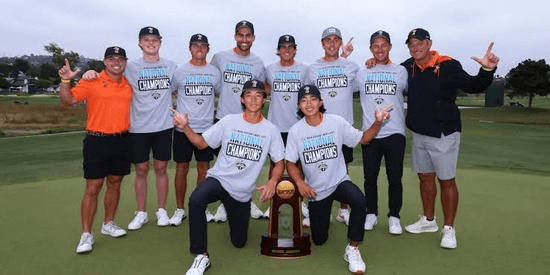
Six regionals, 81 teams, and one question: can Oklahoma State repeat — or does Auburn’s Jackson Koivun finally close the deal
The bracket is set. Eighty-one teams, forty-five individuals, six regional sites, and a single question hanging over the next three weeks of college golf: can Oklahoma State become the first program in twelve years to repeat as NCAA champion — or does this become the spring Auburn finally puts the trophy in Jackson Koivun's hands?
The road to Omni La Costa Resort & Spa in Carlsbad runs through Athens, Bermuda Run, Bryan, Columbus, Corvallis and Marana from May 18-20. Top five teams and low individual not on an advancing team punch the ticket. Thirty teams and six individuals make it to the desert. Then 72 holes of stroke play, a cut to the top eight, and a match-play bracket that has decided every team title since 2009 — the seventeenth running of the format that has come to define the modern college game.
For the amateur game, this is the deepest, most consequential field of the spring. Walker Cup résumés are being written in real time. Future U.S. Open exemptions are on the line. And there is, quite genuinely, a generational player at the top of the leaderboard most weeks who has decided — for now — to stay an amateur.
Oklahoma State arrives in Marana as the No. 1 seed and the team everybody else is measuring themselves against. The Cowboys won the 2025 title at La Costa with no juniors or seniors in the starting five — beat Virginia 3-1 in the final — and every one of those five starters is back. Preston Stout, Ethan Fang, Gaven Lane, Eric Lee, and Filip Fahlberg-Johnsson. Stout is a three-time Big 12 medalist who medaled at last summer's U.S. Amateur. Fang is the reigning British Amateur champion. Both played the Walker Cup. Lee made the semifinals at Olympic.
That is, by any honest accounting, the deepest returning roster in college golf. The last team to repeat was Alabama in 2013 and 2014, and the last team that walked into the postseason looking this complete was probably that same Alabama group. Head coach Alan Bratton has done what coaches almost never get to do in the transfer-portal era: keep a championship lineup intact for an encore.
If Oklahoma State wins, it becomes the program's 13th national title and breaks the tie with Princeton for third-most in NCAA men's golf history. The only programs ahead of them at that point would be Yale and Houston — and both of those are decades-old dynasties from a different era of college golf entirely.
And then there is Auburn. The Tigers earned the No. 1 seed in Athens, the No. 1 ranking in the country, and have won five team titles already this season. They also have, in Jackson Koivun, the best player in college golf — and arguably the best amateur of his generation. His junior season has been the kind of run that gets compared to Tiger Woods' college years not because it's lazy shorthand, but because the numbers actually warrant it.
Koivun broke the NCAA 36-hole scoring record at the Amer Ari (back-to-back 62s) — a mark Woods had held since the 1996 Pac-10 Championship. He won the SEC individual title for the third straight year, the first player to do that in nearly half a century. Six wins in his last eight starts. He has already locked up his PGA Tour card through the PGA Tour University Accelerated program and chosen to remain an amateur to chase team golf and Walker Cup at Lahinch.
What Auburn doesn't have is closure. The Tigers were the best team in college golf for most of last spring, won stroke play at La Costa — and lost to Virginia in the quarterfinals of match play. Head coach Nick Clinard has not exactly hidden how that finish is shaping the program's mood entering this postseason. If Koivun's career has a missing piece, it is a second NCAA team title with him as the centerpiece. Three weeks from now, that piece is either in his hands or it isn't.
Six top seeds. Six host courses. Six different paths into Carlsbad.
Athens (UGA Golf Course) — Auburn headlines a deep regional that includes host Georgia. The Tigers should advance comfortably; the more interesting question is which of the at-large names emerges as the fifth team out.
Bermuda Run (Bermuda Run CC) — Virginia and Ole Miss are stacked at 1-2, with the Cavaliers carrying the residue of last year's runner-up finish and Ben James anchoring one of the most experienced lineups in the field. Ole Miss won the SEC for the first time in 41 years and arrives playing the best golf of any non-top-seed in the bracket.
Bryan (Traditions Club) — Texas is the No. 1 seed in its home state and the host institution for the entire 2026 championship. Christiaan Maas, Tommy Morrison and Daniel Bennett give the Longhorns three legitimate top-25 players. North Carolina and Tennessee follow at 2-3.
Columbus (OSU Golf Club) — Florida tops a regional with serious depth: Arizona State, Stanford, Florida State and Cal all in the same field. This is the toughest regional to call. Luke Poulter and Jack Turner give Florida the firepower; Tyler Weaver headlines a Florida State group built for match play.
Corvallis (Trysting Tree GC) — Arkansas drew the No. 1 seed in the West and gets a true links-style test on the Willamette. Texas Tech is right behind them at No. 2, with Oklahoma, UCLA, Notre Dame, and a Connor Graham-led Red Raider lineup all in play. John Daly II's senior season for Arkansas is one of the better quiet stories of the spring.
Marana (The Gallery GC) — Oklahoma State at No. 1, on a venue that has historically rewarded ball-strikers and length — exactly what the Cowboys lineup is built for. Anything less than a regional title here would be a genuine surprise.
The NCAA championship is not just a college trophy. The individual medalist earns exemptions into this summer's U.S. Open at Shinnecock Hills and into the 2027 Masters — the kind of competitive runway that has historically launched players like Patrick Cantlay, Jordan Spieth, and Jon Rahm into the next phase of their careers.
The medalist will be a new name regardless. Last year's winner, Ole Miss's Michael La Sasso, turned pro earlier this season. The leading candidates to replace him are familiar to anyone who follows the amateur game closely: Koivun, Stout, Fang, Ben James, Jase Summy at Oklahoma, Christiaan Maas, Tommy Morrison, Tyler Weaver, Luke Poulter, Filip Jakubcik at Arizona. Any of those names taking the medal would be a reasonable outcome.
There's a Walker Cup subtext to all of this, too. The 2026 matches are at Lahinch in September, and the U.S. selection committee is watching this postseason as closely as the rest of us. Koivun is a lock. Stout, Fang and Lee are returning Walker Cuppers carrying the weight of recent form. James, Summy, and a handful of others are playing for spots that will not be settled until the U.S. Amateur in August. Match play at La Costa is essentially an audition reel.
For readers who don't follow college golf week-to-week: the championship begins with 72 holes of stroke play across all 30 teams. The individual medalist is crowned after the third round (when the final cut is made). After 72 holes, the field is reduced to eight teams, who then enter a single-elimination match-play bracket — quarterfinals, semifinals, final — to decide the team title. Five-on-five match play, win three points, take the match. It is the format that produced last year's 3-1 Cowboys-over-Cavaliers final, and it is the format that turned a stroke-play No. 4 seed into a national champion.
Oklahoma State has been to match play more times than any program (10), followed by Illinois (9) and Texas (8). Pattern recognition matters in May.
If you were ranking the postseason on storyline density alone, this would be one of the deeper years in recent NCAA history. A defending champion that returned every starter. A No. 1 ranked program led by the best amateur of his generation, still trying to close the deal. Fifteen SEC teams in the field — the most of any conference — and twelve apiece from the ACC and Big 12. A first-time individual medalist guaranteed. A U.S. Open exemption on the table. And, somewhere in the middle of all of it, the question of whether the Walker Cup roster takes its final shape under the desert lights at La Costa.
Regionals tee off Monday, May 18. We'll have you covered through every round.

The NCAA Division I Men’s Golf Championship is the pinnacle of collegiate golf in the United States, held annually in late May or early June. The event brings together the nation's top 30 teams and six individual qualifiers, all of whom have advanced...
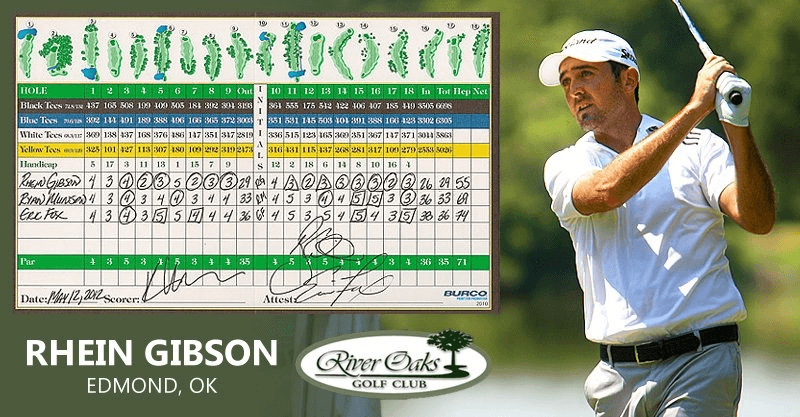
The Pursuit of Perfection: The Lowest Rounds in Golf History
Apr 23, 2026Breaking 60 used to be like running a four minute mile, but now it happens all the time.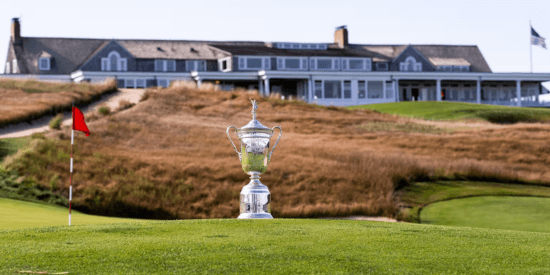
RESULTS: 2026 U.S. Open Local Qualifying
May 3, 2026The road to Shinnecock Hills begins in April as 110 local qualifying sites and 13 final qualifying venues are set.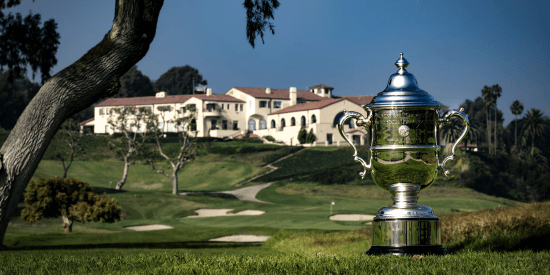
U.S. Women’s Open Qualifying Locations & Sites (2026): Complete Guide
Apr 20, 2026The USGA announced 26 qualifying sites for the 81st U.S. Women’s Open, set for June 4–7 at Riviera.
2026 U.S. Senior Open Qualifying Hub: Sites, Dates, Eligibility & How to Advance
Apr 20, 2026The road to the 46th U.S. Senior Open at Scioto Country Club runs through 32 local qualifiers and 12 final sites
2026 U.S. Amateur Qualifying: Dates, Sites, Registration Info, and How to Enter
Apr 30, 2026Registration for the 2026 U.S. Amateur is opening soon. Explore every local and final qualifying site