The Franchise Era Arrives.
Phoenix United just won the 2026 Grass Clippings Open by six. The bigger story is what their jerseys mean for the future of amateur golf.
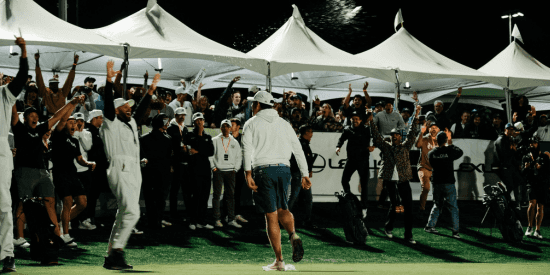
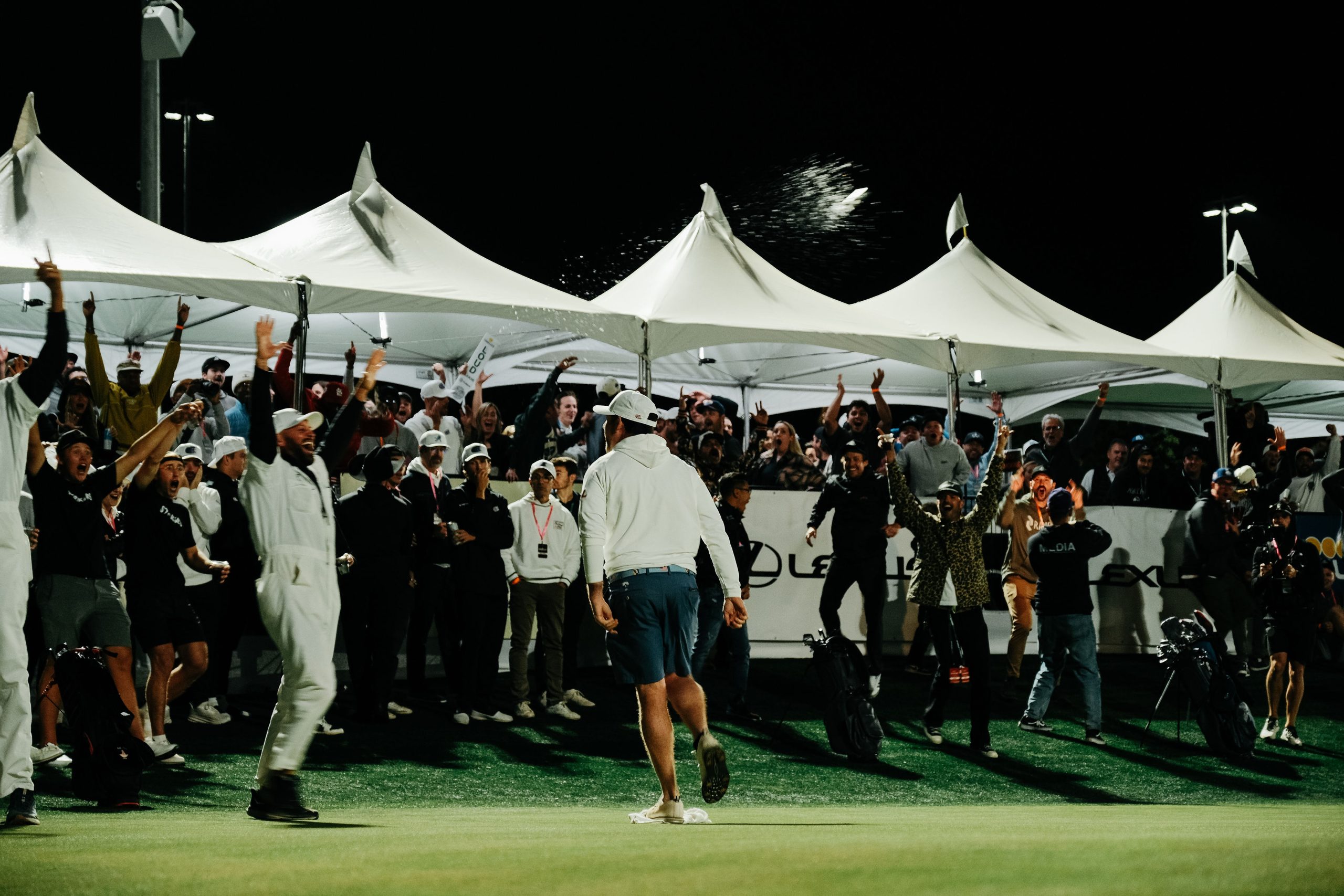
Under the LEDs at Grass Clippings Rolling Hills in Tempe, Austin Quick and Tyler Weworski turned a 36-hole par-3 scramble into a runaway. The Phoenix United pair posted 23-under 85 across two nights, won by six shots, and walked away with $60,000 and a piece of Grass League history.
A history-making scoreboard.
It was the first time in any Grass Clippings Open that a team posted back-to-back rounds of 10-under or better. The margin of victory was the largest in tournament history. And the franchise logo on the chest — Phoenix United — is the part that has the rest of amateur golf paying attention.
Quick and Weworski opened the event tied at the top through Friday night at 10-under, level with Hannah Gregg and Fredrik Lindblom of Hollywood Hitters. They didn't slip on Saturday. Weworski poured in an ace on hole 13 in the final round. The pair pulled away from a chase pack that included three teams locked in a tie for second at 17-under.
Weworski, 35, lives in Carlsbad, California. He played college golf at Texas Tech, Monday-qualified into the PGA Tour's Barracuda Championship in 2020, and has spent most of his post-college career bouncing between mini-tour starts and chasing status. His mother, Corey Weworski, is a former U.S. Women's Mid-Amateur champion.
Quick and Weworski had been here before. They teamed up at the 2024 GCO and finished T2 at 14-under. This year they came back with the same partnership — and nine more shots in the bag.
“I'll be honest, I was the pro who didn't make it to the big time. I was always the guy who was the dreamer or mini-tour guy who wanted to play in front of crowds and never got that chance. That's what this tournament brought — there's thousands of people watching.”
How the 2026 GCO actually works.
The Grass League is structured like no other event on the amateur calendar. Eleven franchises — Phoenix United, Scottsdale Strikers, Minnesota Muskies, Tampa Bay Swamp Dawgs, Michigan Auto Aces, Las Vegas Action, New York Blue Birds, Dallas Horsemen, Los Angeles Roses, Hollywood Hitters, and San Diego Munis — own roster spots and submit two-player teams to compete.
Two pathways feed the GCO field. Franchises submit pre-rostered duos directly. The rest of the field comes through the Grass League Qualifier on April 22, where 108 two-person teams played 18 holes for a chance at the draft. The top finishers advanced to the snake-style draft on April 23, where each franchise selected two additional teams to round out its GCO roster.
Every event is played as a two-person scramble. Both players hit, the team picks the best ball, both play from there. Format was 36 holes total over Friday and Saturday under the lights, with par 3s only.

Phoenix United climbs the standings.
The win moves Phoenix United to fourth in current 2026 franchise earnings at $22,867, behind Minnesota Muskies, Tampa Bay Swamp Dawgs, and Michigan Auto Aces. Season-long franchise points are still at zero across the league because the GCO functions as the kickoff event — points start accumulating through the Match Play Series, Summer Grind, and culminate at the GL Championship on December 7.
Austin Quick was elected Franchise Captain for Phoenix United's 2026 season. Phoenix also rosters Ty Strafaci, Will Kropp, Sam Fidone, and Mike Cohen, among others.
The question hanging over amateur golf.
The Grass League is doing something amateur golf has never done. Players are drafted, dropped, traded, and contracted. In April alone, Dallas Horsemen dropped Matthew Meneghetti and Mason Greene and rostered James Love and Ben Hayes. San Diego Munis added Mikel Martinson and Bobby Massa. The transactional churn looks more like the NFL than the U.S. Amateur.
Amateur golf is about the individual.
Amateur golf has historically been about the individual against the course. Franchise structure subordinates the player to the team brand.
The upcoming Match Play Series, where franchise owners decide which two-some represents the team in made-for-YouTube matches, takes the decision-making further out of the players' hands. A hot golfer can sit. A marketable pairing can play.
There's a void this fills.
There has long been a void between college golf and the senior amateur ranks for players who are good enough to compete at a high level but aren't going to make the PGA Tour. The Grass League fills it.
Weworski is the case study: a former college player and Monday qualifier who finally got to play in front of “thousands of people.” That opportunity didn't exist before.
Pat McAfee discussed the league on his show in late April, putting Grass League in the same conversation as LIV Golf as part of the broader restructuring of the sport. The comparison cuts both ways. LIV brought money and franchises to a tour that didn't ask for either. Grass League is doing the same to the amateur game — except the amateur game arguably had more room for it.

The 2026 calendar continues.
The 2026 Grass League Match Play Series begins in June. It's a single-elimination 2v2 bracket where each franchise fields one team per round, all matches recorded for YouTube. Round 1 submissions are already locked: Dallas sends Liringis/Stocker, Hollywood Hitters send Edwards/Vogel, Scottsdale puts up Yoshihiro/Fahrny, San Diego goes with Lucas/Ryan, Tampa Bay sends Story/Black, and Los Angeles fields Vanderveer/Glinski.
Match Play Series
The Summer Grind
GL Championship
For Quick and Weworski, the GCO win sets the tone. A Phoenix United team that finished outside the franchise earnings top three last year just put itself on the board with the largest victory margin in event history. Whether that holds up across the rest of the calendar is the next question.