Loading article...

Loading...
Loading...
Loading article...
see also: Equipment Reviews
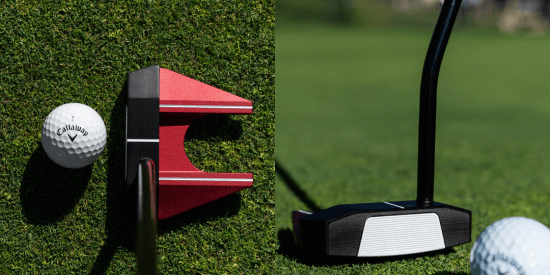
The new Odyssey S2S Tri-Hot SB putters blend single-bend shaft design with forward CG to deliver zero-torque performance
The modern putter conversation is no longer just about head shape, alignment lines, or insert feel. Increasingly, it is about how the shaft enters the head, how that affects the putter’s torque profile, and whether the face naturally wants to stay square throughout the stroke. That is the idea behind the new Odyssey S2S Tri-Hot SB putters, which bring Odyssey’s zero-torque technology into a cleaner, more familiar single-bend design.
At first glance, the new S2S Tri-Hot SB models do not look dramatically different from many modern mallets. That is exactly what makes them interesting. Odyssey’s goal was not simply to make another zero-torque putter. The goal was to make one that removes the biggest reasons golfers have hesitated to try the category in the first place.
In a traditional putter, the relationship between the shaft axis and the center of gravity can cause the face to want to rotate during the stroke. That rotational tendency is what many golfers and manufacturers refer to as torque. A zero-torque design aims to reduce that twisting tendency by positioning the shaft axis and center of gravity in a way that helps the face stay more naturally square.
That sounds simple, but the challenge has always been visual acceptance. Many zero-torque putters have looked unusual at address. Some have required obvious forward shaft lean. Others have relied on center-shafted designs that many players are simply not comfortable using.
Odyssey saw those barriers clearly. According to the company’s product briefing and R&D presentation, the three biggest friction points in the zero-torque category were shaft lean, center-shaft-only construction, and obstructed alignment. The S2S Tri-Hot SB line was created to attack all three.
When golfers talk about putter hosels, they usually describe what they see: plumber’s neck, slant neck, center shaft, or single bend. But the more important question is what that geometry actually does. Shaft bend affects both the look of the putter and the way it wants to behave during the stroke.
A center-shafted putter can help align the shaft more closely with the putter’s center of gravity, but many golfers do not like the visual. A plumber’s neck can look traditional, but it often introduces different offset and rotation characteristics. A single-bend shaft occupies a useful middle ground. It can preserve a cleaner, more conventional look while still supporting a more stable torque profile if the rest of the putter is engineered correctly.
That is the key to the S2S Tri-Hot SB story. The single-bend shaft is not just a styling choice. It is the visible part of a deeper design solution that lets Odyssey maintain zero-torque performance while making the putter look more like something golfers already trust.
Odyssey says the breakthrough came from moving the center of gravity forward. In the S2S Tri-Hot family, that is accomplished through a multi-material construction featuring heavy tungsten in the front, steel through the middle, and lightweight aluminum in the rear. By moving so much mass forward, Odyssey was able to position the shaft entry on the topline and remove the pronounced forward shaft lean that has turned some golfers away from other zero-torque designs.
From there, the company took the next step. Rather than keeping the putter exclusively center-shafted, Odyssey shifted to a single-bend configuration that moves the shaft visually toward the heel while preserving the underlying zero-torque intent. The result is a putter that sets up more like a heel-shafted model but still delivers the face-stability benefits Odyssey is chasing.
In simple terms, the S2S Tri-Hot SB is designed to give golfers a more traditional picture at address without giving up the performance benefits that made the original square-to-square concept appealing.
In most club categories, shaft profile usually refers to stiffness distribution, kick point, or how the shaft loads and unloads. In putters, that conversation is a little different. Here, shaft profile is often more about geometry, entry point, and visual presentation than flex.
With the S2S Tri-Hot SB, the profile story comes down to three things:
1. Heel-ward appearance: The shaft sits in a position that looks more familiar to golfers who have always preferred a traditional setup.
2. Cleaner sightlines: Odyssey says the single bend opens the door for more standard alignment lines because there is less visual obstruction than with bulkier hosel constructions.
3. Preserved zero-torque performance: Even though the shaft looks more heel-oriented, the putter is still engineered around a forward center of gravity and a face-stable concept.
That combination is why the SB models may appeal to golfers who were curious about zero torque but could never get comfortable with the look of a center-shafted putter.
One of the strongest themes from Odyssey’s internal presentation is that these putters are meant to feel “pleasantly different” rather than dramatically foreign. Company representatives described moments where players picked one up, rolled a few putts, and only then realized they were using a zero-torque model. That is a revealing detail.
Usually, zero-torque putters announce themselves immediately. The S2S Tri-Hot SB seems designed to do the opposite. Odyssey wants golfers to see a shape they recognize, align it naturally, and only then discover that the torque profile feels different through the stroke.
That matters because putting is so visual. Golfers often reject a putter long before performance can win them over. The single-bend design is Odyssey’s attempt to lower that psychological barrier.
None of this works without the Tri-Hot construction. Odyssey says the S2S Tri-Hot SB models retain the same core multi-material recipe as the existing Tri-Hot line: a lightweight aluminum back section, a steel middle structure, and substantial tungsten weighting in the front. That forward weighting is what gives Odyssey the freedom to reposition the shaft without losing the stability characteristics it wants.
The company says some models use 120 to 140 grams of tungsten in the face area. That is a significant design commitment and a reminder that zero torque is not achieved by shaft bend alone. The shaft bend is only effective because the mass properties of the head have been engineered to support it.
While the head-and-shaft relationship drives the zero-torque story, Odyssey is pairing it with the same AI dual insert used elsewhere in the line. According to the company, that insert uses a firmer urethane backing layer and a softer front layer, with grooves designed to improve both speed consistency and forward roll.
Odyssey also highlights its RPM groove pattern, which it says sits on a 19-degree slope from vertical to promote more topspin. The company’s pitch is that the insert does not just preserve ball speed on mishits; it also helps launch the ball into a better roll window across more of the face.
Taken together, the design message is clear: the S2S Tri-Hot SB is not just about looking different. It is meant to combine face stability, consistent roll, and traditional visual comfort in a single package.
Golfers who may be most interested in the S2S Tri-Hot SB are those who have been intrigued by zero-torque performance but have resisted the category for visual reasons. If center-shafted heads have always looked awkward to you, or if excessive shaft lean makes a putter feel uncomfortable at setup, Odyssey is clearly trying to solve that exact problem.
Tour validation also supports that positioning. Odyssey referenced Max Greyserman as a player who was interested in zero torque but did not want a center-shafted putter. Once the single-bend versions arrived, he made the switch and kept the style in the bag. That does not guarantee the same result for every golfer, but it does reinforce the product’s intended purpose: zero torque for players who want a more conventional look.
The Odyssey S2S Tri-Hot SB lineup will be available in four options:
Rossie
Jailbird
#7
#7 Cruiser (38-inch)
Retail availability begins on April 24.
The most interesting thing about the Odyssey S2S Tri-Hot SB putters is not simply that they are zero torque. It is that Odyssey has tried to make zero torque look normal. That is where shaft bend and profile become so important. By using a single-bend shaft in combination with a forward center of gravity, Odyssey has created a design that aims to preserve face stability without forcing golfers into a setup they do not like.
For players who want to understand putter design at a deeper level, this release is a useful reminder that the shaft is not just a connector. In a modern putter, it is part of the performance equation. And in the S2S Tri-Hot SB, it may be the detail that makes zero torque finally feel accessible to a much wider group of golfers.

Meet the Amateurs in the 2026 Masters: Six Different Paths to Augusta National
Apr 8, 2026From teenage phenoms to seasoned dreamers, the amateur class at the 2026 Masters brings six compelling stories to Augusta
Masters: Memorable performances by amateurs in the last 40 years
Apr 2, 2026A Mid-Amateur legend and a 14 year old have won low-amateur honors at Augusta National over the years
U.S. Open Qualifying 2026: Local & Final Qualifying Sites for Shinnecock
Apr 8, 2026The road to Shinnecock Hills begins in April as 110 local qualifying sites and 13 final qualifying venues are set.
Masters 2026: Amateur Tracker Ends at Augusta as Rory McIlroy Surges Into the Lead
Apr 10, 2026All six amateurs missed the cut at the 2026 Masters, where Rory McIlroy seized control at 12-under and a dramatic Friday
2026 Augusta National Women's Amateur: Full Field Preview, Favorites & How to Watch
Mar 30, 202648 of the top 50 players in the world. Two past champions. One teenager who lost by a single stroke last year.Loading latest news...