Loading article...

Loading...
Loading...
Loading article...
see also: Brad Dalke, The Masters Tournament, Augusta National Golf Club
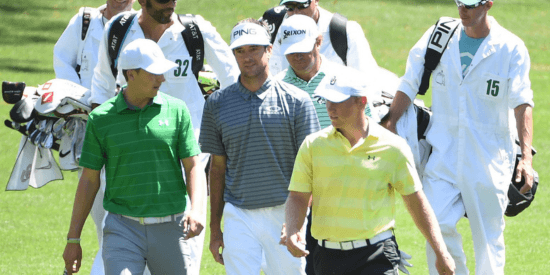
Before Augusta, Brad Dalke believed he could contend. What happened next says everything about the Masters—and the amateur dream.
Before Augusta, Brad Dalke believed he could contend. What happened next says as much about the Masters as it does about the modern amateur game.
A month before the 2017 Masters, Brad Dalke said something most amateurs never say out loud.
“I feel like I’ll be in contention honestly… I feel like I can birdie every hole.”
He was 19 years old. He had never played Augusta National in competition. And yet, the belief was real.
That belief—earned through years of elite performance—is what separates Masters amateurs from everyone else.
Dalke didn’t arrive at Augusta as a ceremonial invite. He arrived as one of the most accomplished junior players of his era.
His run to the U.S. Amateur final at Oakland Hills was particularly telling. He survived a 19-hole quarterfinal and rallied in the semifinals before falling to Curtis Luck in the championship match. That performance secured his Masters invitation—and validated his belief that he could compete at the highest level.
At that moment, Dalke fit a familiar archetype: the decorated amateur ready to test himself against the best players in the world.
Dalke prepared as thoroughly as possible. He made a pre-tournament trip to Augusta, studied the greens, and built a strategy around his strengths—particularly his iron play.
“It just feels like Augusta fits my eye.”
But as many first-timers learn, Augusta National has a way of reshaping expectations.
Former Masters participant Hunter Haas offered Dalke a warning that has echoed through generations of players: there is no way to replicate tournament conditions. The course changes. The speed changes. The pressure changes.
The 2017 Masters was not a typical test.
Strong winds—gusting up to 35 miles per hour—combined with firm, fast greens created one of the most difficult opening rounds in recent memory. The field averaged nearly three strokes over par, and only 11 players broke par on Thursday.
Dalke opened with a 78 (+6), a score that placed him outside the projected cut line but was far from an outlier given the conditions.
For context, even established professionals struggled to control trajectory and distance, particularly on Augusta’s exposed back nine.
The defining characteristic of Dalke’s Masters performance wasn’t Thursday—it was Friday.
Facing a likely missed cut, he responded with a composed 75 (+3), improving by three shots and showing the kind of adaptability required to compete at Augusta.
His round was highlighted by three late birdies:
The birdie at 18, in particular, provided a fitting conclusion—an uphill finish at one of golf’s most iconic venues, executed under pressure.
Dalke’s final total of 153 (+9) left him three strokes short of the cut.
That margin underscores a fundamental truth about Augusta: the difference between playing the weekend and heading home is often minimal.
In Dalke’s case, one or two cleaner holes on Thursday would have placed him in a dramatically different position—and likely altered how his performance is remembered.
In evaluating amateur performances at the Masters, the modern benchmark is straightforward: make the cut.
Players like Ryan Moore (T13 in 2005) and Bryson DeChambeau (low amateur in 2016) represent the upper tier of recent amateur success. In contrast, the majority of amateurs—often fewer than 10 in the field—fail to advance to the weekend.
Dalke’s performance falls into a middle category: competitive but unrewarded. He did not make the cut, but he outperformed portions of the amateur field and demonstrated the ability to adjust under pressure.
Importantly, his showing came in unusually difficult conditions, which further contextualizes the final result.
Following Augusta, Dalke returned to Oklahoma and played a key role in the Sooners’ 2017 NCAA Championship victory, making the clinching putt in the final match.
His collegiate career continued to be successful, but his transition to professional golf proved more complicated. Like many elite amateurs, Dalke encountered the challenges of consistency, confidence, and the mental demands of the professional game.
His later move into the content-driven golf space, including work with Good Good Golf, represents a different path—one that reflects the evolving landscape of competitive golf.
During Masters week, attention naturally focuses on the amateurs in the field—players chasing the cut, the low amateur honor, or a place in tournament history.
Dalke’s story serves as a reminder that the Masters experience extends beyond those outcomes.
It is a test of preparation, adaptability, and belief. It is also a reflection point—where elite amateurs confront the gap between expectation and reality.
Dalke arrived believing he could contend. In flashes, he showed why. In the end, Augusta delivered its usual lesson.
Brad Dalke’s 2017 Masters will not be remembered among the great amateur runs at Augusta National.
But it remains instructive—both for what it revealed about his game at the time and for what it says about the challenge facing every amateur who arrives at Augusta.
At the Masters, belief is required to get there. What happens next is something only Augusta can decide.

One of Golf's four professional majors traditionally invites amateurs who have reached the finals of the US Amateur, or won the British Amateur or the US Mid Amateur. Also included are the winners of the relatively new Asia Pacific Amateur and Latin ...
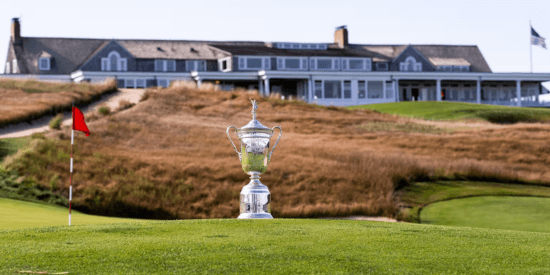
2026 U.S. Open Local Qualifying Results: All 109 Sites + Leaderboards
May 14, 2026Live results from all 109 U.S. Open Local Qualifying sites. Site-by-site medalists, amateurs, and alternates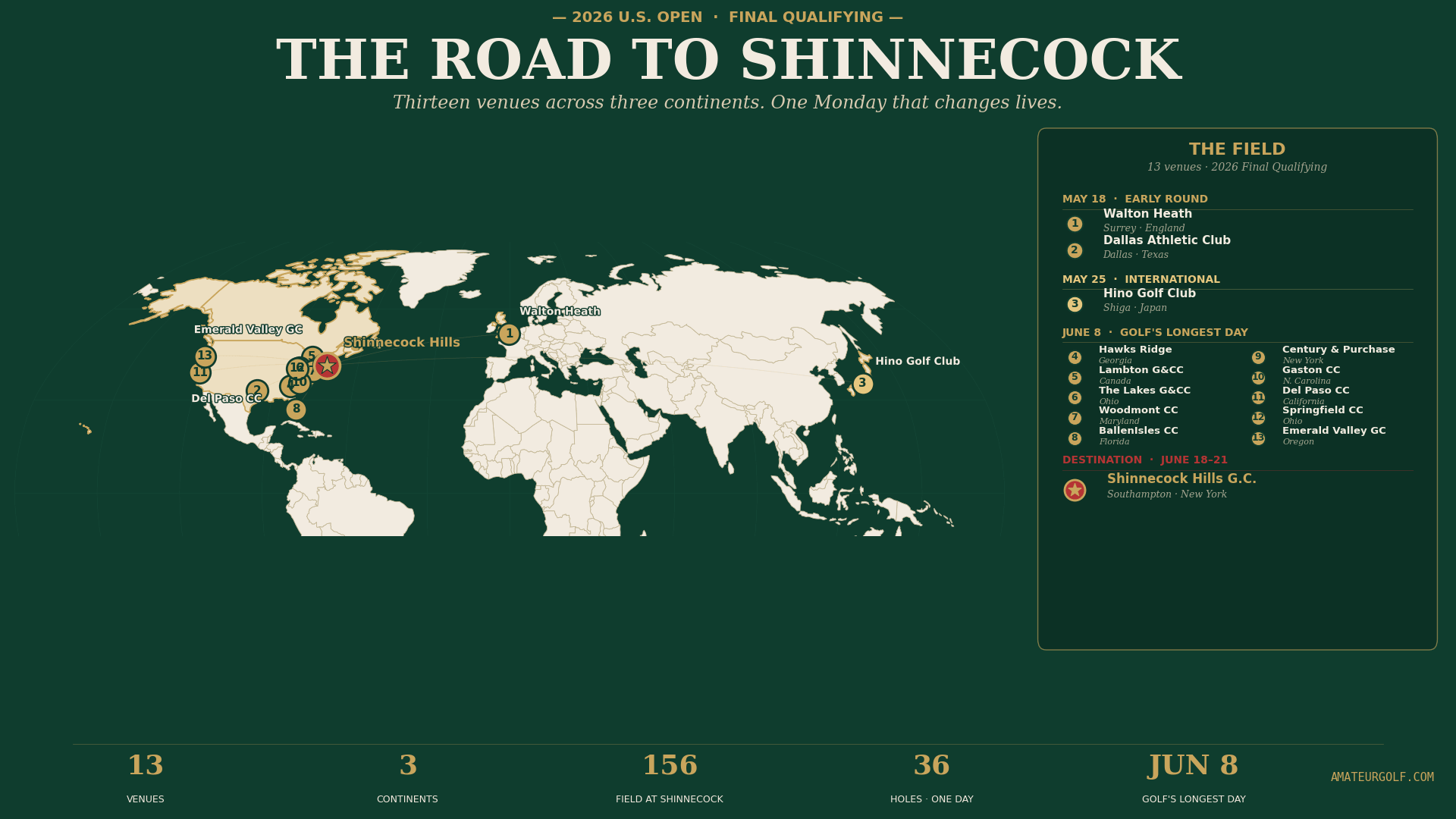
RESULTS: 2026 U.S. Open Final Qualifying
May 18, 2026A deep-dive into all 13 final qualifying venues from Walton Heath, England to Sacramento, California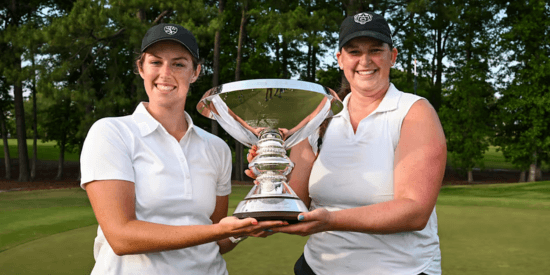
Ellison & Scheck Win 2026 U.S. Women's Amateur Four-Ball in 19 Holes
May 6, 2026The No. 3 seed snaps a five-year teenage-champion streak. Carter & Snyder, both 15, fall in sudden death after
Why Pinehurst Is the Ultimate Place to Play a Two-Man Championship
May 19, 2026Competitive golfers take on Pinehurst during the AmateurGolf.com Two Man Links and Father & Son Championship presented by Titleist
How to Watch the 2026 NCAA Golf Championships
May 20, 2026Everything you need to tune into the men's and women's NCAA Division I golf championships at Omni La Costa