Loading article...

Loading...
Loading...
Loading article...
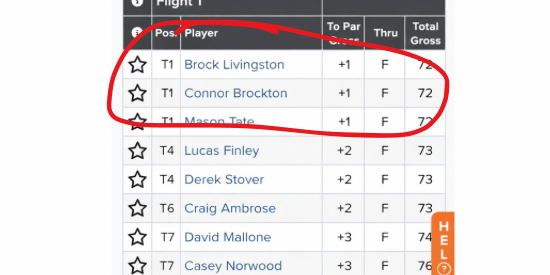
Tied on the leaderboard and suddenly you’re behind? Here’s exactly how Golf Genius breaks ties (last 9–6–3–1, final-round priority
Ties are common in competitive amateur golf. But if you’ve ever finished with the same score as someone else and watched Golf Genius rank you lower without a playoff, it’s not random — it’s usually an automated countback (also called “matching scorecards”).
Here’s how Golf Genius tie-breaks typically work, what tournament committees can change in the settings, and what competitive golfers should know before the first tee shot.
In many events, Golf Genius uses the common default tie-break method that compares performance on the closing holes in this order:
The player with the better score in the first comparison point is ranked higher. If still tied, Golf Genius continues down the list until the tie is broken.
Two players both shoot 72.
Even though the totals match, Player B is ranked ahead because 36 on the back nine beats 37.
In 36-, 54-, or 72-hole tournaments, many committees configure Golf Genius to compare ties by looking at the final round first, then applying countback within that round (last 9–6–3–1).
Translation: if two players finish with the same total score, the one who played better in the closing round is often ranked higher, and then the back-nine countback can come into play if those final-round scores match.
In handicap tournaments, Golf Genius usually applies the same tie-break structure to net scores — not gross. That means back-nine net, last-six net, and so on.
If you’re playing a net championship or member-guest, remember that one stroke (net) on the closing holes can flip a tied finish.
Golf Genius is flexible. Tournament administrators can configure tie-breaks differently depending on the competition policy. Common alternatives include:
The key point for players: your event’s Terms of Competition determine what Golf Genius is instructed to do. The software will follow the settings selected by the committee.
In team formats (high school, college, interclub, invitational team championships), tie-breaks often use one of these approaches:
That’s why the “non-counting” score can still matter in the final standings — it may decide a trophy.
One important distinction: some tournaments use countback for final placement (like 3rd vs. 4th), but still require a playoff to determine the champion.
In other cases — especially qualifiers, seeding for match play, and determining alternates — countback might be the method used to produce a single order. Golf Genius can also be configured to “break ties” in the results display based on the chosen criteria.
Bottom line: if a winner must be decided, always defer to the tournament’s published policy.
If you want one simple mindset for competitive golf: play the finish like it matters — because in Golf Genius, it often does.

GOLF'S LONGEST DAY: 2026 U.S. Open Final Qualifying Monday June 8
Jun 5, 2026Follow along from 10 locations - our team is on the ground looking for the best stories
How to Watch the 2026 NCAA Golf Championships
May 20, 2026Everything you need to tune into the men's and women's NCAA Division I golf championships at Omni La Costa
2026 NCAA Men's Golf Championship: Live Coverage, Field & Daily Updates from La Costa
Jun 3, 2026Auburn defeats UCLA at La Costa to capture its second NCAA men’s golf championship in three years.
Why Pinehurst Is the Ultimate Place to Play a Two-Man Championship
May 19, 2026Competitive golfers take on Pinehurst during the AmateurGolf.com Two Man Links and Father & Son Championship presented by Titleist
Stanford Wins 4th NCAA Women's Golf Title, Tops USC
May 26, 2026The Cardinals closed a dominant week at La Costa with another match-play crown — their fourth national titleLoading latest news...