Loading article...

Loading...
Loading...
Loading article...
see also: Equipment Reviews
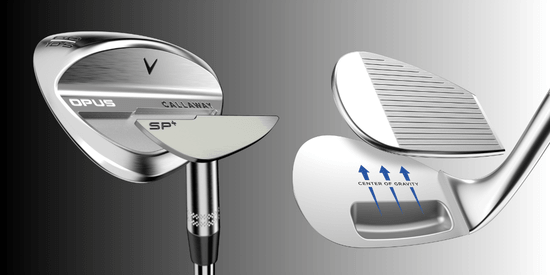
A new high-CG Opus wedge built for lower flight, tighter distance control, and consistent spin in tournament conditions.
Callaway’s Opus SP+ Chrome Wedge enters the market with a specific performance target that will resonate with competitive amateurs: lower launch, tighter flight windows, and more reliable spin from a wider range of lies. The design changes aren’t subtle—Callaway reshaped internal mass with a larger Spin Pocket™ and added tungsten high in the topline to push the center of gravity (CG) upward.
If you’re playing in wind, attacking firm greens, or trying to reduce the “floaty” wedge that comes out high and unpredictable, the SP+ concept is worth understanding before you decide whether it belongs in your bag.
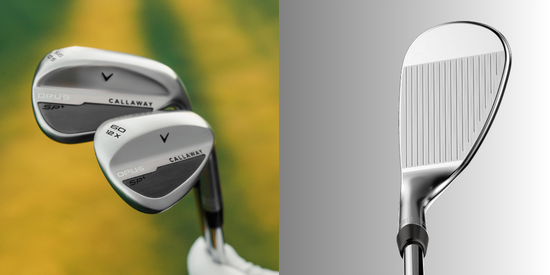
The performance story of Opus SP+ starts with CG. Callaway’s wedge team emphasized that SP+ takes the Opus SP framework and increases the amount of mass positioned high in the head to produce a more penetrating, controllable flight.
“Opus SP+ takes on the best qualities of Opus SP, with lower launch, more spin, and engineering control. We’ve taken the Spin Pocket and made it larger; we’ve hollowed out more of the sole and doing that allows us to put Tungsten up in the topline… We’ve also added even more Tungsten up top to raise the CG, which allows us to flight the ball lower for more control.”
— Brian Herr, Callaway R&D Manager (Wedges)
For tournament golfers, higher CG wedges can translate into three practical benefits: lower peak height on full swings, more stable carry distances in wind, and better distance control when you’re trying to flight wedges down.
Opus SP+ uses a re-engineered, three-piece construction (tungsten, MIM face, cast 8620 body) built around a 25% larger Spin Pocket™ compared to Opus SP. The pocket is part of how Callaway frees up mass from lower in the head and repositions it higher to raise CG.
On the media call, Callaway described the update as a more aggressive version of the SP concept: more sole material removed, a larger pocket, and more weight moved upward—aimed at players who want to keep wedge flight down while maintaining spin.
“We’ve taken that Spin Pocket and we’ve made it larger. We’ve hollowed out more of the sole and by doing that that allows us to put tungsten up in the top line… The higher CG helps us flight the ball lower.”
— Brian Herr
Callaway positioned tungsten high in the topline of SP+ and noted there is 23% more tungsten in Opus SP+ compared to Opus Platinum. The purpose is straightforward: raise CG further, promote a more penetrating launch, and support spin production from full shots through touch wedges.
In competitive amateur golf, this type of weighting shift matters most when you’re trying to control the top of your window—especially on full-gap and full-sand wedge shots where distance control is often won or lost.
Opus SP+ includes Callaway’s Spin Gen 2.0 face package, highlighted by a 17° groove angle, tighter groove pitch spacing, and a deeper cross-hatch laser pattern across the face. The competitive angle here is consistency: better groove edge contact and more friction retention when the lie isn’t perfect.
If you’re tracking proximity and scoring wedges, the problem isn’t usually raw spin numbers in ideal conditions—it’s the unpredictable shot from first cut or a slightly damp lie. The face updates are designed to reduce that drop-off.
The SP+ construction includes a MIM (Metal Injection Molded) face, which allows precise manufacturing and has also been positioned as a feel improvement. Herr noted the team has received positive feedback on impact dampening, which should translate to a slightly softer sensation on partial wedges and greenside shots.
“That MIM face—the feel—we’ve gotten really good feedback about how MIM dampens impacts.”
— Brian Herr
Opus SP+ is offered in three grinds—each with a clear fit profile. For most better players, grind choice will matter more than any single internal technology feature because it determines turf interaction and how the leading edge behaves when you change face angle.
“The X grind… it’s a higher bounce versatile club. People who are steep really like this, but it allows them to open up the face green side. And then the S grind… it’s a medium bounce, fits a lot of different player types.”
— Brian Herr
Opus SP+ Chrome wedges are built with slightly heavier swingweights in the scoring lofts: D5 in lob and sand wedges, and D3 in gap and pitching wedges. Stock components include a True Temper Dynamic Gold S200 shaft and a True Temper Icon Tour Velvet grip.
If you’re comparing Opus SP+ against your current gamer wedges, focus on outcomes that show up in tournament conditions:
Competitive amateurs live and die by wedge predictability. The Opus SP+ is designed for players who want a flatter flight and reliable spin control—especially when you’re trying to hit a number under pressure.
Want Opus SP+ Chrome in the bag for spring events? Preorder today.

2026 U.S. Open Local Qualifying Results: All 109 Sites + Leaderboards
May 14, 2026Live results from all 109 U.S. Open Local Qualifying sites. Site-by-site medalists, amateurs, and alternates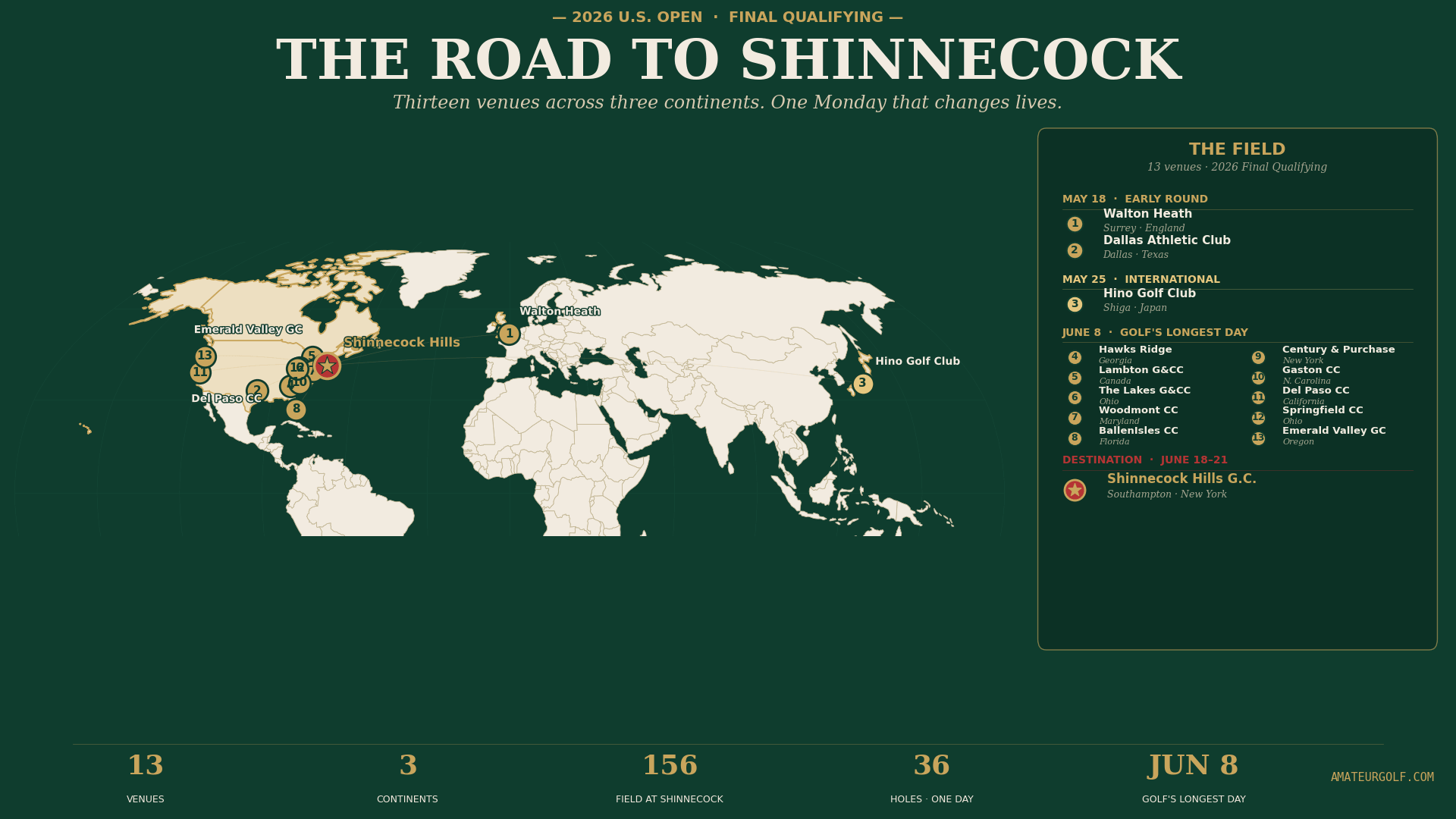
RESULTS: 2026 U.S. Open Final Qualifying
May 18, 2026A deep-dive into all 13 final qualifying venues from Walton Heath, England to Sacramento, California
How to Watch the 2026 NCAA Golf Championships
May 20, 2026Everything you need to tune into the men's and women's NCAA Division I golf championships at Omni La Costa
Why Pinehurst Is the Ultimate Place to Play a Two-Man Championship
May 19, 2026Competitive golfers take on Pinehurst during the AmateurGolf.com Two Man Links and Father & Son Championship presented by Titleist
2026 NCAA Men's Golf Championship: Live Coverage, Field & Daily Updates from La Costa
May 31, 2026Preston Stout fires a 65 to seize the individual lead. Auburn holds off Texas. Match-play bubble tightens.Loading latest news...