Loading article...

Loading...
Loading...
Loading article...

Indoor golf is no longer a novelty—it’s becoming a true training and competition environment for amateurs and professionals alike.
Five years ago, “going to the sim” usually meant grabbing a bay, swinging a bit, and maybe playing a famous course on a screen. Today, it’s something else. Indoor golf is turning into a competitive space—where serious amateurs chase measurable gains, where leagues and money games feel increasingly real, and where the best facilities are starting to look (and operate) more like training centers than entertainment venues.
That shift is why one simple question posted recently in the r/Golfsimulator community is so revealing: What makes a GREAT golf simulator facility? The answers are packed with “small details,” but a few themes kept showing up: price-value trust, data quality, bay comfort, and operational polish.
Golfers aren’t shy about it: if simulator time costs the same as (or close to) an actual round, many simply won’t bite. Indoor golf should be the best value way to practice and play when outdoor golf isn’t ideal.
The pricing sweet spot isn’t just about a number—it’s about options: off-peak rates, multi-hour packs, and memberships that reward frequent use without trapping customers in rigid commitments. Players want to book two hours when they need two hours, not one hour because a system won’t allow more.
The fastest way to lose a serious golfer is to make them doubt the numbers. Launch monitor quality is a credibility issue. If ball flight looks wrong, spin seems inconsistent, or putting feels like a gimmick, players don’t just complain—they move on.
That matters even more now that many golfers have “good enough” devices at home. To win time and loyalty, a commercial facility has to feel like a clear upgrade—high-trust data, consistent reads, and software that doesn’t fight the user.
One of the most practical deal-breakers is also the most obvious: cramped bays. If players feel like they can’t make a full, confident swing, it’s over. Good facilities build in room to move, room for bags, and enough seating for the group size the bay is supposed to serve.
The best feedback often sounds like hospitality more than golf tech: a usable bar-top table, stools or chairs that match capacity, a place to set gear, and hours that work for real life (early mornings and after-work evenings).
Most simulator facilities don’t lose customers because the idea is bad. They lose them because execution feels sloppy: confusing booking, inconsistent bay readiness, worn screens that degrade the image, or hitting surfaces that punish wrists and elbows.
The most successful spaces feel intentional—clean, organized, and welcoming—like a modern version of a clubhouse where golfers actually want to spend time.
The biggest takeaway isn’t a checklist item—it’s the trend behind them. Players are using simulators for structured practice, lessons, speed work, and competitive rounds with friends. Indoor golf is becoming part of the competitive calendar, not just a seasonal workaround.
For competitive amateurs, that means more reps with reliable feedback and fewer wasted sessions. For facilities, it means a higher standard: your product isn’t “a simulator.” It’s a place golfers trust to get better—and a place they can compete when daylight, weather, and course access aren’t cooperating.
If we boil the community feedback down into one operating philosophy, it’s this: make it easy to become a regular.
Indoor golf is getting more competitive by the month. The upside is that players win: the best facilities will keep raising the standard, giving amateurs and professionals better places to train, compete, and build community year-round.
Got a favorite indoor spot—or a pet peeve? Send us your notes and photos. We’re building an ongoing Indoor Golf coverage series for competitive amateurs.
Source: r/Golfsimulator community discussion on what defines a “great” simulator facility. View thread.

2026 U.S. Open Local Qualifying Results: All 109 Sites + Leaderboards
May 14, 2026Live results from all 109 U.S. Open Local Qualifying sites. Site-by-site medalists, amateurs, and alternates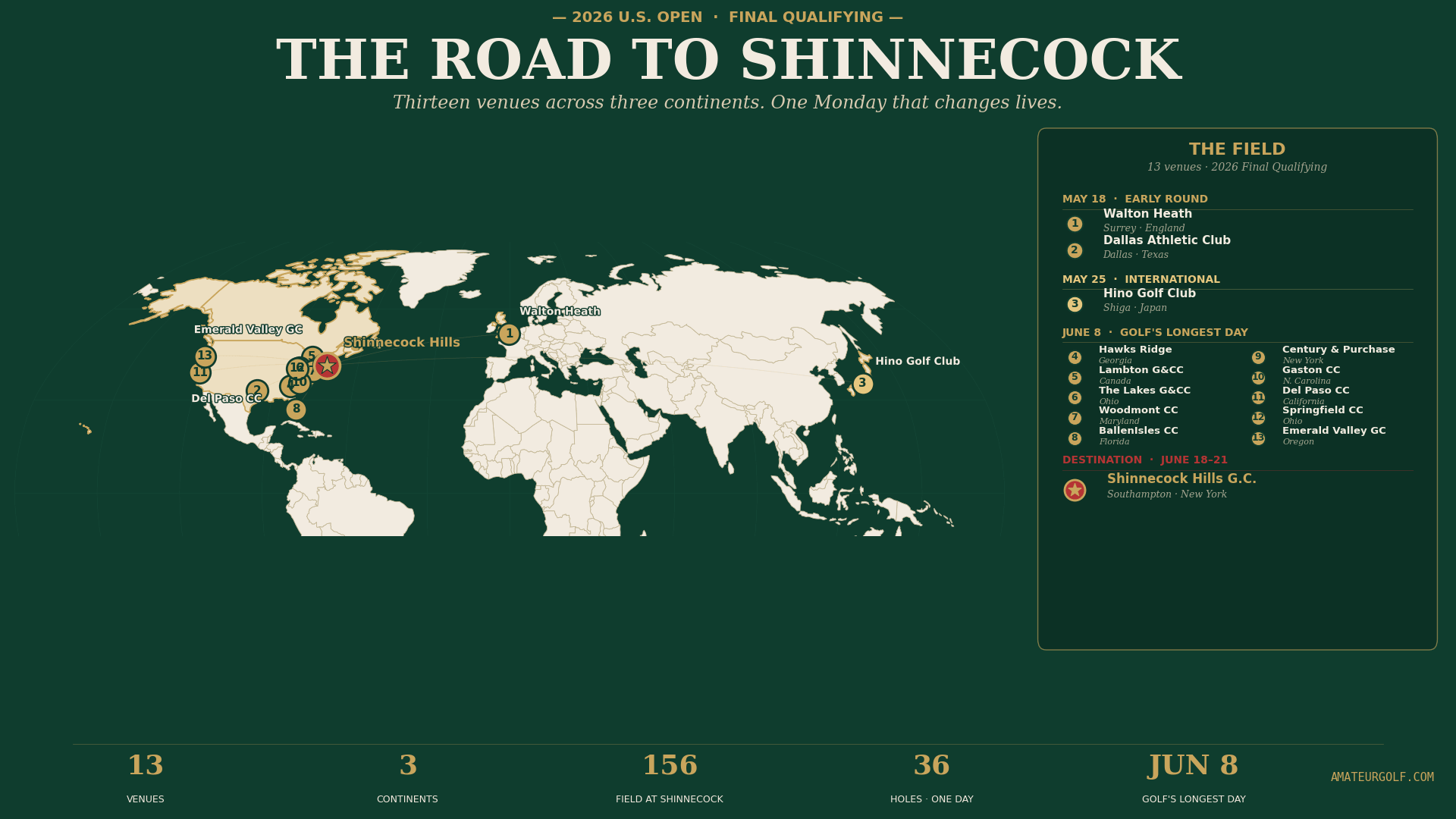
RESULTS: 2026 U.S. Open Final Qualifying
May 18, 2026A deep-dive into all 13 final qualifying venues from Walton Heath, England to Sacramento, California
Why Pinehurst Is the Ultimate Place to Play a Two-Man Championship
May 19, 2026Competitive golfers take on Pinehurst during the AmateurGolf.com Two Man Links and Father & Son Championship presented by Titleist
How to Watch the 2026 NCAA Golf Championships
May 20, 2026Everything you need to tune into the men's and women's NCAA Division I golf championships at Omni La Costa
Stanford Wins 4th NCAA Women's Golf Title, Tops USC
May 26, 2026The Cardinals closed a dominant week at La Costa with another match-play crown — their fourth national titleLoading latest news...