
The Making of a Masters Amateur
February 4, 2026 | by AmateurGolf.com Staff
see also: Pongsapak Laopakdee
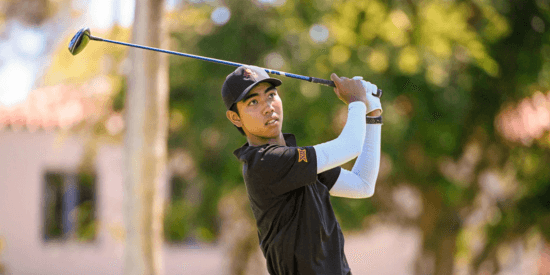
Arizona State’s Fifa Laopakdee went from quiet recruit to Augusta invitee.
Arizona State has produced some of the most recognizable names in amateur and professional golf history. Now, the Sun Devils may have another global contender rising fast — and his story is the kind that resonates far beyond college golf.
Fifa Laopakdee, a quiet standout from Thailand, has turned himself into one of the most dangerous winners in the amateur game. After capturing the Asia-Pacific Amateur Championship, Laopakdee earned invitations to both the 2026 Masters Tournament and The Open Championship, instantly becoming one of the most important amateur storylines in the world.
But what makes this story worth reading for competitive amateurs, juniors, and parents isn’t just where he’s going. It’s how he got there.
A quiet arrival in Tempe
When Laopakdee arrived at Arizona State, he didn’t come with fireworks. According to Sun Devil Athletics’ original reporting, head coach Matt Thurmond first discovered him almost by chance while watching an under-16 European championship in the Czech Republic, where Laopakdee finished third against a field packed with top European juniors.
He entered a Sun Devil program with real depth and an unusually large incoming group that season, meaning early attention was spread across the roster. Laopakdee was viewed as a strong recruit — just not necessarily the loudest name in the room.
A setback that forced patience
Laopakdee cracked the lineup early as a freshman, but his momentum was interrupted by a finger injury that required surgery and wiped out much of the season. For many young players, especially those adjusting to a new country, a new campus, and a higher competitive level, that kind of pause can become a derailment.
Instead, it became part of the development curve. Thurmond later shared that even after Laopakdee returned, progress wasn’t immediate. There were stretches where things looked slower than expected, including a difficult week in Hawaiʻi against elite competition.
That’s where the story shifts from being a college golf feature to something every serious amateur golfer can learn from: the climb isn’t always straight up.
The turning point: no shortcuts
Rather than easing him along, Arizona State pushed him. Thurmond challenged Laopakdee harder than he had before, placing him into a demanding nine-round internal qualifier against a teammate instead of a typical three-round test.
The goal wasn’t punishment. It was proof — proof that the work could hold up under pressure, and proof that confidence can be earned through difficult rounds, not handed over through encouragement.
Round by round, Laopakdee became steadier, calmer, and sharper. And then the results started to look different.
From contender to winner
In college golf, top-10 finishes are strong and top-20s are often excellent. Laopakdee separated himself by finishing the job. In his breakout run, he posted signature results including:
- Champion, 2025 Thunderbird Collegiate
- Tied for 1st, Papago Individual
- Tied for the win, Cabo Collegiate
Thurmond described Laopakdee as the type of player who doesn’t get overwhelmed by big moments — the type who, when he’s in position to win, has shown he can actually do it.
Making history at the Asia-Pacific Amateur
The defining moment came in the summer of 2025, when Laopakdee won the Asia-Pacific Amateur Championship in Dubai. The victory carried immediate weight:
- He became the first player from Thailand to win the event.
- He earned invitations to the Masters (April 9–12, 2026) and The Open Championship (July 12–19, 2026).
- He became global news in the amateur golf world, with increased media attention and recognition at Arizona State events.
In other words: the quiet recruit wasn’t quiet anymore — not to the golf world.
Why this story matters for amateur golfers, juniors, and parents
Here’s why Laopakdee’s rise is such a strong lesson for the broader amateur golf community: it highlights what the path actually looks like when you’re chasing elite golf.
So many juniors believe the timeline has to be immediate — commit early, play right away, win quickly, move on fast. Laopakdee’s story shows the opposite. Development often comes through setbacks, patience, and resilience, not instant validation.
The college golf reality: depth, competition, and earning it
Arizona State is one of the deepest programs in the country. Laopakdee’s breakthrough didn’t happen because the door was opened for him. It happened because he stayed ready when the door was closed.
The nine-round qualifier is a perfect example of the level college players face: real internal competition, real pressure, and no shortcuts. For juniors dreaming of Division I golf, this is the standard — not the exception.
A blueprint for young amateurs
- Injuries don’t end the story — they shape it.
- Confidence is built through hard rounds, not easy ones.
- Winning comes after learning how to compete under pressure.
- Quiet players can still become world-class contenders.
Laopakdee didn’t become elite because of hype. He became elite because he stayed consistent, stayed composed, and proved he could rise when the moment demanded it.
For parents: the long game matters
For parents navigating junior golf, there’s a powerful reminder here: the best players aren’t always the ones who peak at 15 or 16. Sometimes the future Masters amateur is the player who develops at 18, 19, or 20 — after learning how to handle adversity, competition, and the demands of college athletics.
Laopakdee’s story is proof that trusting the process and staying grounded can lead to the biggest stages in the sport.
The next chapter
Now in his junior year, Laopakdee is approaching the biggest decision elite amateurs face: how long before the professional game calls? But first comes the opportunity of a lifetime — competing at Augusta National and on golf’s oldest major stage.
From quiet recruit to global contender, his rise hasn’t been loud. It’s been deliberate, patient, and powerful when it matters most. And for amateur golfers watching from the outside, it’s a reminder that the next breakthrough might be closer than you think — if you’re willing to keep earning it.
Reporting credit: This article is based on and inspired by original reporting from Sun Devil Athletics, written by Meredith Cunningham (published January 27, 2026). AmateurGolf.com adapted and expanded the story with additional context and takeaways for competitive amateur golfers, juniors, and families.
Most Popular Articles

Rory McIlroy Wins 2026 Seminole Pro-Member With Dad Gerry
Mar 2, 2026Rory McIlroy added another trophy to the mantle on golf’s most exclusive Monday, teaming with father Gerry at Seminole Golf Club.
U.S. Open Qualifying 2026: Local & Final Qualifying Sites for Shinnecock
Feb 19, 2026The road to Shinnecock Hills begins in April as 110 local qualifying sites and 13 final qualifying venues are set.
FINAL RESULTS: Gasparilla Invitational 2026
Feb 21, 2026Hayes Brown wins Gasparilla at 2-under, edging Peyton White by one, while Jeff Frazier claims the Senior title at Palma Ceia.
Yunseo Yang Wins Women’s Amateur Asia-Pacific at Royal Wellington Golf Club
Feb 15, 2026Yunseo Yang makes history as Korea’s first WAAP champion, earning major exemptions with a dominant win.
If You’re Entering the U.S. Open, Read This First: 2026 Qualifying Explained
Feb 16, 2026110 locals. One Longest Day. Zero margin. Here’s what you need to know before filing for the 2026 U.S. Open.Loading latest news...