Loading article...

Loading...
Loading...
Loading article...
see also: Equipment Reviews
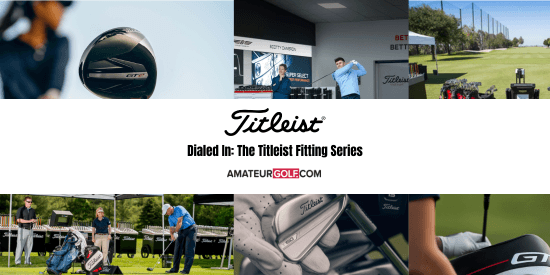
Competitive golf is a game of small edges. Titleist’s fitting approach combines expert human insight and honest data

Competitive amateur golf is defined by small edges: a tighter pattern off the tee, a stock number you can trust into firm greens, a wedge setup that creates easier up-and-downs. Those edges rarely come from one breakthrough moment—they come from eliminating uncertainty.
Titleist’s fitting philosophy is built to remove doubt and replace it with clarity. It’s not about chasing trends or maximizing one number on a screen. It’s about building a set that performs reliably when pressure and conditions are real.
What you’ll learn in this guide: how Titleist fitters think, what they measure, how decisions get made across driver/irons/wedges, and which technical checkpoints matter most for scoring—not just launch monitor bragging rights.
Titleist describes its fitters as a dedicated “FitCrew”—specialists supported by a massive selection of heads, shafts, and build options. That breadth matters because a fitting is rarely about “the best club”—it’s about the best match for your delivery, speed, and tendencies.
If you’ve ever hit one driver that launched perfectly but went left under pressure—or an iron that flew long when you stepped on it—you already understand the point: your gamer swing isn’t your best swing.
The Titleist goal is a set that holds up across your range of swings, not just your highlight reels.
For competitive amateurs, that means prioritizing repeatable flight windows, playable misses, and gapping that survives wind, adrenaline, and uneven lies.
While every session is customized, most Titleist fittings follow the same core structure:
1) Player interview: goals, miss tendencies, typical courses/conditions, and what you want to change.
2) Baseline: your current gamer(s) establish real starting numbers and shot shape patterns.
3) Head direction: models that influence launch/spin/forgiveness and your common miss.
4) Shaft pairing: weight, profile, length, and feel to tighten dispersion and improve strike.
5) Build + gap check: loft/lie, set composition, and gapping so every club has a purpose.
Launch monitor data is used to validate choices, but the fitter is watching strike location, start lines, and how your miss behaves. Those three things explain the “why” behind most fitting outcomes.
Titleist leads with a simple belief: their greatest differentiator is their people. Fitters are on the “front lines” every day, gathering information to genuinely enhance a golfer’s game—not judging the golfer’s swing.
What separates a great fitting from a good one is insight: understanding what each head model, shaft profile, length, weight, and build characteristic will do for a specific player. Golfers often walk away struck by the same realization: the fitter knows what every single option does—and why it matters.
One way Titleist describes the process is “building a puzzle”: combining knowledge and information to create the right piece that shapes the golfer—and the golfer’s game.
Fitting can be uncomfortable. Most golfers aren’t used to being watched, and the instinct is to only swing your best. Titleist takes a different approach: create a judgment-free environment where golfers can relax, have fun, and “steer the car.”
Here’s the key: fitters often want to see mishits because those swings provide the “whole golfer story.” Mishits reveal what happens when timing drifts, contact moves low on the face, or pressure shows up—exactly the situations competitive amateurs face on the course.
This is also why a fitting can feel like a breakthrough: you’re not chasing a unicorn swing. You’re learning which setup keeps your game functional when you’re not perfect.
Titleist fitting is designed to produce performance that translates to scoring. A useful framework is the “3Ds”—three outcomes that matter to competitive amateurs:
Consistent carry numbers and gapping—so you can plan your way around a course and commit under pressure.
Tight patterns matter more than one flush shot. The goal is a predictable window with misses that stay playable.
Shots that land steep enough can hold greens. This is often the difference between “it looks good on a monitor” and “it works on the course.”
Why descent angle matters: two players can hit the same carry distance with the same iron, but if one player lands it flatter, the ball releases—turning “middle of the green” into “back edge” or “through.”
The metals fitting process typically begins with a player interview to determine how you want to improve driver performance: more distance, tighter dispersion, a better flight window, or a specific shot shape.
From there, the fitter guides a curated process where you test different head models with distinct performance traits that influence ball speed, launch angle, and spin rate.
Then comes shaft pairing: weight, length, profile, torque, and feel—often with a simple mission: make your misses behave more like your good shots.
Technically, most driver gains come from one of three places: better strike (center contact), better delivered loft (launch/spin window), or tighter face-to-path outcomes (start line/curve).
In roughly 30 swings, the aim is to be optimized—and confident you’re taking your tee game to the next level.
Titleist iron fittings typically begin with stock shots using your 7-iron, establishing a baseline for carry distance and flight. From there, fitters evaluate which head model—or blended set—best matches how you deliver the club.
Titleist frames iron performance around three factors: distance, dispersion, and descent angle. The mission is consistent carry, tighter left-right misses, and approaches that “sit softly.”
Fitters use launch monitor data (often TrackMan) but also watch for turf interaction, strike pattern, sound, and feel. If a head looks great but interacts poorly with your delivery, it won’t survive real golf.
A key technical checkpoint is set composition—where your irons end, where hybrids/utility irons begin, and whether you need a different launch window at the top of the bag.
A Titleist wedge fitting is designed to get you dialed in around the green with the right lofts, bounce angles, and grinds. With Vokey options across the matrix, fitters can match your technique and typical turf conditions.
Titleist’s wedge philosophy is straightforward: there’s no standard wedge setup. To optimize your short game, you need wedges built for your delivery, your lies, and your go-to shots.
Technically, the “job” of each wedge includes: your carry gaps, your preferred flight, and your bounce needs (how the sole interacts with turf and sand). When it’s right, you stop guessing—and start committing.
Titleist’s approach to women’s equipment is built on performance, not stereotypes. A club doesn’t know who is swinging it—it responds to speed, delivery, and dynamics.
If clubs are too heavy or too long, the golfer is working against herself—and a proper fitting can be a breakthrough.
The philosophy line that captures it: Titleist doesn’t make women’s clubs, but they do make clubs for women.
The best fitting outcomes aren’t just technical—they’re psychological. Golfers leave educated, excited, and ready to play better immediately.
The fitter’s job is to show you what works best and explain why—so you love every club in your bag and trust it under pressure.
When the new clubs arrive, the golfer should step onto the tee feeling one thing: certainty.
Titleist fitting works because it matches the reality of competition: imperfect swings, real pressure, and a premium on trust. It blends human expertise with technology-driven clarity to build a set that performs on the course, not just on a screen.
If you want tighter patterns, more greens in regulation, and more confidence in every club you pull, a Titleist fitting isn’t a luxury—it’s a competitive advantage.

GOLF'S LONGEST DAY: 2026 U.S. Open Final Qualifying Monday June 8
Jun 5, 2026Follow along from 10 locations - our team is on the ground looking for the best stories
2026 U.S. Open Final Qualifying: A final rundown from Golf's Longest Day
Jun 8, 202612 amateurs qualified for Shinnecock at 10 sites around the country on June 8. Two of them were medalists.
2026 NCAA Men's Golf Championship: Live Coverage, Field & Daily Updates from La Costa
Jun 3, 2026Auburn defeats UCLA at La Costa to capture its second NCAA men’s golf championship in three years.
Stanford Wins 4th NCAA Women's Golf Title, Tops USC
May 26, 2026The Cardinals closed a dominant week at La Costa with another match-play crown — their fourth national title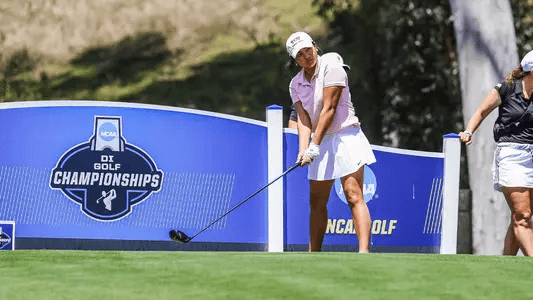
2026 NCAA Women’s Golf Championship: Stanford Roars to a Five-Shot Lead
May 24, 2026Stanford's 9-under third round opened a five-shot lead at Omni La Costa as the field trimmed to 15.Loading latest news...