Loading article...

Loading...
Loading...
Loading article...

How one sponsor exemption can launch amateurs, pros, and now content creators to the pro golf big leagues.
In professional golf, a single sponsor exemption can rewrite a career trajectory almost overnight. Just ask Luke Clanton. In the summer of 2024, Clanton accepted a sponsor exemption into the Rocket Mortgage Classic — a decision that sparked a breakout run of top finishes, earned him PGA TOUR membership through PGA TOUR University Accelerated, and ultimately helped him launch his professional career on the PGA TOUR in 2025. One invitation opened the door to everything that followed.
But Clanton’s rise is just one example of how valuable — and competitive — sponsor exemptions have become, especially in a shifting era where performance isn’t the only thing tournaments consider.
Take Kai Trump, who drew national attention after receiving one of three amateur sponsor exemptions into the LPGA’s ANNIKA event at Pelican Golf Club. Her massive online following made her an attractive choice for a tournament seeking visibility and reach.
Or Grant Horvat, one of YouTube golf’s biggest personalities, who was offered a sponsor exemption into the PGA TOUR’s Barracuda Championship. Horvat ultimately declined because the TOUR would not allow his film crew inside the ropes due to media-rights restrictions — a dealbreaker for a creator whose career depends on documenting his journey. The invitation itself, however, reflected just how much digital visibility now factors into sponsor-exemption decisions.
And then there’s Brad Dalke, former elite amateur and Internet Invitational champion, who has said he would “drop everything” if a sponsor exemption came his way. His talent and visibility make him a growing candidate as the exemption landscape continues to evolve.
As competitive golf, influencer golf, NIL-era branding, and digital reach blend together, the sponsor exemption landscape is changing. Performance still matters — Clanton is proof of that. But online presence is now part of the equation. Sponsor exemptions have always been about garnering visibility and talent, as shown through the many exemptions Tony Romo has been granted, but the landscape is changing with the massive audiences golf social media personalities are bringing to the game.
A sponsor exemption is a tournament entry spot allocated at the discretion of the event’s title sponsor. It allows a player who has not otherwise qualified — through rankings, TOUR status, Monday qualifying, or past champion categories — to compete in that week’s event.
For decades, these invitations were mostly used to highlight top amateurs, promising young professionals, or recognizable names returning from injury. Increasingly, they have also become a mechanism for tournaments to boost visibility by inviting well-known athletes or creators whose presence broadens the audience.
A perfect example is Tony Romo, the former NFL quarterback who received multiple sponsor exemptions into PGA TOUR events, including the AT&T Byron Nelson and the Corales Puntacana Resort & Club Championship. Romo never qualified through traditional competitive categories — his exemptions were granted because tournaments understood the value of featuring a household name who draws casual sports fans into the broadcast. His appearances underscored a growing reality: sponsor exemptions aren’t only about competitive potential. They’re also about interest, relevance, and reach.
Standard PGA TOUR full-field events typically offer up to eight sponsor exemptions, while LPGA events usually grant four to six. Limited-field events — such as invitationals — often provide fewer or none.
The newly established PGA TOUR Signature Events operate with much tighter rules, offering only four sponsor exemptions — all of which must go to PGA TOUR members. They also include a special exemption for players with 80 or more TOUR wins (a category designed with Tiger Woods in mind), along with a single host exemption tied to each event’s heritage, such as the Palmer Cup, the Charlie Sifford Memorial Exemption, or the Jack Nicklaus Award Exemption.
These restrictions mean the more unconventional or visibility-driven choices — from Kai Trump to Grant Horvat to Tony Romo — occur almost exclusively in standard full-field events where sponsors have the flexibility to think creatively.
One more key detail: if a player wins a PGA TOUR event while competing on a sponsor exemption, they earn an immediate TOUR card along with a multi-year exemption (typically two years for a standard event). It doesn’t matter how they got into the field — a win guarantees status.
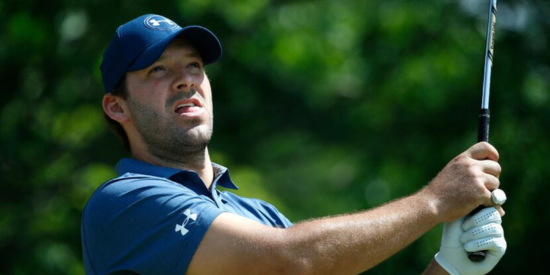 Tony Romo Competing in PGA Events per Sponsor Exemptions
In golf, accepting a sponsor exemption as an amateur comes with a unique catch: you can compete, earn world ranking points, and even win the event — but you cannot accept any prize money unless you turn professional before the week begins. That rule has produced some of the most dramatic financial sacrifices in the modern game.
No one illustrates this better than Lottie Woad. In 2025, she won the KPMG Women’s Irish Open, forfeiting $79,000, then finished third at the Amundi Evian Championship — a major — leaving another $485,200 behind. More than half a million dollars gone in a single season, simply to remain amateur.
This dilemma has confronted stars before. In 1991, Phil Mickelson entered the Northern Telecom Open on a sponsor exemption and ended up winning the tournament outright. As an amateur, he declined the $180,000 winner’s check — roughly $429,251 in today’s dollars. His victory stood as the last by an amateur on the PGA TOUR for more than three decades.
It wasn’t until 2024 that another amateur matched the feat. Nick Dunlap, then the reigning U.S. Amateur champion, received a sponsor exemption into The American Express and stunned the golf world by winning the event at just 20 years old. Like Mickelson, he was required to turn down his winnings — in this case, a remarkable $1.5 million — before turning professional the following week.
While amateur wins are rare, exemptions have still proven to be career-launching windows. Few examples demonstrate this better than Luke Clanton’s breakthrough summer in 2024. After making the cut at the U.S. Open, Clanton received a sponsor exemption into the Rocket Mortgage Classic and finished inside the top 10, earning him a place in the next week’s John Deere Classic. There, he delivered a tied-second finish, then carried that momentum into additional starts, ultimately finishing fifth at the Wyndham Championship, runner-up at the RSM Classic, and making five cuts in six total PGA TOUR appearances — all as an amateur.
Clanton has since secured PGA TOUR membership through the PGA TOUR University Accelerated program and made his professional debut at the RBC Canadian Open in June 2025, completing one of the most impressive amateur-to-pro transitions in recent memory.
Many established pros traveled similar paths. Justin Leonard, Adam Scott, and Jordan Spieth each used early sponsor exemptions to gain momentum, earn status, and accelerate their rise toward major championships. The right exemption, at the right time, can change everything.
 Woad, Mickelson, and Dunlap. So Much Success On the Pro Tours Yet Unable to Accept Any Prize Money!
 Sponsor exemptions matter because they offer something few other avenues in golf can provide: immediate access to the highest levels of the sport. For amateurs, they represent a chance to test their games against the world’s best — often at enormous financial cost. For tournaments, they provide energy, visibility, and storylines that elevate an entire week. And for modern personalities like Grant Horvat, they demonstrate that online influence now carries real competitive value in the eyes of sponsors.
They can also unlock careers. Phil Mickelson, Nick Dunlap, and Luke Clanton all turned single exemptions into defining moments that reshaped their trajectories. Lottie Woad sacrificed over half a million dollars to remain amateur, knowing that the right exemption could offer a better long-term payoff. Even creators and crossover athletes — from Kai Trump to Tony Romo — are now part of the conversation, bringing younger, broader, and more diverse audiences to events that are eager to grow.
And that evolution brings us to Brad Dalke. With a deep amateur pedigree, a growing digital presence, and a game built for big stages, Dalke sits squarely in the middle of this modern era of sponsor exemptions. He’s talented. He’s visible. He’s compelling. And in today’s landscape, those three qualities may be exactly what sponsors are looking for.
Which raises the question: Is Brad Dalke one exemption away from earning his shot at the PGA TOUR? Given how sponsor exemptions are trending — blending performance, personality, and audience — all it takes is one invitation.
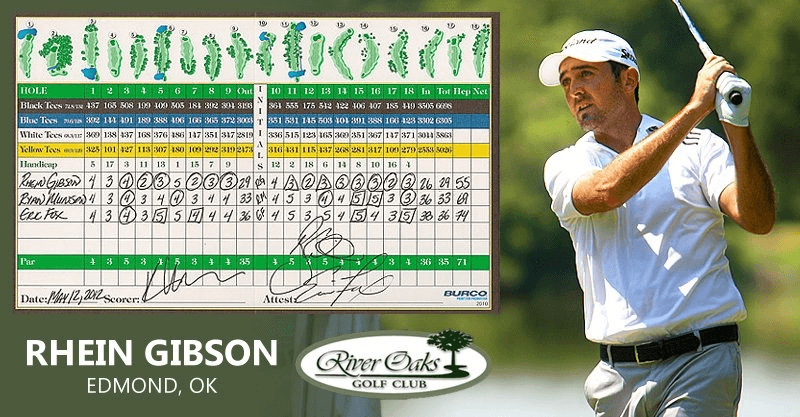
The Pursuit of Perfection: The Lowest Rounds in Golf History
Apr 23, 2026Breaking 60 used to be like running a four minute mile, but now it happens all the time.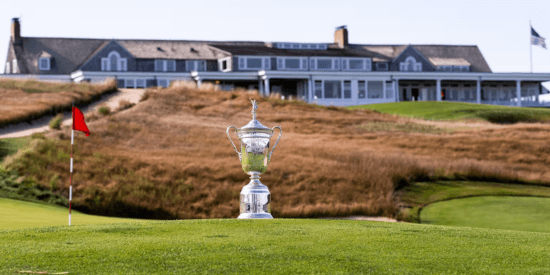
RESULTS: 2026 U.S. Open Local Qualifying
May 3, 2026The road to Shinnecock Hills begins in April as 110 local qualifying sites and 13 final qualifying venues are set.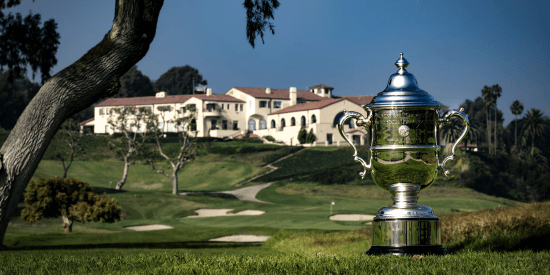
U.S. Women’s Open Qualifying Locations & Sites (2026): Complete Guide
Apr 20, 2026The USGA announced 26 qualifying sites for the 81st U.S. Women’s Open, set for June 4–7 at Riviera.
2026 U.S. Senior Open Qualifying Hub: Sites, Dates, Eligibility & How to Advance
Apr 20, 2026The road to the 46th U.S. Senior Open at Scioto Country Club runs through 32 local qualifiers and 12 final sites
2026 U.S. Amateur Qualifying: Dates, Sites, Registration Info, and How to Enter
Apr 30, 2026Registration for the 2026 U.S. Amateur is opening soon. Explore every local and final qualifying siteLoading latest news...