Loading article...

Loading...
Loading...
Loading article...

From Brandon Holtz to Bobby Wyatt, reinstated pros are dominating the Mid Amateur stage
Editorial Feature · AmateurGolf.com
Should former professional golfers be able to compete against everyday working mid-amateurs?
That question looms over amateur golf after one of the most revealing U.S. Mid-Amateur Championships in recent memory. This year’s event looked less like a gathering of weekend warriors and more like a Korn Ferry Tour reunion—six of the eight quarterfinalists were former professionals.
So what’s going on? Why are so many ex-pros coming back to amateur golf? And is that fair to the rest of the field—especially given what the Mid-Am was originally created to represent?
When the U.S. Mid-Amateur debuted in 1981, its mission was clear: create a national championship for golfers aged 25 and older who had day jobs, families, and a deep love of competition—but not the time or resources to chase the professional dream.
It was meant to be a championship for “career amateurs.” Winners would receive invitations to the Masters and U.S. Open, tangible rewards for golfers who played for passion, not paychecks.
Four decades later, that vision is being tested. The same event once built for working golfers is increasingly influenced by reinstated players—those returning from professional careers to compete as amateurs.
For much of golf’s history, turning professional meant exile from amateur golf—forever. That changed in the 1960s and ’70s, when the USGA and R&A softened their stance. By the 1980s, a formal reinstatement pathway existed:
The policy reshaped careers. Bill Loeffler (1986 U.S. Mid-Am) and David Eger (1988) leveraged reinstatement into major amateur success—Eger later returned to professional golf and won on the PGA Tour Champions. The flexibility created decades ago remains in place—and under renewed scrutiny.
Few embody the modern reinstatement story better than Justin Hueber. After years on the Korn Ferry Tour, he left professional golf and, following a waiting period, regained amateur status in 2024. Now working full-time and raising a family, he still reached the 2025 U.S. Mid-Amateur quarterfinals, where he fell to eventual champion Brandon Holtz.
Holtz, who spent six seasons on mini-tours before regaining status in 2024, won the Mid-Am by defeating former pro Jeg Coughlin 3&2—earning a Masters invitation and a U.S. Open exemption.
The pattern extends beyond the USGA slate. At Pine Valley, former PGA Tour player Bobby Wyatt captured the 100th Crump Cup, one of amateur golf’s crown jewels.
 Hueber, Holtz and Wyatt. Former Pros, Now Competitive Ams.
 The same dynamic is appearing internationally. At the 2025 Walker Cup, lifelong amateur Stewart Hagestad—a three-time U.S. Mid-Am champion—stood opposite Stuart Grehan, who regained amateur status only months after his last professional start. Two paths, one label: amateur.
 Hagestad and Grehan, Two Amateur Paths to the Same Walker Cup
 It’s not just national championships. In Idaho’s Mid-Amateur, newly reinstated amateur Kevin Murphy won by 17 shots—a margin that underscores how quickly returning pros can tilt competitive balance at the state level, too.
Critics argue the Mid-Am was built for working golfers, not for those with years of tour experience—especially when a Masters invitation is at stake. Supporters counter that reinstatement is redemption, not a loophole, and that many returning players are now balancing careers, families, and limited practice time like everyone else.
Modern golf’s pipeline produces more aspiring pros than ever—via PGA Tour U and the LPGA College Advancement Pathway—while roster spots at the top shrink. Starting in 2026, the PGA Tour plans to reduce full-status cardholders from 125 to 100, and the Korn Ferry Tour will promote fewer players to the big tour. The result: more players leave (or lose) professional status and seek competitive outlets. Amateur golf—especially the Mid-Am—has become a safety net.
NIL deals let top amateurs earn while keeping status. Golf creators monetize their “amateur” journeys. Reinstated ex-pros win blue-chip amateur titles. The definitions of amateurism and professionalism are evolving—and perhaps out of necessity.
Players like Holtz, Hueber, Wyatt, and Grehan aren’t breaking rules—they’re operating within a framework that has existed for decades. But their success forces a fair question: What should the spirit of amateur golf mean going forward?
Is the Mid-Am still the home of the true weekend warrior—or a proving ground for returning veterans? Maybe the answer lies in the middle. The rules are working as intended. The passion remains real. And perhaps amateur status is less about who’s been paid before—and more about who’s still playing for the love of the game.
2026 U.S. Open Local Qualifying Results: All 109 Sites + Leaderboards
May 14, 2026Live results from all 109 U.S. Open Local Qualifying sites. Site-by-site medalists, amateurs, and alternates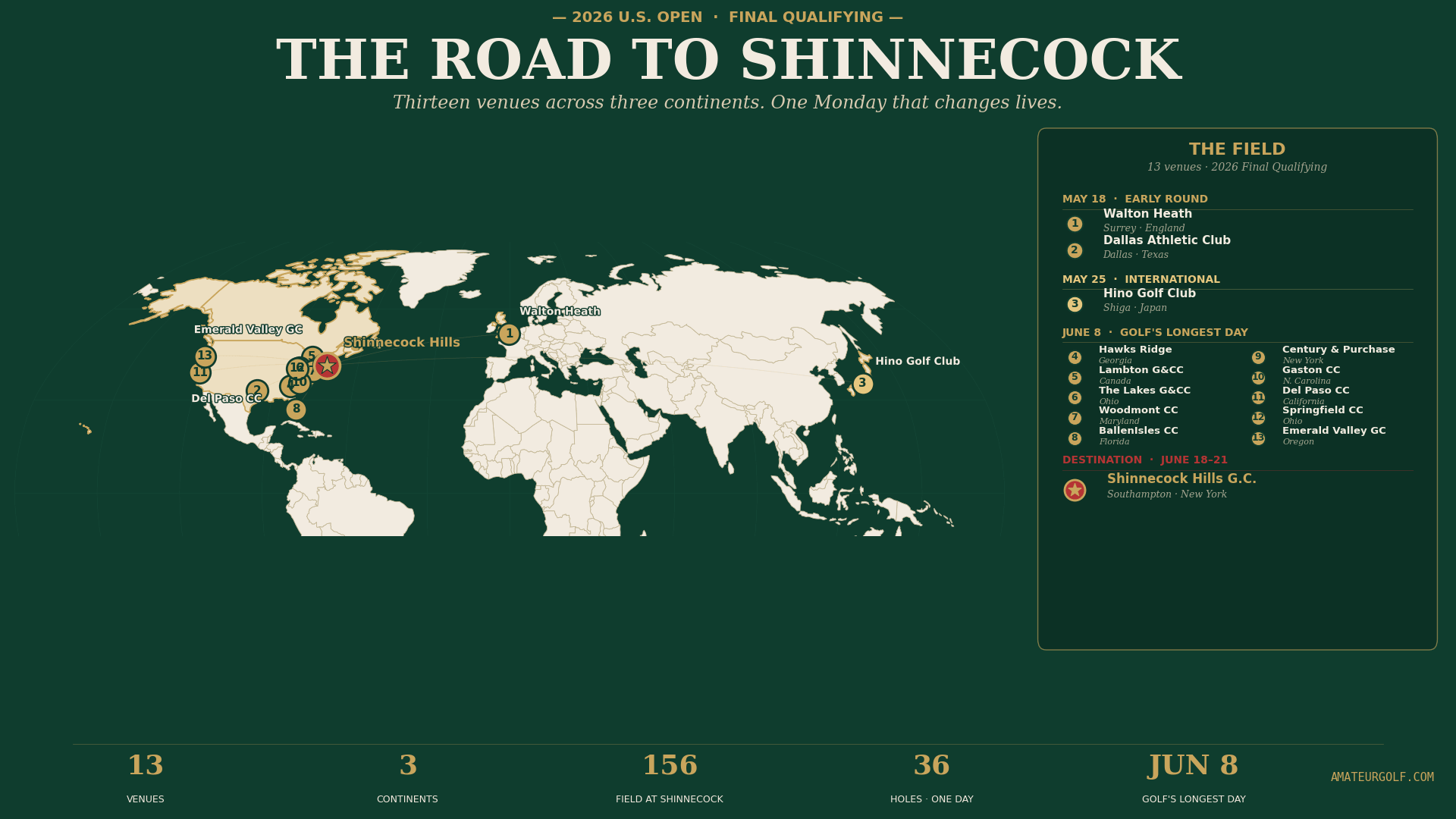
RESULTS: 2026 U.S. Open Final Qualifying
May 18, 2026A deep-dive into all 13 final qualifying venues from Walton Heath, England to Sacramento, California
Ellison & Scheck Win 2026 U.S. Women's Amateur Four-Ball in 19 Holes
May 6, 2026The No. 3 seed snaps a five-year teenage-champion streak. Carter & Snyder, both 15, fall in sudden death after
Why Pinehurst Is the Ultimate Place to Play a Two-Man Championship
May 19, 2026Competitive golfers take on Pinehurst during the AmateurGolf.com Two Man Links and Father & Son Championship presented by Titleist
How to Watch the 2026 NCAA Golf Championships
May 20, 2026Everything you need to tune into the men's and women's NCAA Division I golf championships at Omni La CostaLoading latest news...