Loading article...

Loading...
Loading...
Loading article...
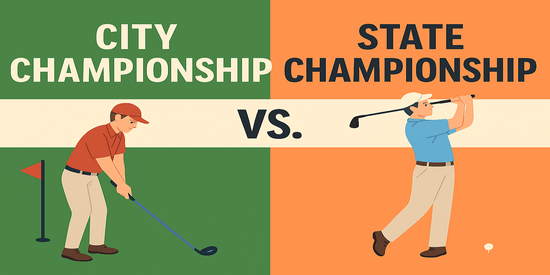
Before you tee it up, know the stakes. Whether you’re testing your game at the local level or stepping onto the bigger state stage
If you’re an amateur golfer looking to dip your toes into tournament play — or move up the competitive ladder — chances are you’ve seen both City Championships and State Championships pop up on your radar. They might seem similar, but they’re not quite the same experience.
Here’s a breakdown of how they compare when it comes to difficulty, access, prestige, and the qualifying process — and how to decide which one’s right for you.
🏌️♂️ How Tough Are They?
Let’s start with difficulty.
City Championships can be plenty competitive, especially in golf-rich cities. You’ll usually see a mix of strong club players, high school standouts, and a few seasoned amateurs. The skill range is broader, so you might find yourself paired with someone shooting even-par — or someone grinding for bogey.
State Championships, though? That’s a different level. These events tend to attract the best amateurs across the entire state — college players, mid-ams with national tournament experience, and top juniors. If you're not bringing your A-game, you’ll feel it.
In short: City championships are a great test. State championships are an elite proving ground.
🚪 How Easy Is It to Get In?
This one’s important if you're just starting out.
City Championships are usually much more accessible. If you live in the city or belong to a local club — and you’ve got a handicap — you’re probably eligible. Some are open to all comers with no qualifying required.
State Championships are usually more selective. There’s often a handicap cutoff (like 5.4 or better), and many require you to play your way in through a qualifier unless you’re already exempt based on past performance.
Bottom line: City events are easier to enter. State events make you earn your spot.
🏆 Which Has More Prestige?
Winning either one is a big deal — but they carry different kinds of weight.
City Championships can be legendary in the local scene. Some — like San Francisco’s or Chicago’s — have deep histories and serious bragging rights. Win one of those, and people in your area will know your name.
State Championships, though, carry more official weight. These wins (or even top finishes) can earn you World Amateur Golf Ranking (WAGR) points, help with college recruiting, and may even open doors to national events or USGA qualifiers.
So if you're aiming to get noticed by coaches or break onto a bigger stage, the state amateur is the better bet.
🧾 What’s the Process to Get In?
City Championships are usually pretty simple: pay the fee, confirm your handicap, and you’re in. That makes them perfect for newer tournament players looking to gain experience.
State Championships often have a multi-step entry process. Unless you’re exempt, you’ll need to play in a qualifier — usually an 18-hole stroke play event — just to earn a spot in the main field. There are fewer spots and more hoops to jump through.
That makes the field stronger and more exclusive — but also tougher to break into.
| City Championship | State Championship | |
| Difficulty | Moderate to competitive | High-level, elite amateur field |
| Access | Easier for locals | Requires qualifying or exemption |
| Prestige | Strong local respect | Bigger state/national impact |
| Qualifying | Rarely needed | Usually required |
So... Which One's for You?
If you’re new to tournament golf, start with your city championship. It’s a great intro to competitive play without the pressure of qualifying. You’ll meet local players, get a feel for the format, and still have a shot at the title.

2026 U.S. Open Local Qualifying Results: All 109 Sites + Leaderboards
May 14, 2026Live results from all 109 U.S. Open Local Qualifying sites. Site-by-site medalists, amateurs, and alternates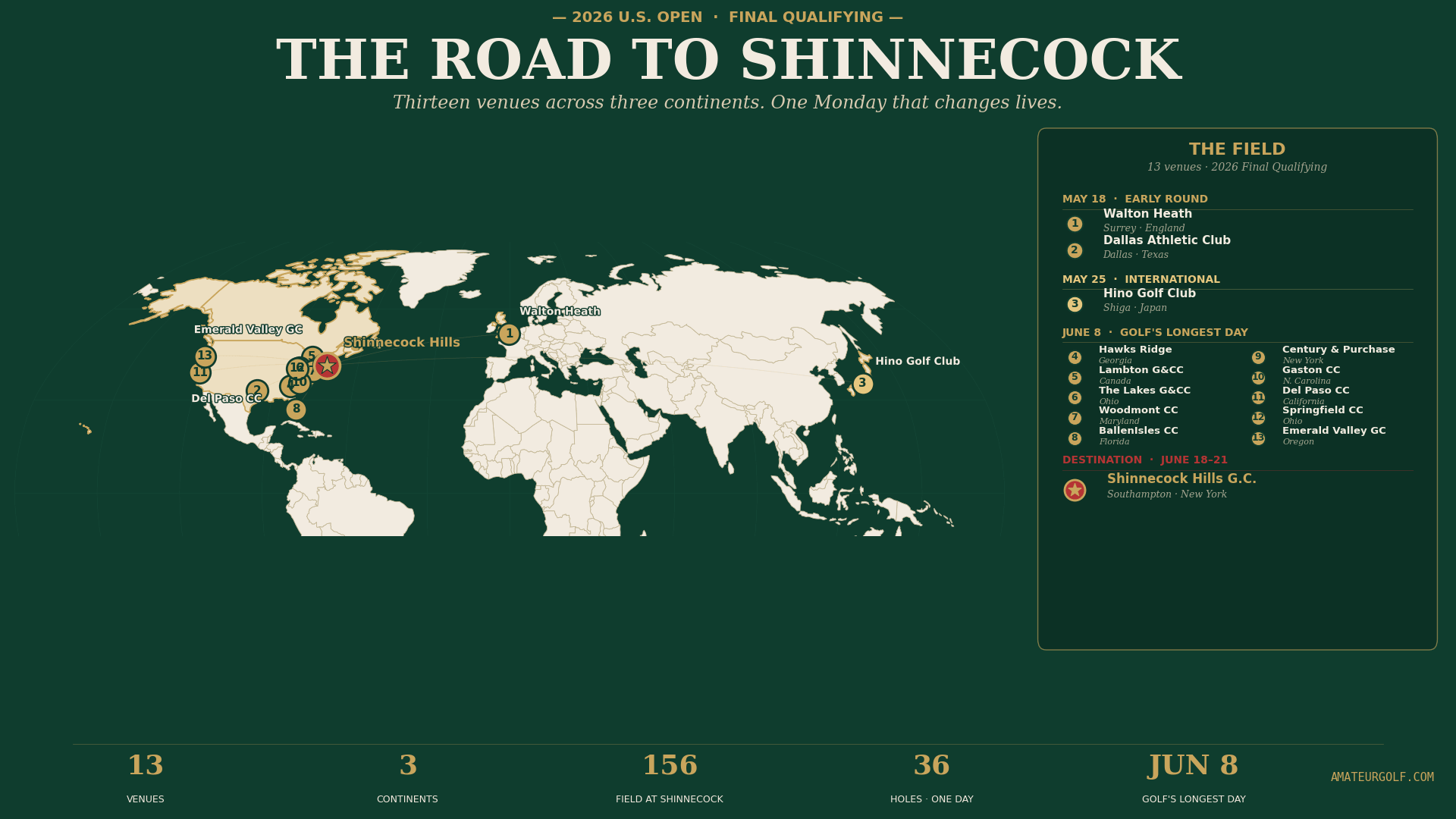
RESULTS: 2026 U.S. Open Final Qualifying
May 18, 2026A deep-dive into all 13 final qualifying venues from Walton Heath, England to Sacramento, California
How to Watch the 2026 NCAA Golf Championships
May 20, 2026Everything you need to tune into the men's and women's NCAA Division I golf championships at Omni La Costa
Why Pinehurst Is the Ultimate Place to Play a Two-Man Championship
May 19, 2026Competitive golfers take on Pinehurst during the AmateurGolf.com Two Man Links and Father & Son Championship presented by Titleist
2026 NCAA Men's Golf Championship: Live Coverage, Field & Daily Updates from La Costa
May 31, 2026Preston Stout fires a 65 to seize the individual lead. Auburn holds off Texas. Match-play bubble tightens.Loading latest news...