Loading article...

Loading...
Loading...
Loading article...
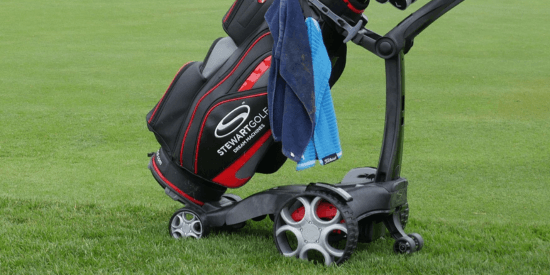
Can a hands-free electric cart actually improve your round? I put the Stewart Q Follow to the test over 9 holes to find out.
Golf, at its best, invites clarity. It asks you to walk, to think, to feel your game in motion. That’s why I love walking when I play — and why I’ve always believed the gear we carry should support that rhythm, not interrupt it.
Stewart Golf Black Friday Deals Are Live: Save up to 60% on select electric caddies — including the Q Follow.
Shop Black Friday DealsSo when I teed off on the back nine at Encanto Golf Course this week, I wasn’t just testing a new piece of equipment — I was rethinking what a walking round could feel like. At my side (or more accurately, two paces behind me) was the Stewart Golf Q Follow — one of the most advanced electric golf caddies ever built. And by the end of nine holes, it changed the way I think about walking golf.
Stewart Golf isn’t a tech startup or a mass-market golf brand. It’s a British engineering company with a singular focus: to make walking golf as elegant, effortless, and high-performance as possible. Every cart they make is handbuilt in Great Britain by skilled technicians who approach these machines more like aerospace engineers than sports manufacturers.
The Q Follow is the result of two decades of refinement, and it shows. From the carbon fiber-style composite chassis to the incredibly compact fold, the Q Follow is engineered with obsessive attention to detail — not just to look sleek, but to perform consistently, round after round.
What stood out most to me during the round at Encanto was how invisible the Q Follow became — not because it failed to show up, but because it worked so well I stopped thinking about it.
This cart runs on seventh-generation Follow technology, meaning once you clip the handset to your belt, it tracks your movement and follows you intuitively. Not with clunky sensors or guesswork, but with precise Bluetooth connectivity and a smart stabilizer system that keeps it balanced and locked in, even as you walk around doglegs or across mild slopes.
The 50-yard remote control gave me full command whenever I wanted to send it ahead to the next tee box or steer it gently around the green. And when I needed to cross a bridge or move through the parking lot, I simply grabbed the ergonomic handle and walked it manually. It adapts to the course the same way I do — no second-guessing.
Encanto’s back nine isn’t particularly hilly, but it’s no pushover either. Over nine holes, the SmartPower lithium battery showed no signs of strain. More importantly, I could monitor everything — from charge levels to power usage — in real time via the Stewart Golf smartphone app.
Even small touches like the USB charging port, dual-bearing wheels, and the auto-deploying rear stabilizer signal that the people who designed this cart understand what a day on the course actually looks like.
By the time I walked off the 18th tee (my ninth of the day), I wasn’t thinking about the Q Follow anymore — I was thinking about how present I felt during the round. No strain on my shoulders. No fussing with bag straps or pushing uphill. No searching for parking spots around the green. Just golf, and the space between shots.
That’s what Stewart Golf has built: not just a cart, but a caddie-like experience that supports the way serious golfers approach the game. It’s not a gimmick. It’s a solution for players who walk not just for tradition or fitness, but because walking connects them to the course.
Is $2,999 a small investment? No. But if you walk regularly — whether you're preparing for competitive rounds or just seeking clarity on the course — the Q Follow is a performance upgrade. It's one of the rare golf products that feels like it was made by and for serious players.
Encanto may not be Pebble Beach. But paired with the Q Follow, it reminded me that how we move through a round matters just as much as where we play it.

GOLF'S LONGEST DAY: 2026 U.S. Open Final Qualifying Monday June 8
Jun 5, 2026Follow along from 10 locations - our team is on the ground looking for the best stories
2026 U.S. Open Final Qualifying: A final rundown from Golf's Longest Day
Jun 8, 202612 amateurs qualified for Shinnecock at 10 sites around the country on June 8. Two of them were medalists.
2026 NCAA Men's Golf Championship: Live Coverage, Field & Daily Updates from La Costa
Jun 3, 2026Auburn defeats UCLA at La Costa to capture its second NCAA men’s golf championship in three years.
Stanford Wins 4th NCAA Women's Golf Title, Tops USC
May 26, 2026The Cardinals closed a dominant week at La Costa with another match-play crown — their fourth national title
2026 NCAA Women’s Golf Championship: Stanford Roars to a Five-Shot Lead
May 24, 2026Stanford's 9-under third round opened a five-shot lead at Omni La Costa as the field trimmed to 15.Loading latest news...