Loading review...

Loading...
Loading...
Loading review...
see also: Equipment Reviews
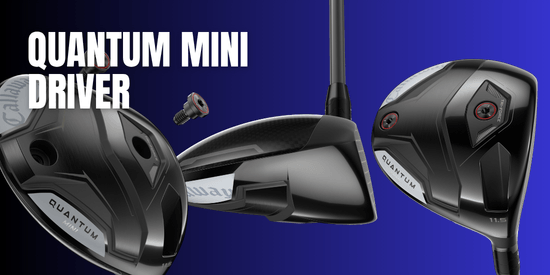
In my testing, the Callaway Quantum Mini Driver didn’t replace my gamer driver—but it filled a critical gap.
Mini drivers are one of the most interesting categories in golf right now, especially for competitive amateurs who are constantly trying to solve the same puzzle: how do you build the top of your bag in a way that gives you both coverage and control? That was exactly the question I set out to answer with the new Callaway Quantum Mini Driver.
My current setup is pretty defined. My Quantum Triple Diamond Max driver carries 275, my Callaway Utility Wood at 21 degrees carries 225, and my Apex Pro 3-iron carries 203. That left a very real gap at the top of the bag—one that shows up on tight driving holes, positional tee shots, and certain courses where hitting driver is simply too much club.
My average carry with the Quantum Mini Driver was 260 yards.
That number alone made this club immediately relevant in my setup.
The version I tested was the 11.5-degree head with an extra stiff shaft, and from the first few swings it was obvious this wasn’t just a novelty club or a niche experiment. It had a real job to do. For me, the Quantum Mini slotted directly into that 250-to-260-yard window—a number that is incredibly useful on courses where accuracy matters more than squeezing out every last yard.
The biggest thing I noticed right away was the shorter shaft length. That may sound obvious, but on the course and during testing it changed the entire personality of the club. The Quantum Mini felt easier to sequence, easier to square up, and easier to shape than a standard driver. It gave me a sense that I could swing aggressively without feeling like the clubhead might outrun me.
What stood out most was how naturally I could turn it over. For players who like to see a little draw or who sometimes fight a club that wants to hang open, that is a huge benefit. At the same time, I also felt very comfortable hitting a controlled fade. That combination is what makes this club interesting: it didn’t feel one-dimensional. It felt workable, but not overly demanding.
Best takeaway from testing: the Quantum Mini gave me the rare combination of easy turn-over and fade confidence, which is exactly what better players want from a tee club they plan to lean on.
This is where the Quantum Mini really made its case.
My driver is still my driver. At 275 carry, it is the club I want in my hand when I can open up a hole and chase distance. My Utility Wood is still one of the most useful clubs in my bag when I need to hit a specific number or launch something high with control. My Apex Pro 3-iron still has a purpose too, especially in firm conditions or on holes where I want a flatter flight.
But the Quantum Mini introduced something I did not really have: a dedicated fairway-finder that still flies like a real weapon. At 260 carry, it gives me a club I can use on narrow tee shots, positional par-4s, and home-course situations where 250 to 260 in the fairway is far more valuable than 275 in the rough.
Top-of-the-bag carry numbers
Driver: 275
Quantum Mini Driver: 260
Utility Wood (21°): 225
Apex Pro 3-Iron: 203
That is a much cleaner progression than I expected, and it is the strongest argument for why mini drivers are becoming more relevant for serious amateurs. They are not always there to replace driver. Sometimes they exist to solve the exact shot your set makeup is missing.
The surprise for me was how playable the 11.5-degree version was from the turf. Typically, stronger-lofted mini drivers can start to feel like tee-first clubs that only occasionally work off the deck. That was not the case here.
I found the 11.5-degree head to be really easy to launch from the fairway, which expands its usefulness immediately. It means this is not just a club you pull on tight par-4s. It can also become a legitimate option when you need to chase something up near a green, attack a long par-5, or simply rely on a club that launches more predictably than a strong 3-wood.
That said, if I were shopping for this club more as a fairway-first option rather than a tee club, I would absolutely take a hard look at the 13.5-degree version. For players who want a little more help launching it off the deck or want the club to feel closer to a strong fairway wood in function, that loft probably makes a lot of sense.
For the better player, every club at the top of the bag has to earn its place. You are not building a set based on theory. You are building it around real numbers, real course demands, and real misses.
That is why the Quantum Mini works. It offers a very specific answer to a very common problem: What do you hit when driver is too much, but your next club leaves too much on the table?
For me, that answer was 260 carry, tighter control, and a profile that inspires confidence both visually and functionally. For others, it may be a replacement for 3-wood. For some, it may be a strategic club for only a few courses a year. But for competitive amateurs in the market for a mini driver, this is exactly the kind of product that deserves a serious look.
The Quantum Mini isn’t just about distance.
It’s about owning a number, trusting a shape, and finally having a club that fits the shot between your driver and your next best option.
The Callaway Quantum Mini Driver impressed me because it did not try to be everything. It simply did an important job really well. It gave me a dependable 260-yard club at the top of the bag, one that felt easier to control than driver, more powerful than my utility wood, and more versatile than I expected—especially from the fairway.
The shorter shaft was a major win. The ability to turn it over was noticeable. The fade confidence was real. And the fact that the 11.5-degree head was easy to hit off the deck makes this more than just a one-purpose club.
For my game, the Quantum Mini fits as a course-dependent weapon and a true gap-filler. For competitive amateurs who value precision, want a trustworthy fairway-finder, and need to tighten up the top end of the bag without giving up too much speed, this is one of the more compelling mini drivers I’ve tested.

Meet the Amateurs in the 2026 Masters: Six Different Paths to Augusta National
Apr 8, 2026From teenage phenoms to seasoned dreamers, the amateur class at the 2026 Masters brings six compelling stories to Augusta
Masters: Memorable performances by amateurs in the last 40 years
Apr 2, 2026A Mid-Amateur legend and a 14 year old have won low-amateur honors at Augusta National over the years
U.S. Open Qualifying 2026: Local & Final Qualifying Sites for Shinnecock
Apr 8, 2026The road to Shinnecock Hills begins in April as 110 local qualifying sites and 13 final qualifying venues are set.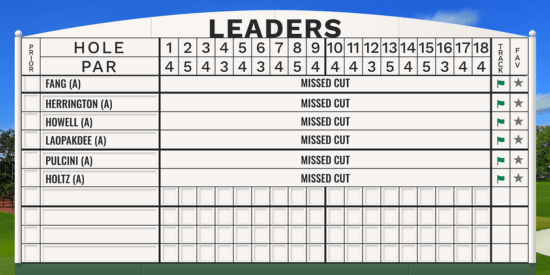
Masters 2026: Amateur Tracker Ends at Augusta as Rory McIlroy Surges Into the Lead
Apr 10, 2026All six amateurs missed the cut at the 2026 Masters, where Rory McIlroy seized control at 12-under and a dramatic Friday
2026 Augusta National Women's Amateur: Full Field Preview, Favorites & How to Watch
Mar 30, 202648 of the top 50 players in the world. Two past champions. One teenager who lost by a single stroke last year.Loading latest news...