Loading article...

Loading...
Loading...
Loading article...
see also: Equipment Reviews
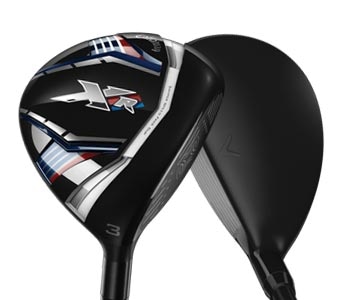
Callaway's XR fairway woods and hybrids are long and forgiving, especially off the deck
Fans of Callaway know all about the company’s new and improved Big Bertha Alpha 815 lineup and the low-compression Chrome Soft golf ball that staff ambassador Phil Mickelson is totally gaga over. Undoubtedly, many of them have also seen the “Outrageous Speed” promos that have staffer Gary Woodland dropping bombs with the company’s XR driver and irons.
A bit more under the radar are the company’s XR fairway woods and hybrids. These clubs may not provoke huge headlines, but they get the job done. Which is to say they’re really long and forgiving (if you’re into that sort of thing).
Before I describe what makes these clubs rocket launchers, as one of my club fitters calls them, I need to emphasize a point or two about how easy they are to hit. The XR fairway woods and hybrids feature redesigned head shapes that substantially improve their forgiveness - especially off the deck which is how most golfers will use them. I only needed a handful of swings during my testing session to realize I wouldn’t need to hit the ball any harder than I usually do to see longer carry distances along with consistently good spin rates. The really accomplished player is going to like these sticks a lot. The average recreational player is going to love them.
|
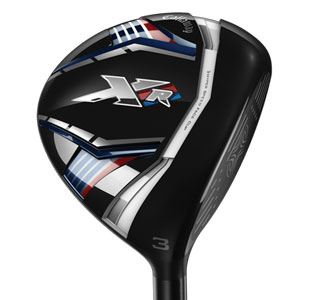
Callaway's XR fairway woods
are engineed for distance and
forgiveness |
Callaway’s XR fairway woods are the only clubs in their category to earn five stars for performance in Golf Digest’s annual Hot List. Three models are available: a standard edition that launches higher and spins a little more, a pro version designed for players who swing a little faster or have quicker tempos and finally a 14-degree deep model that essentially functions as a driver replacement. The pro version as you would expect will deliver a more penetrating flight when compared to the standard fairway wood. It’s worth noting that the standard XR fairway comes in six lofts (15 to 25 degrees) while pro version is only available in lofts (14, 16 and 18 degrees).
All XR fairway woods feature the same technologies:
|
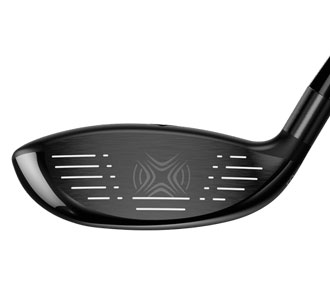
Callaway's XR fairway woods
and hybrids feature the Hyper Speed Face
Cup |
The XR hybrids (standard and pro) have many of the same of technologies found in Callaway’s fairway woods, but naturally differ in terms of design and purpose. As many of us have realized by now, hybrids are much easier to use than long irons. The standard and pro XR hybrids come in four lofts - 19, 22, 25 and 28 degrees (standard), and 16, 18, 20 and 23 degrees (pro).
The XR pro hybrid features a much more compact head shape that better players prefer and comes stock with a Project X LZ Pro shaft that weighs 73 to 76 grams depending on flex. By comparison the Project X LZ SD shaft in the standard model weighs 55 to 58 grams and contributes to a D1 swing weight while the pro version is listed at D3.
Like the fairway woods, the XR hybrids take advantage of the next-generation Forged Hyper Speed Face Cup which promotes better ball speeds. The redesigned head shapes on these hybrids are deeper and more pronounced than the less-forgiving X2 Hot models that came before them. The generous shapes of these heads allowed Callaway to insert a larger weight pad this time around which lowered the CG by as much as 46 percent compared to the X2 Hot. According to Harry Arnett, Callaway’s SVP of Marketing, robot testing revealed that the new XR hybrids are 13 yards longer than last year’s clubs. Of course humans aren’t robots, as Arnett himself points out in a Callaway Talks video, so I encourage you to go out there and try them out for yourself.
Performance
For testing I was able to demo a standard Callaway XR fairway wood with a stiff Project X LZ shaft along with a standard XR hybrid paired with a stiff Project X SD shaft. All shots were struck using a Titleist ProV1x ball and analyzed using a Foresight launch monitor.
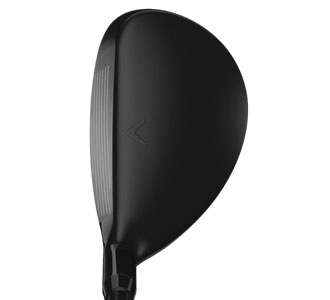 |
The
crown on the XR hybrid features a matte black
finish and an alignment aid |
Sometimes it takes a few swings to get an idea of how a club will feel and perform, but in this case I had all the evidence I needed after four or five shots. The XR fairway wood (15 degrees) was really easy to sweep off the deck and the shot data was extremely consistent from swing to swing. The fairway wood launched at about 12.5 degrees and produced 3400 rpm of total spin on average. Shots with the XR 3-wood sustained a peak height of 21 yards and carried about 6 yards longer than my gamer. Smash factor (1.41) and club head speed were nearly identical between clubs. The key differentiators were ball speed (the XR fairway wood delivered 3 mph more on average) and spin rate. My gamer, a Nike Covert 2.0 performance 3-wood launched higher (13.9) and spun more (4390 rpm). Comparing total distances, I picked up a substantial 16 yards using the XR fairway wood.
I also had big performance gains comparing hybrids. I put Callaway’s hybrid to the test against my Nike Covert 2.0 Tour edition (set to 20 degrees). While I was able to maintain a consistent smash factor (1.40) between clubs, the lighter XR hybrid allowed me to swing the head a little faster which in turn generated a little more ball speed. The XR hybrid launched the ball at 13.3 degrees, reaching a peak height of 18 yards. Callaway’s hybrid generated an average of 2510 rpm of total spin. By comparison, my gamer produced a 13.7 launch angle, peak height of 17 yards and 2353 rpm of total spin. In spite of the similarities, the XR hybrid flew 10 yards longer (total distance gain of eight yards).
If pure distance is what you long for, the XR fairway woods and hybrids will deliver. A word of advice for anyone thinking about upgrading is to carefully consider the intention. These fairway woods and hybrids, including the pro models, are not designed with Callaway’s OptiFit hosel so you won’t be experimenting with loft settings once you put them in your bag. It may not matter too much in the case of a 3 wood where max distance along with high MOI can really help off the tee or on a par 5 approach, but having too little spin on a hybrid might make it play too much like a wood and not enough like a long-iron replacement.
Look and Feel
Callaway’s XR fairway woods and hybrids feature a nice matte black crown and a traditional head shape. The fairway wood, in particular, is just large enough to inspire confidence without giving the impression that it’s chunky. The hybrid, on the other hand, has a little too much mass. Better players will prefer the pro model which has a slimmer head profile.
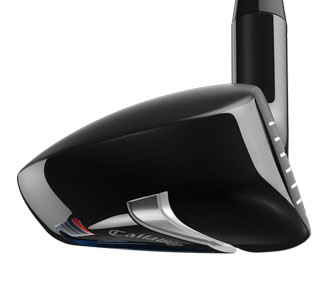
|
Callaway's XR hyrid is deeper
and more forgiving than the company's X2
Hot |
When it comes to sound, both clubs produce a solid thwack on center-faced strikes. The clubs don’t sound much different on off-center shots and, when it comes to responsiveness, I have to admit that the clubs come off a little tone-deaf to me. Then again, if you’re experiencing solid ball performance even on miss hits, you may not even care or notice.
Who’s It For?
Do you like distance? How about forgiveness? Wait, you like both? Congratulations, these clubs are definitely for you.
All joking aside, these fairway woods and hybrids are designed to help a wide cross section of golfers, but they are especially useful for anyone who struggles with lower- lofted woods and hybrids from the fairway. The fact that Callaway has managed to maintain a high MOI while simultaneously lowering the spin means that everyone, even less accomplished players, can have greater confidence handling those long and difficult approach shots.
The Callaway XR fairway woods ($229.99 MSRP for standard, $239.99 for pro) and the XR hybrids ($219.99 MSRP for standard, $229.99 for pro) are currently available for purchase. All clubs come with a Project X LZ shaft as standard; many other after-market shafts are available (some at no up-charge).

2026 U.S. Open Local Qualifying Results: All 109 Sites + Leaderboards
May 14, 2026Live results from all 109 U.S. Open Local Qualifying sites. Site-by-site medalists, amateurs, and alternates
RESULTS: 2026 U.S. Open Final Qualifying
May 18, 2026A deep-dive into all 13 final qualifying venues from Walton Heath, England to Sacramento, California
Ellison & Scheck Win 2026 U.S. Women's Amateur Four-Ball in 19 Holes
May 6, 2026The No. 3 seed snaps a five-year teenage-champion streak. Carter & Snyder, both 15, fall in sudden death after
Why Pinehurst Is the Ultimate Place to Play a Two-Man Championship
May 19, 2026Competitive golfers take on Pinehurst during the AmateurGolf.com Two Man Links and Father & Son Championship presented by Titleist
How to Watch the 2026 NCAA Golf Championships
May 20, 2026Everything you need to tune into the men's and women's NCAA Division I golf championships at Omni La CostaLoading latest news...