
Getting to the core of Titleist golf balls
4/15/2012 | by AmateurGolf.com Staff
see also: Equipment Reviews
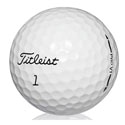
Ever wonder what makes Titleist golf balls go? Team Titleist examines
FAIRHAVEN, Mass. (April 15, 2012) -- Countless times a day, Titleist golf balls are launched from earth, propelling upwards and onwards in a matter of seconds.
Ever wonder what makes them go?
Golfers, their golf clubs and golf swings certainly have a lot to do with it. Not to mention all of the technology, innovation and R&D that gets added to the equation when it comes to making the #1 ball in golf.
However, a golf ball's main source of energy is its core.
Since we’re a rather curious bunch here at Team Titleist, we decided to head downstairs to the Golf Ball R&D department in order to improve our core competency. Here's what we learned from the experts...
The core is a high-resiliency rubber composition that makes up the center and largest component of every Titleist golf ball. In the Titleist R&D department, an entire team of chemists and engineers has been dedicated to formulating cores and advancing the technology (such as the Titleist Pro V1's new ZG Process Core Technology) that helps power the most played golf balls at every level of competitive golf.
"Plain and simple, the core is the engine of the golf ball," says Bill Morgan, Senior V.P. of Titleist Golf Ball R&D.
The core's main ingredient is Polybutadiene (pol-ee-byoo-tuh-dahy-een), a synthetic rubber that produces a high-energy return and can be manufactured to a number of desired characteristics.
"Stiffness, compression, resilience, size, whether it's a single core or a dual core," says Morgan, "all of those things factor into performance characteristics of the golf ball."
Spin rate (control), initial velocity (distance) and compression (feel) are all affected by differences in core construction.
In addition to the base rubber, cores contain cross-linking agents that will increase resiliency (speed) when cured, peroxides to catalyze that cross-linking, and fillers to adjust the weight.
(The USGA rules of golf allow for golf balls weighing as much as 1.620 ounces, and since the core is the largest component, the overall weight is adjusted here.)
"Generally speaking, every element that you add to a golf ball changes multiple characteristics of the ball," Morgan says. "So you balance what a particular compound or dimension does against performance characteristics, and you're trying to match that to golfers' needs."
The Titleist Pro V1 golf ball features a single solid core, 1.530 inches in diameter, constructed with Titleist's new and innovative ZG Process Core Technology. The ZG Process, which took over five years to develop, has resulted in Titleist's most uniform core ever constructed – from within the core itself, from core to core within the press and from press to press.
The transformation from uncured rubber to the engine of a Titleist golf ball takes less than 15 minutes at over 300º F.
"It’s the most consistent golf ball that we’ve ever made," says Brian Comeau, Manager of Materials Research in R&D.
Other features of the Pro V1 include a responsive Ionomeric Casing Layer (.045 inches thick), high-performance Urethane Elastomer Cover and spherically-tiled 352 tetrahedral dimple design. The result is a golf ball that provides exceptional distance and durability, increased spin control and a more consistent, penetrating ball flight.
"It's important to remember that no single element of design can determine the performance of the golf ball," says Comeau. "There needs to be a symbiotic relationship between all of the elements, from the core to the intermediate layer, to the cover and dimple patterns."
The Titleist Pro V1x golf ball has a large, high velocity solid dual core with soft center, as well as a responsive Ionomeric Casing Layer (.035 inches thick), high-performance Urethane Elastomer Cover and spherically-tiled 328 tetrahedral dimple design.
This combination delivers very low spin off the driver and long irons, a higher trajectory that contributes to longer distance and a consistent ball flight that cuts through windy conditions.
The new Titleist NXT Tour, NXT Tour S, Velocity and DT Solo golf balls also feature different core, cover and dimple design variations that contribute to their relative performance characteristics.
The new NXT Tour, which delivers excellent scoring performance exceeded only by Pro V1 and Pro V1x, has a large dual core, three-piece construction that features a slightly smaller, soft center and higher volume outer core layer. Its soft, thin Fusablend cover features a new spherically tiled octahedral design with four axis of symmetry, and 302 dimples in five different sizes.
The result is a combination of long, consistent distance, commanding short game spin and control, as well as soft feel on all shots with excellent durability.
The new NXT Tour S – featuring a new, proprietary low compression and highly resilient core – was created for golfers seeking NXT Tour-like performance with a softer feel. (This ball is also available in high optic yellow.) In creating the new Titleist Velocity golf ball, R&D implemented exclusive high-speed LSX core technology to produce the highest velocity core formulation of any Titleist golf ball.
The Velocity is encased in a NAZ2 cover formulation featuring a 332 icosahedral dimple design that delivers high initial ball speed on all full swing shots and playable feel in the short game. It all adds up to a soaring, tight, consistent ball flight and deep downrange peak trajectory.
The new DT SoLo was developed with one objective in mind: Design the softest compression feel possible, while continuing to deliver the long distance and control that DT SoLo players have always counted on.
The cover blend of two soft Surlyn ionomers, in combination with the soft, fast core and 392 icosahedral dimple design aerodynamic package, provides a penetrating ball flight with long roll out for excellent total distance.
We hope you enjoyed this brief journey to the core of the Titleist family of golf balls. Click here to get some more information on the current line-up.
Most Popular Articles
2025 PGA TOUR Q-School Guide: Sites, Scores, and Who Advanced
Dec 5, 2025Second Stage is complete and Final Stage awaits at Sawgrass — follow every Q-School leaderboard and the players still chasing
2025 LPGA TOUR Q-Series: Final Qualifying Stage FINAL SCORING
Dec 8, 2025Helen Briem earns medalist honors, 31 players headed to the LPGA next year
2025 PGA TOUR Q-School Final Stage: Ewart Leads Five New TOUR Card Winners
Dec 14, 2025A.J. Ewart topped Final Stage at TPC Sawgrass, leading five players who secured PGA TOUR membership for 2026.
Australian Open at Royal Melbourne: Preview, amateur bios, and how to watch
Nov 30, 2025Rory McIlroy headlines one of the championship's top fields in years - at least four amateurs will have their chance at glory
Luke Ringkamp Cruises to Rolex Tournament of Champions Title at TPC San Antonio
Nov 26, 2025One week after committing to Pepperdine, Luke Ringkamp won the Rolex Tournament of Champions by nine shots.Loading latest news...