Loading article...

Loading...
Loading...
Loading article...

As The R&A and the USGA take a hard look at anchoring the putter, here's a chance to voice your own opinion
by James Achenbach
HOUSTON, Tex. (Feb. 5, 2012) -- Just when it appeared likely that belly putters and chest putters would be with us for an extended period of time, a new ban-the-belly movement within the R&A has convinced the U.S. Golf Association to take what executive director Mike Davis calls a “fresh look” at the putting phenomenon known as anchoring.
To take a survey on long putting now, click here.
Anchoring, as it is commonly called in R&A and USGA circles, refers in general to any putting method in which the putter is secured against the body in a manner considered to be outside the definition of a natural or traditional stroke.
In belly putting, the grip end of the putter is anchored in or around the abdomen. In chest putting, which is often called long putting, the grip end is locked against the chest.
Writing an anti-anchoring rule would be extremely tricky. Drafting the precise language would in all probability become the biggest challenge in the history of equipment rulesmaking. It would constitute a major rules decision.
The putters themselves would not be ruled nonconforming, but rather the putting methods would become illegal. This is exactly what happened more than 40 years ago when between-the-legs (croquet) putting was outlawed. The putters continued to be used by a few players, namely Sam Snead, in a sidesaddle style.
A change in attitude toward belly putters and long putters was clear at the USGA annual meeting, which ended Saturday evening at the Houston Hilton Post Oak Hotel.
In the past, Davis has talked sympathetically about golfers whose careers have been saved or extended by chest putters or belly putters.
This time, though, Davis appeared to adopt a tougher and more idealistic stance on anchoring.
“All of a sudden ... this has become a much bigger topic,” Davis stressed. “The USGA and R&A have been talking about this at length.
“We are looking at it from a perspective that ... what we should look at for everything: What is good for the game, for all golfers, long term? I will tell you, the R&A was in Far Hills (N.J.) last week. We have an annual meeting where we talk about all kinds of issues about how we govern the game worldwide.
“We did talk about various equipment issues, including anchoring. Our board (USGA Executive Committee) did (talk about it) this week as well. There are no outcomes at this point.
“It is something we have taken a fresh look at. More players are using it, both on the elite level and the recreational level. We want to be sure that we are looking at all the angles and thinking about what is in the best interests both of the traditions of the game, the history of the game, and what we think would be good for the game.”
Davis was bolstered in his position by new USGA president Glen Nager, who was inaugurated Saturday night and will serve two consecutive one-year terms.
Nager fully backed Davis while delivering an aggressive speech against bifurcation of equipment rules (creating one set of rules for elite players and another set of rules for everyone else), and he expressed the same support for a renewed look at anchoring.
What exactly does all this mean?
USGA officials declined to offer details, but an informed Golfweek source said Davis, Nager and USGA equipment standards chair Dan Burton have committed themselves to participating with the R&A in a top-to- bottom examination of belly putting and chest putting.
The source talked at length about the influence of British weather.
“The R&A do not like the fact that golfers can steady themselves by using a putter as a crutch in windy, rainy or cold weather,” the source said. “In essence, they are steadying themselves with the putter. This was never intended under the Rules of Golf. They are using the putter for something other than a traditional stroke.”
Both the R&A and USGA have assumed a largely passive view of anchoring for more than 20 years. In 1989, an official statement condoned long putters, at least temporarily. There have been no statements since then.
The element that has most influenced the current atmosphere, according to the source, is the emergence of players such as Webb Simpson and Keegan Bradley who have used belly putters for several years.
“Nobody (within the ruling bodies) wants children to know nothing else but sticking putters in their bellys,” the source said. “It now seems possible that an entire new generation of golfers could learn to putt this way and never use the traditional method that has been the bedrock of putting for hundreds of years.”
Peter Dawson, R&A chief executive, has expressed his personal dislike of anchoring. However, he has pointed out that the equipment standard committees for the two rulesmaking organizations are charged with much of the responsibility for any equipment rules change.
The USGA is expected to once again address the subject publicly at San Francisco’s Olympic Club during the 2012 U.S. Open.
To take a survey on long putting now, click here.
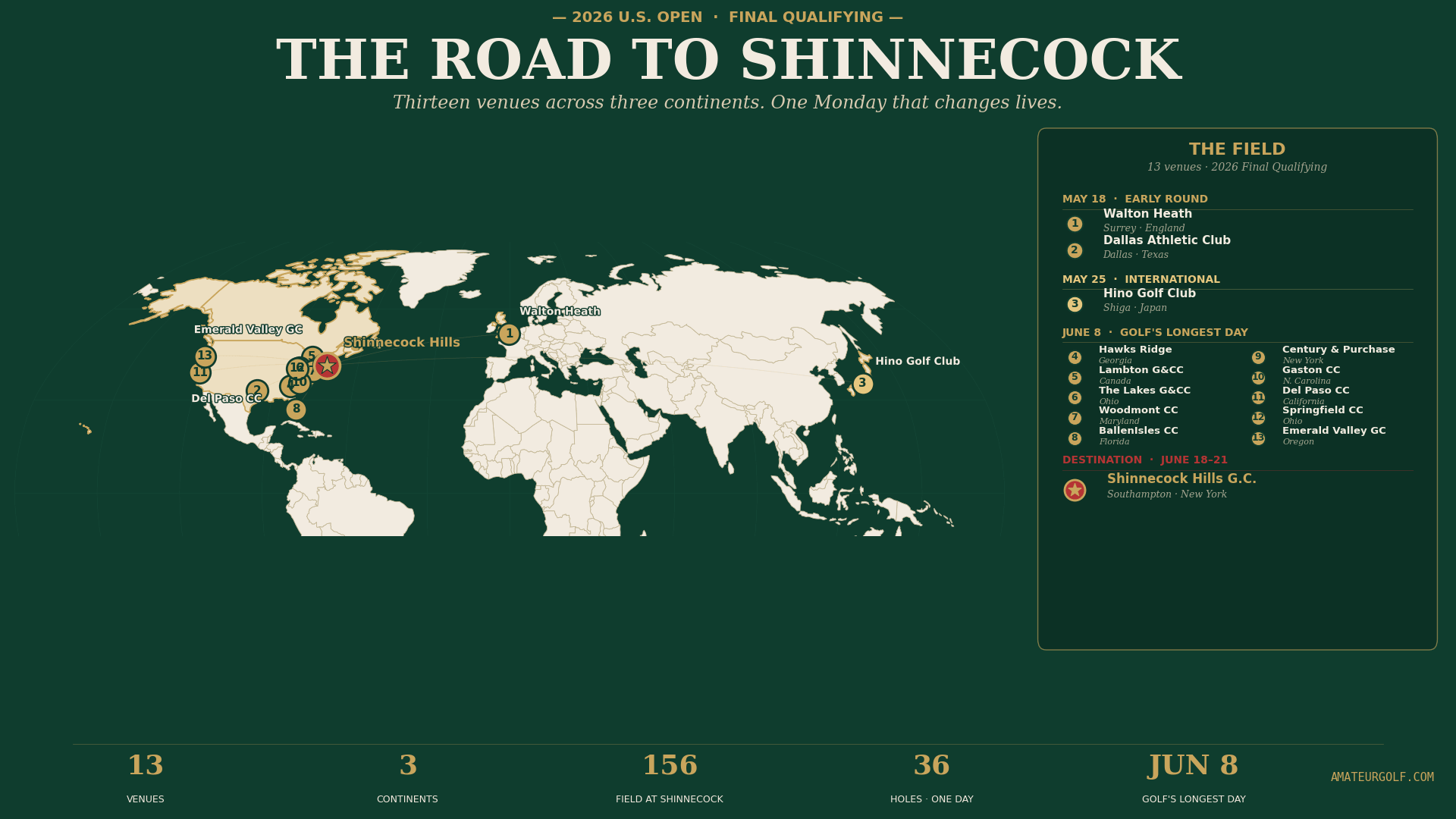
GOLF'S LONGEST DAY: 2026 U.S. Open Final Qualifying Monday June 8
Jun 5, 2026Follow along from 10 locations - our team is on the ground looking for the best stories
2026 U.S. Open Final Qualifying: Live Tracker for Golf's Longest Day
Jun 8, 2026Every 2026 U.S. Open Final Qualifying leaderboard in one place. Live scoring for all 10 Golf's Longest Day sites
How to Watch the 2026 NCAA Golf Championships
May 20, 2026Everything you need to tune into the men's and women's NCAA Division I golf championships at Omni La Costa
2026 NCAA Men's Golf Championship: Live Coverage, Field & Daily Updates from La Costa
Jun 3, 2026Auburn defeats UCLA at La Costa to capture its second NCAA men’s golf championship in three years.
Stanford Wins 4th NCAA Women's Golf Title, Tops USC
May 26, 2026The Cardinals closed a dominant week at La Costa with another match-play crown — their fourth national titleLoading latest news...